Tax Evasion vs. Tax Avoidance: What Is the Difference?


Tax evasion and tax avoidance are often used as if they mean the same thing, but only one of them is a crime. The difference comes down to two words: legality and intent.
Tax avoidance is the legal use of the rules to reduce what you owe, while tax evasion is the illegal act of hiding income or lying to tax authorities to pay less than you should.
Both aim to lower a tax bill, yet one is ordinary financial planning and the other can lead to prison.
For businesses, and especially for banks, fintechs, and other regulated firms, the line matters for a reason most explainers miss.
Tax evasion is a predicate offense for money laundering, which means the proceeds of evasion are dirty money, and any firm that handles them can be drawn into a financial-crime investigation.
This guide covers the definitions, examples, penalties, and the compliance obligations that come with them.
What Is Tax Avoidance?
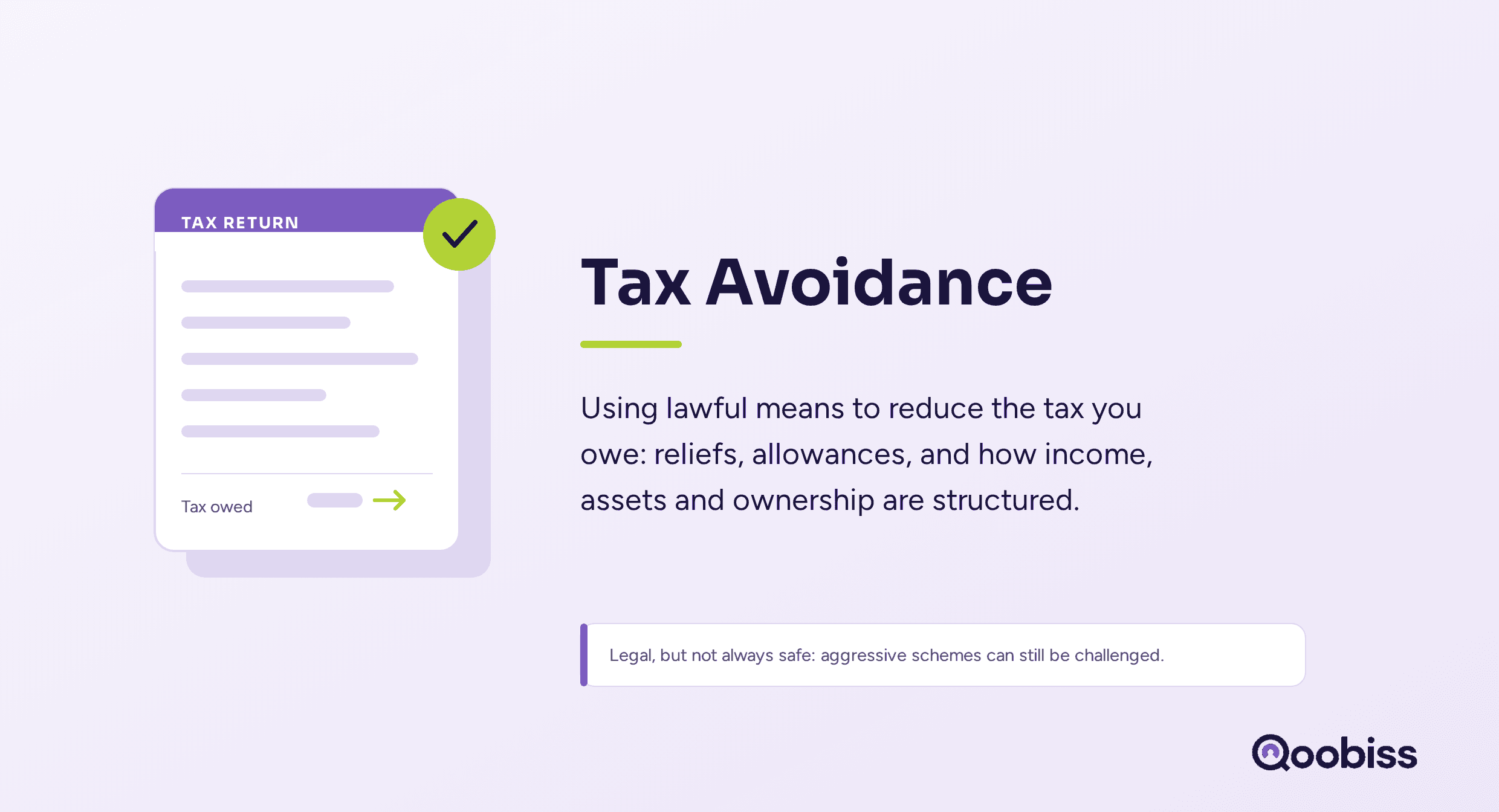
Tax avoidance is arranging your finances within the law to minimize the tax you owe. It relies on provisions that governments deliberately wrote into the tax code to encourage certain behavior, such as saving for retirement or investing in property. There is no deceit involved, and everything is reported honestly. Common, entirely legal examples include:
Claiming deductions for mortgage interest, charitable donations, or business expenses.
Using tax credits for things like education, energy efficiency, or dependents.
Contributing to tax-advantaged retirement accounts such as a 401(k), IRA, or pension.
Investing in tax-exempt instruments like municipal bonds.
Structuring a business or timing income and gains to fall under lower rates.
What Is Tax Evasion?
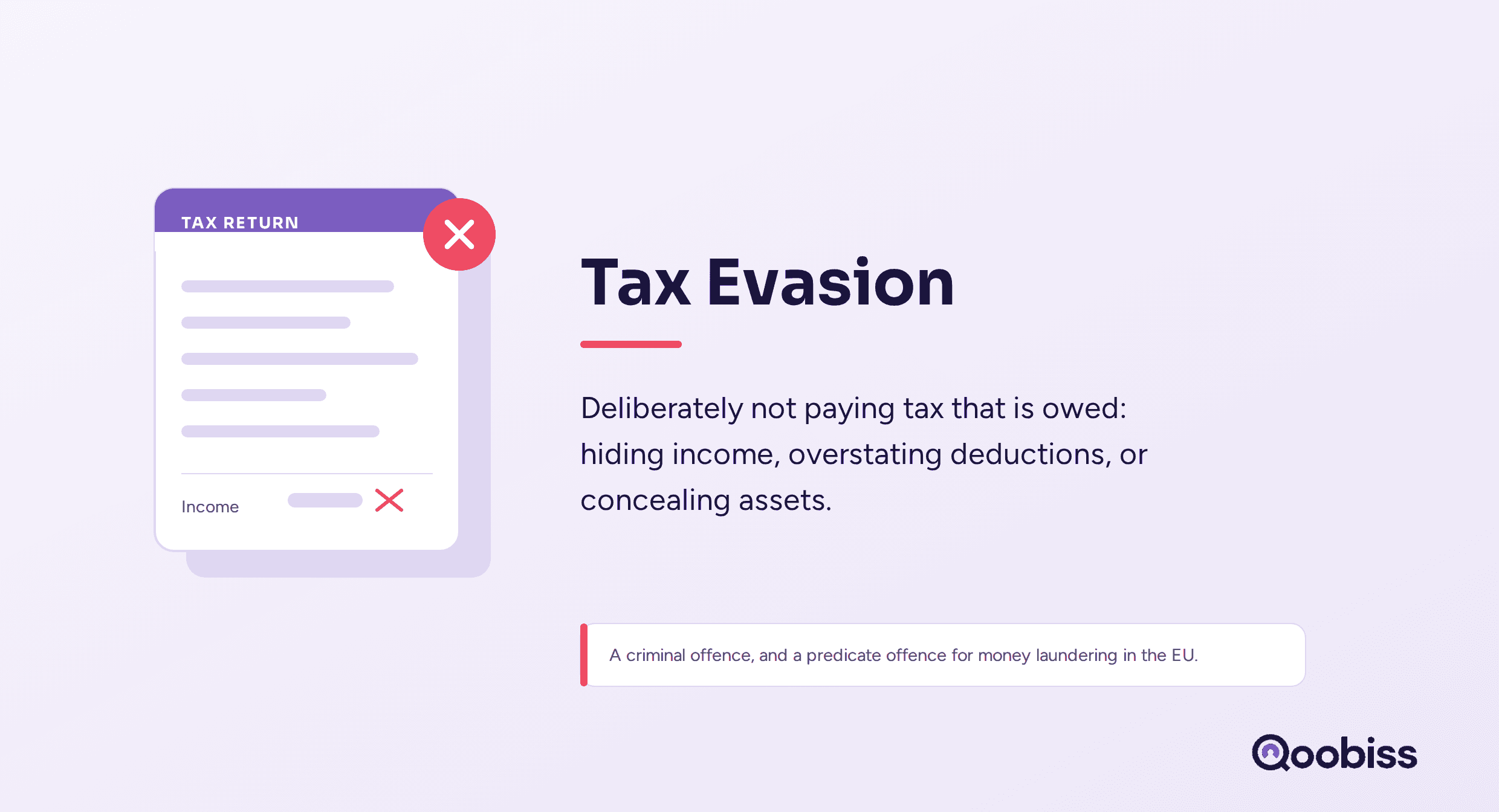
Tax evasion is the illegal, deliberate underpayment or non-payment of tax owed, usually through concealment or misrepresentation. Unlike avoidance, it depends on hiding the truth from the tax authority. The defining feature is willful intent to defraud, and typical examples are unambiguous:
Underreporting or failing to declare income, including cash, tips, or bonuses.
Inflating or inventing deductions and expenses that never happened.
Hiding money in undeclared offshore accounts or shell companies.
Keeping two sets of books or falsifying records.
Failing to file a return at all in order to avoid assessment.
The Key Difference: Legality and Intent
The cleanest way to separate the two is to look at whether the law permits the action and whether the taxpayer is being honest about it. The table below sets them side by side, including the compliance dimension that other comparisons leave out:
Factor | Tax avoidance | Tax evasion |
|---|---|---|
Legality | Legal | Illegal and criminal |
Intent | Transparent use of the rules | Willful deceit or concealment |
Methods | Deductions, credits, reliefs, structuring | Hiding income, false records, offshore concealment |
Disclosure | Fully reported to the authorities | Information withheld or falsified |
Consequence | None; it is permitted planning | Fines, back taxes, and imprisonment |
AML implication | None in itself | A predicate offense; proceeds are laundered money |
The Grey Area: Aggressive Tax Avoidance
Between clearly legal planning and outright fraud sits a contested middle ground often called aggressive tax avoidance. These are schemes that follow the letter of the law but not its spirit, exploiting loopholes in ways lawmakers never intended.
Tax authorities such as the UK's HMRC treat them as avoidance that bends the rules, and campaigners like the Tax Justice Network argue the label legal is misleading, since some schemes have only a slim chance of surviving a court challenge and are better described as tax abuse.
For a compliance team, the lesson is that a structure being technically legal does not make it low risk.
Penalties for Tax Evasion

Because tax evasion is a crime, the penalties are severe and reach both individuals and the businesses that facilitate it. The specifics vary by country, but the enforcement direction is consistent across major jurisdictions:
Jurisdiction | Key penalties |
|---|---|
United States | Under 26 U.S.C. 7201, tax evasion is a felony carrying fines up to $100,000 for individuals ($500,000 for corporations) and up to 5 years in prison |
United Kingdom | Under the Criminal Finances Act 2017, firms face strict, extraterritorial liability for failing to prevent the facilitation of tax evasion, with unlimited fines and penalties up to 200% of the tax due |
European Union | Under 6AMLD, tax crimes are predicate offenses for money laundering, with a minimum maximum sentence of 4 years and corporate criminal liability |
Why It Matters for Compliance: Evasion as a Money-Laundering Predicate
This is the point most articles ignore. The EU's Sixth Anti-Money Laundering Directive (6AMLD, Directive (EU) 2018/1673) lists tax crimes among the 22 predicate offenses that can underpin money laundering. In plain terms, money that comes from evading tax is criminal proceeds, and moving, holding, or disguising it is laundering. That reframes the whole topic for regulated firms:
The taxpayer commits the predicate offense by evading tax.
The proceeds become dirty money the moment they enter the financial system.
Any obliged entity that banks, transfers, or invests those funds risks facilitating money laundering if its controls fail.
So the avoidance-versus-evasion line is not just an academic distinction. It determines whether the funds flowing through your platform are legitimate or launderable, and whether your firm is meeting its legal duties.
The Rules Businesses Need to Know
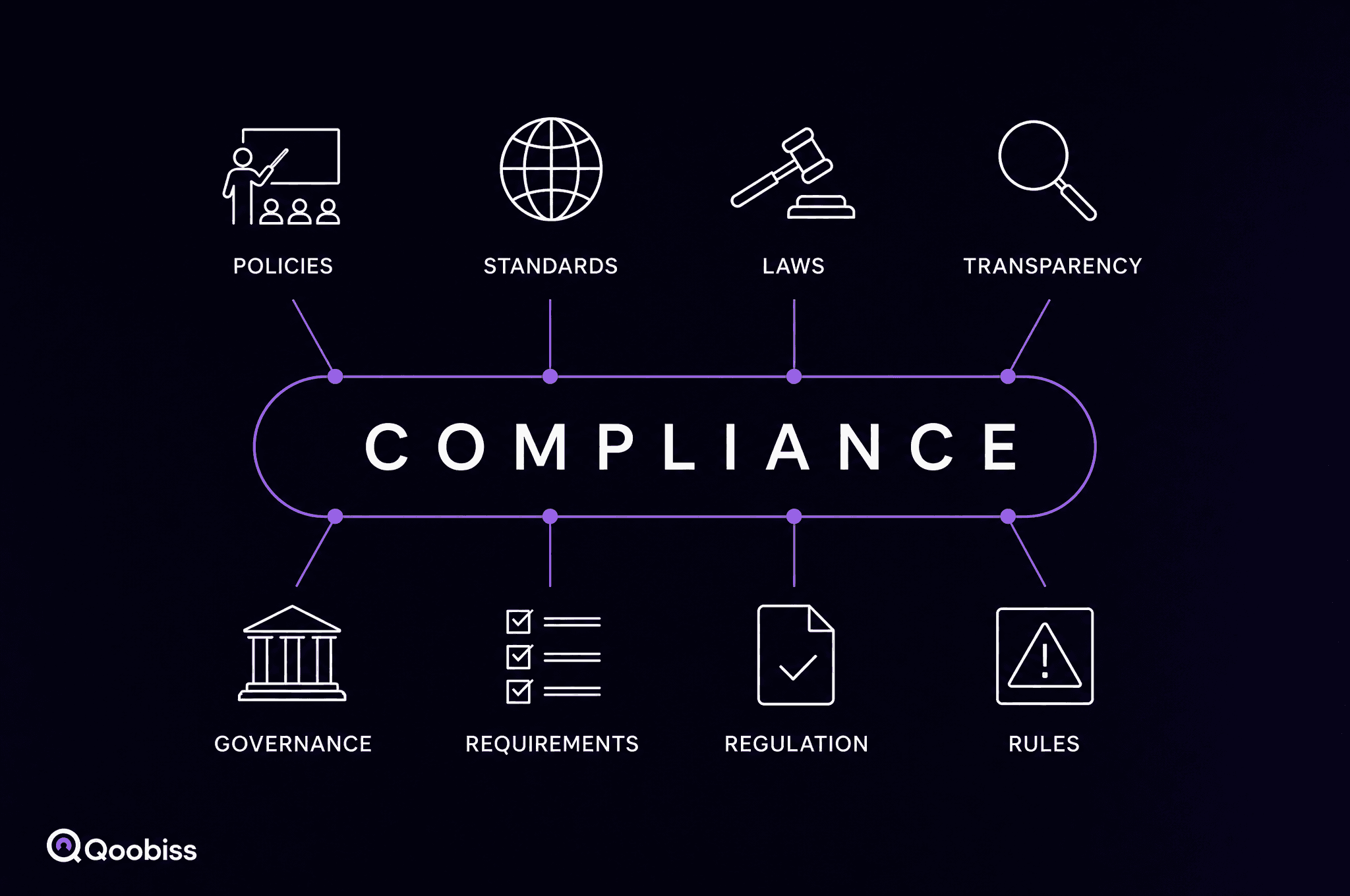
Tax evasion and aggressive avoidance are policed by a growing web of international and EU instruments. Compliance teams at banks, fintechs, and crypto firms should be familiar with the main ones:
Framework | What it does |
|---|---|
6AMLD (EU) | Makes tax crimes a predicate offense for money laundering and imposes corporate liability |
DAC6 (EU) | Requires mandatory disclosure of certain cross-border tax arrangements that carry risk hallmarks |
ATAD I and II (EU) | Anti-tax-avoidance rules including a general anti-abuse rule, controlled-foreign-company rules, and hybrid-mismatch rules |
OECD BEPS and Pillar Two | Global standards to stop profit shifting and set a minimum effective corporate tax rate |
CRS and FATCA | Automatic exchange of financial-account information across borders to expose hidden offshore income |
Red Flags: How Compliance Teams Spot Evasion Risk

Tax-evasion proceeds rarely announce themselves, so analysts look for patterns that suggest income is being hidden or funds are being disguised. Individually these signals may be innocent, but together they warrant closer scrutiny:
Funds routed through offshore or secrecy jurisdictions with no clear business rationale.
Complex ownership chains or shell companies that obscure the beneficial owner.
A customer whose source of funds or source of wealth cannot be substantiated.
Transaction volumes that do not match the customer's declared income or profile.
Deposits broken into smaller amounts to stay below reporting thresholds, a pattern known as smurfing or structuring.
What Obliged Entities Must Do
Meeting AML obligations around tax crime means building the same controls that catch other predicate offenses, applied with tax-evasion typologies in mind. For most regulated firms that stack includes:
Customer due diligence. Verify identity and run customer due diligence, with enhanced due diligence for higher-risk clients and complex structures.
Beneficial ownership checks. Identify the real people behind an entity through business verification so ownership cannot be hidden.
Screening. Run AML screening against sanctions, PEP, and adverse media sources.
Transaction monitoring. Use ongoing transaction monitoring to detect the red-flag patterns above in real time.
Reporting. File a suspicious transaction report when the evidence points to possible evasion or laundering.
Detect Tax-Crime Risk with Qoobiss
Qoobiss gives banks, fintechs, and crypto firms the tools to catch the proceeds of tax evasion before they move through the system. Omnicheck combines AML screening with real-time transaction monitoring, while Qoobiss's identity verification and due-diligence tools confirm who your customers really are. See how Qoobiss helps compliance teams meet their AML obligations, or get in touch to see it in action.
This article is for general information only and is not legal or tax advice. For guidance on a specific situation, consult a qualified tax professional or lawyer.
Qoobiss
Frequently Asked Questions
What is the difference between tax evasion and tax avoidance?
Is tax avoidance legal?
What are examples of tax evasion?
Is tax evasion money laundering?
What are the penalties for tax evasion?