Chargeback Fraud Prevention: How to Stop It and Protect Your Revenue


Chargeback fraud is one of the fastest-growing threats to online businesses, and much of it comes not from criminals with stolen cards but from real customers disputing purchases they actually made.
The chargeback system was built to protect consumers, yet it is increasingly abused, and merchants are left to absorb the cost.
More than 83 percent of enterprise merchants say friendly fraud has risen over the past three years, and it now drives a large share of all chargeback losses.
The damage goes well beyond the disputed sale. According to the 2026 LexisNexis True Cost of Fraud study, every $1 lost to a chargeback costs a merchant around $5.13 once fees, lost goods, and labor are counted, and friendly fraud alone represents a $132 billion annual risk to eCommerce.
This guide explains what chargeback fraud is, its main types, how the process works, and, most importantly, how to prevent it upstream and win back the disputes you should never have lost.
What Is Chargeback Fraud?
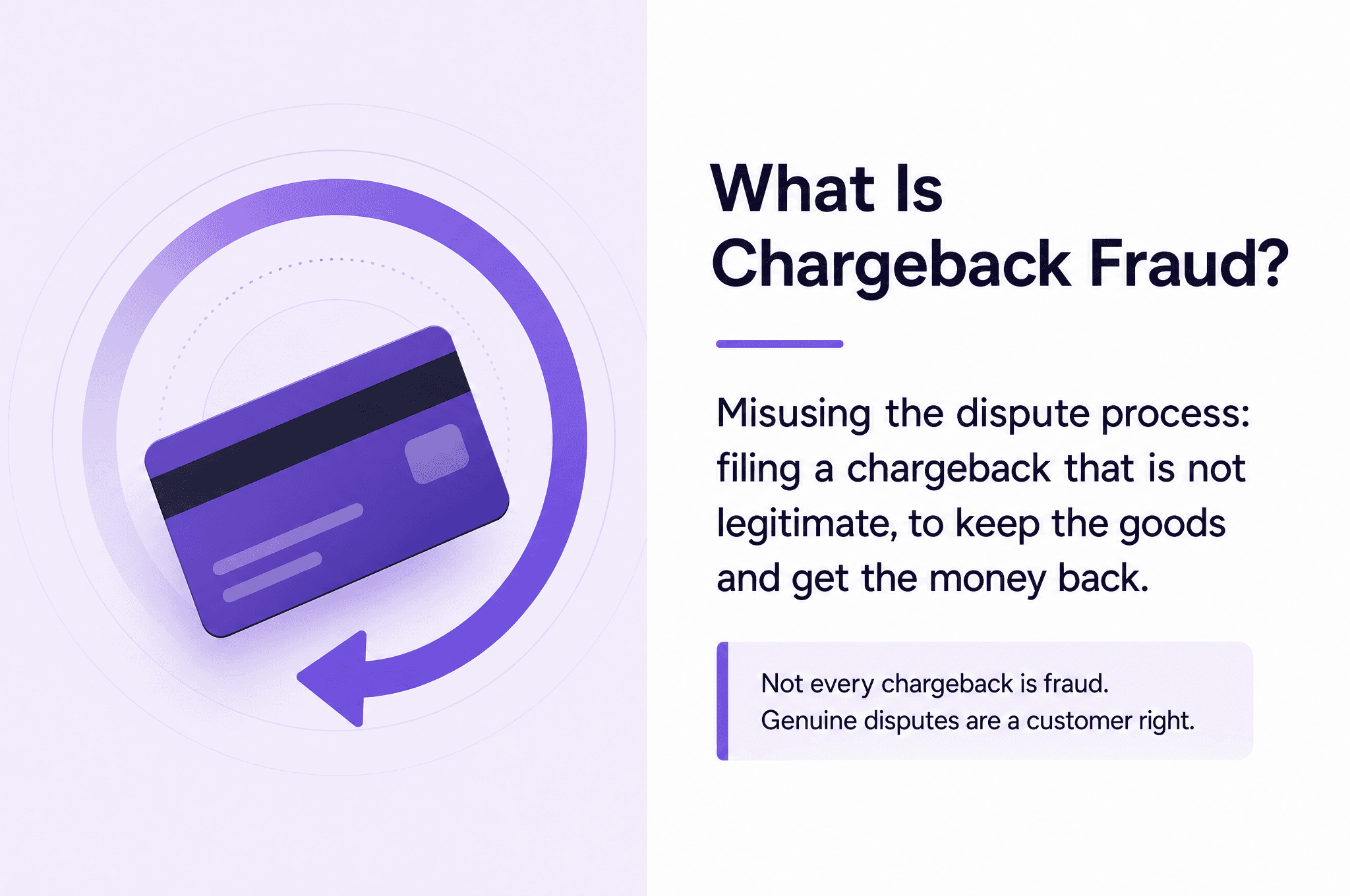
A chargeback is a forced reversal of a card payment, initiated when a customer disputes a transaction with their bank rather than asking the merchant for a refund. The bank returns the money to the cardholder and debits the merchant. Chargeback fraud is the misuse of that process: filing a dispute that is not legitimate in order to get goods or services for free while keeping the money back.
The key thing to understand is that not every chargeback is fraud. A customer who never received an item, or was charged twice, has a genuine right to dispute. Chargeback fraud is specifically the dishonest or opportunistic use of the system, and telling the two apart is the heart of an effective prevention program.
Chargeback vs. Refund
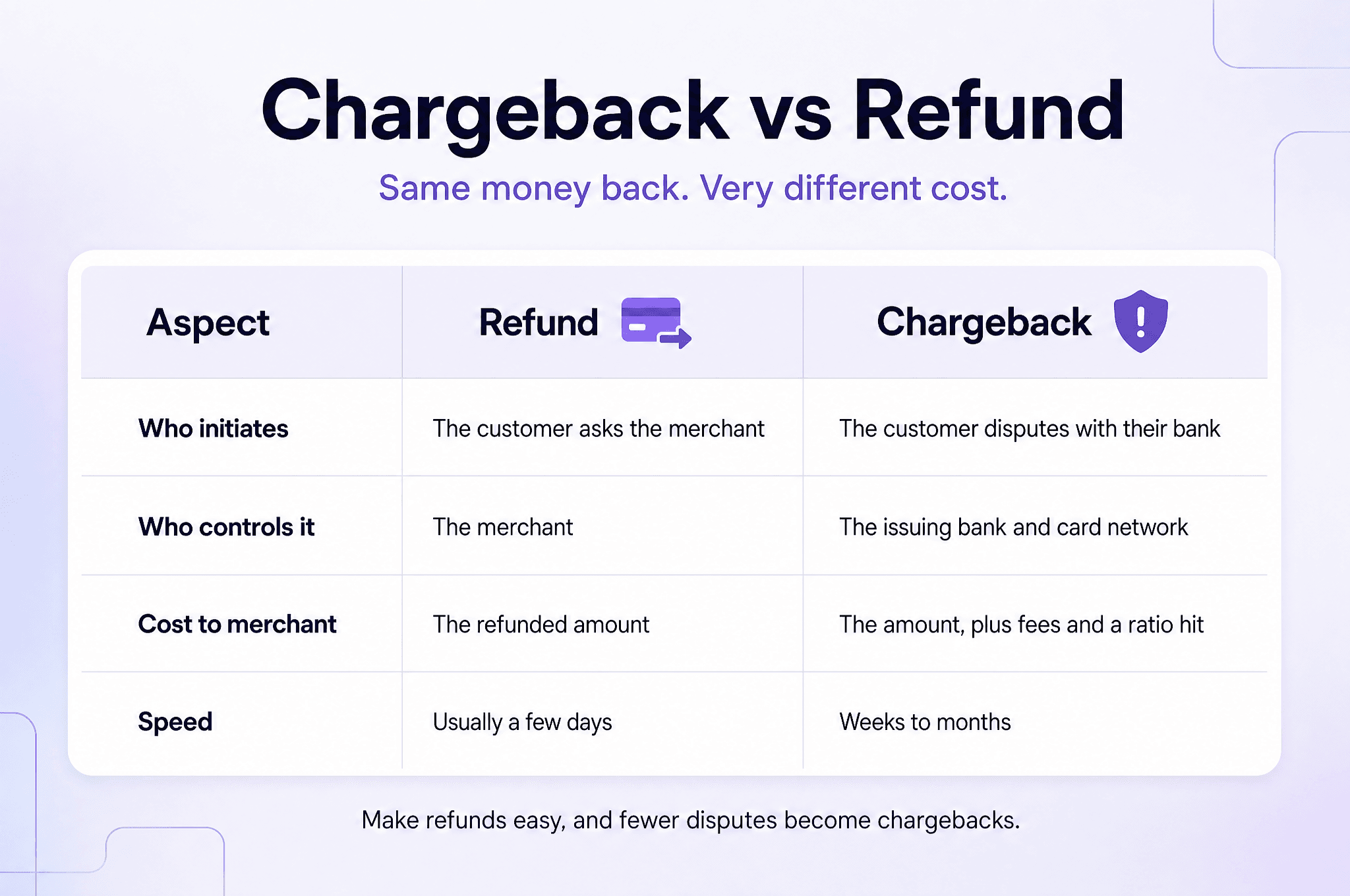
A big driver of chargeback fraud is that customers reach for a dispute when a simple refund would have done, often because it feels easier or faster. The two are very different for a merchant, and encouraging refunds over chargebacks is itself a prevention tactic:
Aspect | Refund | Chargeback |
|---|---|---|
Who initiates | The customer asks the merchant | The customer disputes with their bank |
Who controls it | The merchant | The issuing bank and card network |
Cost to merchant | The refunded amount | The amount plus fees and a ratio hit |
Speed | Usually a few days | Weeks to months |
Making refunds and cancellations easy, and telling customers how to reach you, diverts disputes that would otherwise become costly chargebacks.
The Three Types of Chargeback Fraud
Chargeback fraud is not a single problem, and each type needs a different defense. Grouping disputes into the right category is the first step, because the control that stops one type does little against another:
Type | What it is | Best defense |
|---|---|---|
True (criminal) fraud | A stolen or cloned card used by a criminal; the real cardholder files a valid dispute. | Stop it upstream with identity and payment authentication |
Friendly or first-party fraud | The genuine cardholder disputes a purchase they actually made. | Compelling-evidence representment and clear records |
Merchant error | A billing mistake, double charge, or fulfillment problem triggers a dispute. | Fix operations, descriptors, and customer service |
Friendly fraud, also called first-party fraud, is the fastest-growing category. Visa estimates it accounts for around 20 percent of all fraudulent disputes globally, rising to as much as 30 percent for high-volume online merchants, and first-party fraud has become the leading fraud type worldwide, making up roughly 36 percent of reported fraud
Is Chargeback Fraud Illegal?
Yes. Deliberately filing a false chargeback to keep both the goods and the money is a form of payment fraud and can be prosecuted as card fraud or wire fraud. In serious, high-value cases it can lead to criminal charges and even jail, and merchants can pursue civil recovery.
In practice, most first-party fraud is opportunistic rather than organized, and proving intent is difficult, which is exactly why prevention and solid evidence matter more than the threat of prosecution.
How the Chargeback Process Works
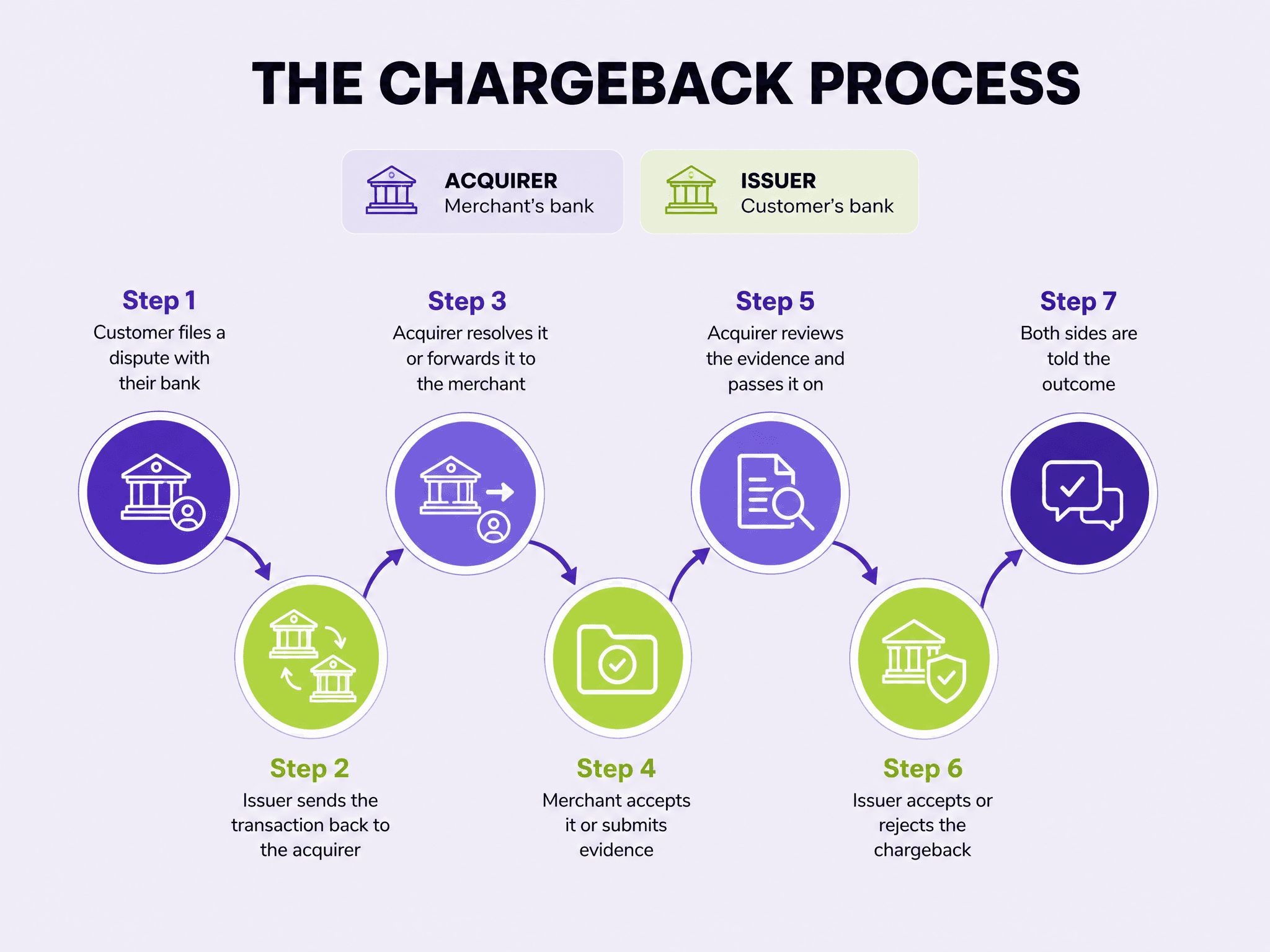
To prevent and fight chargeback fraud, it helps to know the sequence a dispute follows. The customer typically has up to 120 days to dispute, and the case can run through several stages before it is settled:
Stage | What happens | Who holds the loss |
|---|---|---|
Dispute filed | The cardholder challenges the charge with their issuing bank. | Merchant, provisionally |
Chargeback issued | The issuer investigates and reverses the funds through the network. | Merchant |
Representment | The merchant submits compelling evidence to prove the charge was valid. | Cardholder, if merchant wins |
Arbitration | The card network reviews the case and makes the final decision. | Loser of the ruling |
Merchants win on average around 44 percent of the chargebacks they contest, but net recovery is far lower once second disputes and undetected fraud are counted. With strong evidence and preparation, win rates can climb past 70 percent, which is why the quality of your records is decisive.
The True Cost of Chargeback Fraud
The disputed amount is only the beginning. Chargebacks carry layered costs, and card networks penalize merchants whose dispute rates climb too high. The figures worth knowing include:
Every $1 lost to a chargeback costs around $5.13 in total once fees, lost goods, and labor are included.
Chargeback fees typically run from $15 to as much as $100 per case, regardless of who wins.
Friendly fraud drives up to 75 percent of chargeback losses and a $132 billion annual risk to eCommerce.
Card networks flag merchants who exceed roughly a 0.9 to 1 percent chargeback ratio, adding fees and monitoring.
Persistent offenders risk landing on industry denylists and losing the ability to accept cards at all.
Matching Prevention Controls to Fraud Type
Because each type of chargeback fraud has a different root cause, the smartest programs map specific controls to specific threats rather than hoping one tool covers everything. The matrix below shows which control does the heavy lifting against each type:
Control | Stops which fraud | How it works |
|---|---|---|
Identity verification and liveness | True and account-takeover fraud | Confirms a real, verified person is behind the payment |
3-D Secure and SCA | True fraud | Authenticates the payer and shifts liability to the issuer |
Device and behavioral intelligence | True and first-party fraud | Flags anomalies, bots, and repeat abusers |
Compelling-evidence representment | Friendly or first-party fraud | Proves the cardholder made and received the purchase |
Clear descriptors and service | Merchant error | Prevents confusion and unrecognized-charge disputes |
How to Prevent Chargeback Fraud Upstream
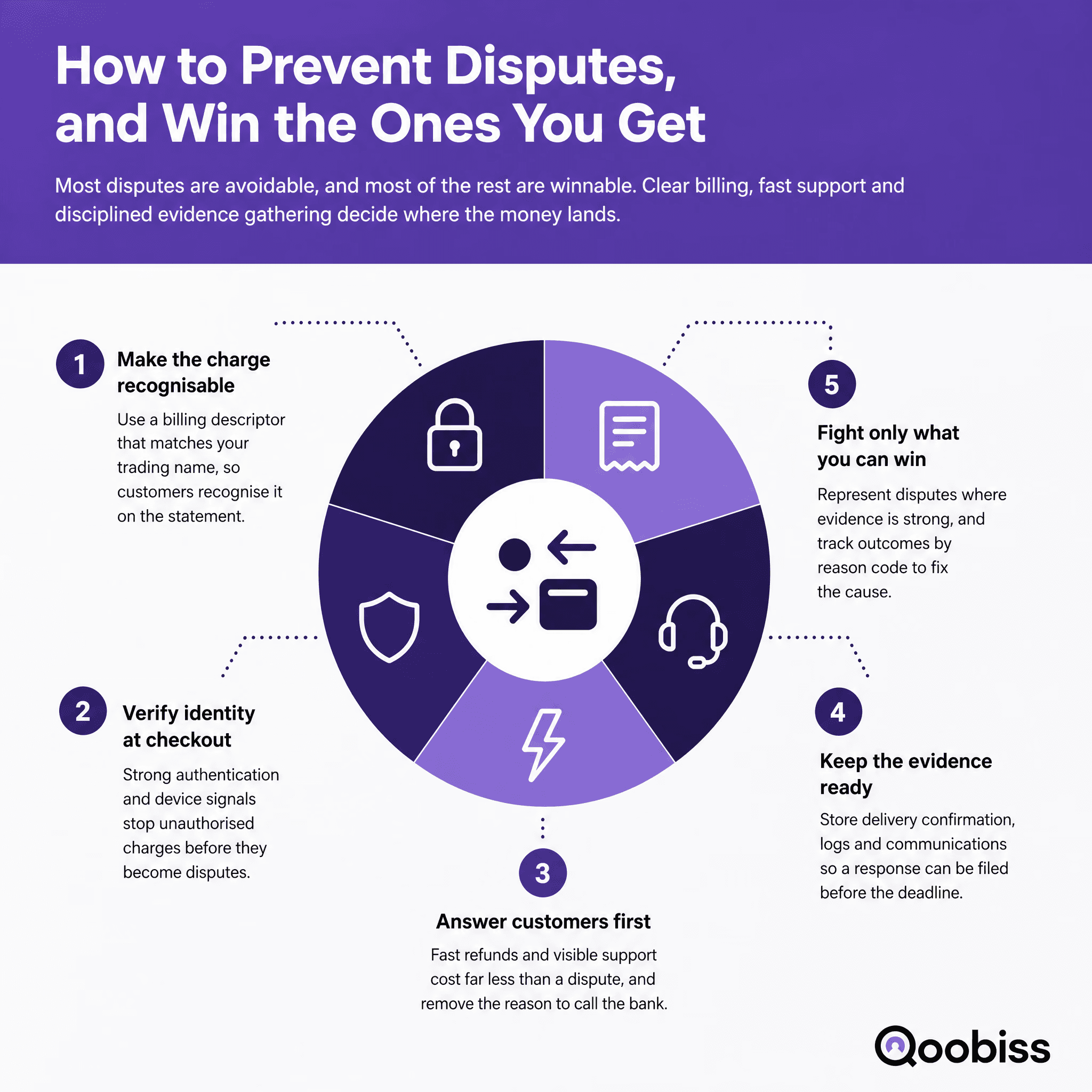
The most effective way to cut chargebacks is to stop the bad transactions before they ever settle, rather than fighting disputes weeks later. That means verifying who is behind a payment and authenticating it properly at checkout. The core upstream controls are:
Verify identity at onboarding and checkout. Strong identity verification with biometric and liveness checks stops criminals and synthetic identities from transacting in the first place.
Authenticate payments with 3-D Secure and SCA. Authenticated transactions move chargeback liability for fraud to the issuer, a powerful and often overlooked protection.
Use device and behavioral intelligence. Device fingerprinting and behavioral signals catch bots, deepfake-driven attacks, and customers who dispute repeatedly.
Apply AVS, CVV, and tokenization. Basic card checks and tokenized payment data reduce both true fraud and the exposure from data breaches.
Monitor transactions in real time. Continuous transaction monitoring flags risky orders and velocity patterns before they turn into disputes.
Fighting Back: Representment and Visa CE 3.0
When a friendly-fraud chargeback does slip through, representment is how you recover the funds. It means submitting evidence to the issuer that proves the transaction was legitimate and that the cardholder made and benefited from it.
Visa's Compelling Evidence 3.0 framework is the most important development here: for eligible card-not-present fraud disputes, a merchant that can show a history of prior undisputed transactions from the same customer, matched by data points such as device ID, IP address, and delivery address, can qualify for an automatic liability shift back to the issuer.
Strong, well-organized evidence, ideally the same identity and device data captured at checkout, is what turns a losing dispute into a win.
Chargeback Reason Codes
Every chargeback carries a reason code that tells you why the customer disputed and what evidence you need to respond. Visa groups them into four categories, and knowing which one you are facing shapes your defense:
Category | Code range | What it covers |
|---|---|---|
Fraud | 10.x | Unauthorized or counterfeit card use, including card-absent fraud |
Authorization | 11.x | Charges approved despite a decline or expired authorization |
Processing errors | 12.x | Duplicate charges, incorrect amounts, and similar mistakes |
Consumer disputes | 13.x | Goods not received, not as described, or subscription complaints |
Tracking your reason codes over time reveals whether your losses are driven by true fraud, friendly fraud, or your own operations, and therefore where to focus prevention.
The EU Angle: PSD2 and PSD3
For European merchants, chargeback prevention is shaped by payment regulation that most guides ignore. Under PSD2, most electronic payments require Strong Customer Authentication, meaning the payer confirms their identity with at least two independent factors. Because a properly authenticated payment shifts fraud liability to the issuer, SCA is one of the strongest anti-chargeback tools available in the EU.
The incoming PSD3 and Payment Services Regulation go further, tightening authentication and expanding the liability that falls on providers who fail to authenticate. Treating SCA as a revenue protection measure, not just a compliance box, is a genuine advantage.
The Root Causes: Card Cloning and Account Takeover
Much of what merchants log as chargeback fraud actually begins upstream, when a criminal obtains a card or hijacks an account.
Cloned cards and taken-over accounts generate legitimate disputes from real victims, so the most effective long-term defense is to cut off those root causes with identity verification, authentication, and fraud prevention.
The same controls that stop money laundering and account abuse also prevent the disputes they eventually cause, which is why fraud and chargeback teams increasingly work from one view of the customer.
Prevent Chargeback Fraud with Qoobiss
Qoobiss helps merchants, fintechs, and payment platforms stop chargeback fraud at its source. Its identity verification and fraud prevention tools confirm a real person is behind every payment, while real-time transaction monitoring through Omnicheck flags risky activity before it settles. See how Qoobiss supports fintech and payments teams, or get in touch to see it in action.
Frequently Asked Questions
How does chargeback fraud work?
How serious is chargeback fraud?
Can I go to jail for chargeback fraud?
What is the difference between chargeback fraud and friendly fraud?
How can merchants prevent chargeback fraud?
What is a good chargeback ratio?