Liveness Detection: How It Stops Spoofing & Presentation Attacks


A criminal no longer needs to steal your face. They can buy a synthetic identity for as little as $15, generate a convincing deepfake in minutes, or replay a high-resolution video of your selfie to a verification camera.
As biometric onboarding has become the norm for banks, fintechs, crypto exchanges and government services, fraudsters have shifted their effort to the one weak point every face-recognition system shares: proving that the face in front of the camera belongs to a real, living, physically present human being. That is the job of liveness detection.
This guide explains what liveness detection is, the attacks it defends against (including the injection attacks that most introductions ignore), how active and passive methods differ, how accuracy is actually measured, which certifications and regulations matter for KYC and AML compliance: and how to evaluate a vendor. It is written for product, risk and compliance teams who need to make a confident build-or-buy decision.
What Is Liveness Detection?
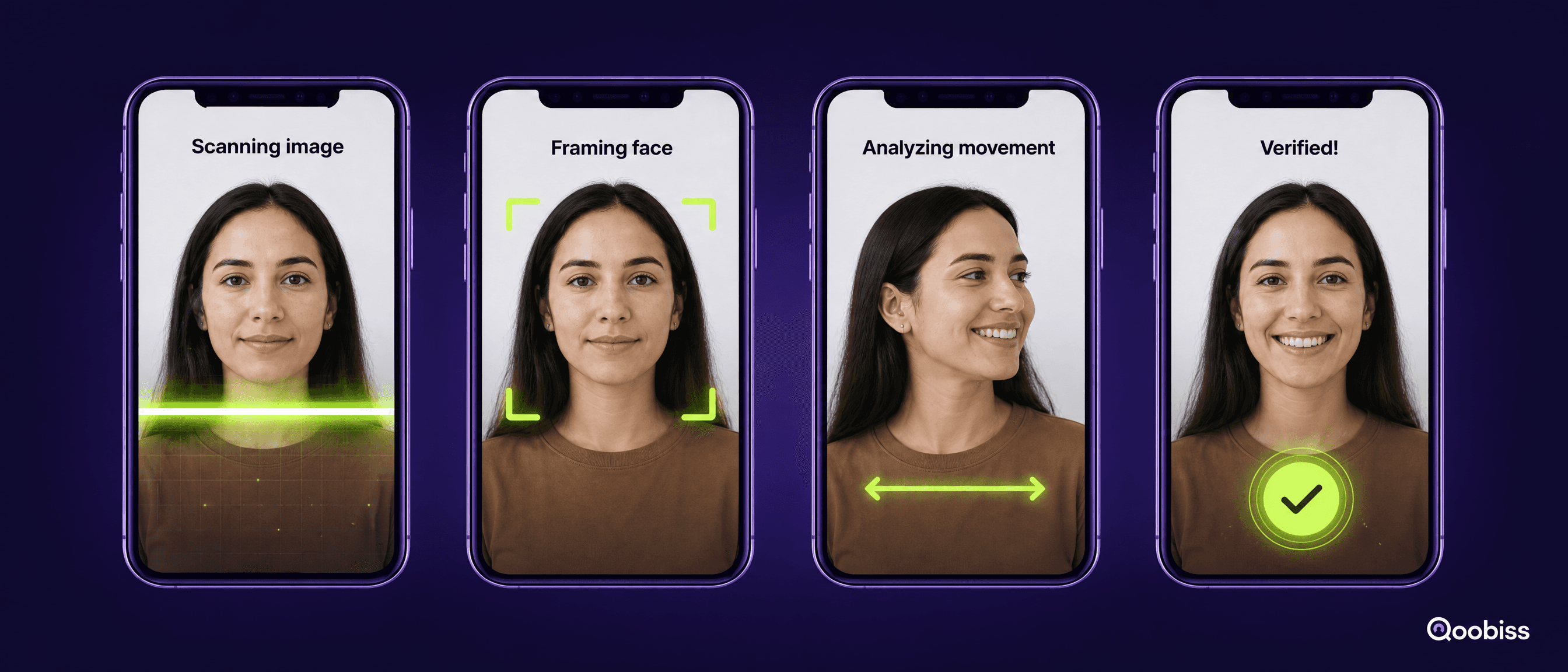
Liveness detection is a security technology that determines whether a biometric sample, most commonly a face captured by a camera, comes from a live person who is physically present, rather than from a spoof such as a photo, video, mask, or deepfake. In plain terms, face matching answers “is this the right person?” while liveness detection answers the prior question: “is this a real person at all?” Both are needed. A system that only matches faces can be fooled by holding up a printed photo of the legitimate user.
In the biometrics industry, liveness detection is formally known asPresentation Attack Detection (PAD). A “presentation attack” is any attempt to defeat a biometric sensor by presenting fake biometric data to it. The U.S. National Institute of Standards and Technology (NIST) describes liveness as a method “developed to counter the presentation of fake biometrics at a sensor.” Liveness detection is almost always paired with facial recognition and biometric verification inside a broader identity-verification flow.
Liveness detection vs. face matching, in one line: face matching confirms identity (a 1:1 or 1:N comparison); liveness detection confirms genuine presence (an anti-spoofing check). Skipping liveness leaves face matching wide open to the simplest fraud of all, a photo of the real user.
Why Liveness Detection Matters Now
The threat environment changed faster than most verification stacks. According to Sumsub’s 2024 Identity Fraud Report, deepfakes accounted for roughly 7% of all fraud attempts in 2024 and quadrupled year over year, while forged or altered documents made up about half of all fraud attempts.
Juniper Research has estimated cumulative online-fraud losses will exceed $362 billion between 2023 and 2028. High-profile cases have made the risk concrete, including a widely reported incident in which an employee was deceived into transferring roughly $25 million after a video call populated entirely by deepfaked colleagues.
Three forces make liveness detection essential rather than optional: generative AI has made convincing fake faces cheap and fast; “fraud-as-a-service” marketplaces sell ready-made synthetic identities and spoofing kits; and regulators increasingly expect verified, live biometric checks during digital onboarding. Without a liveness layer, every deepfake and every fake ID selfie is a potential account takeover.
Presentation Attacks vs. Injection Attacks
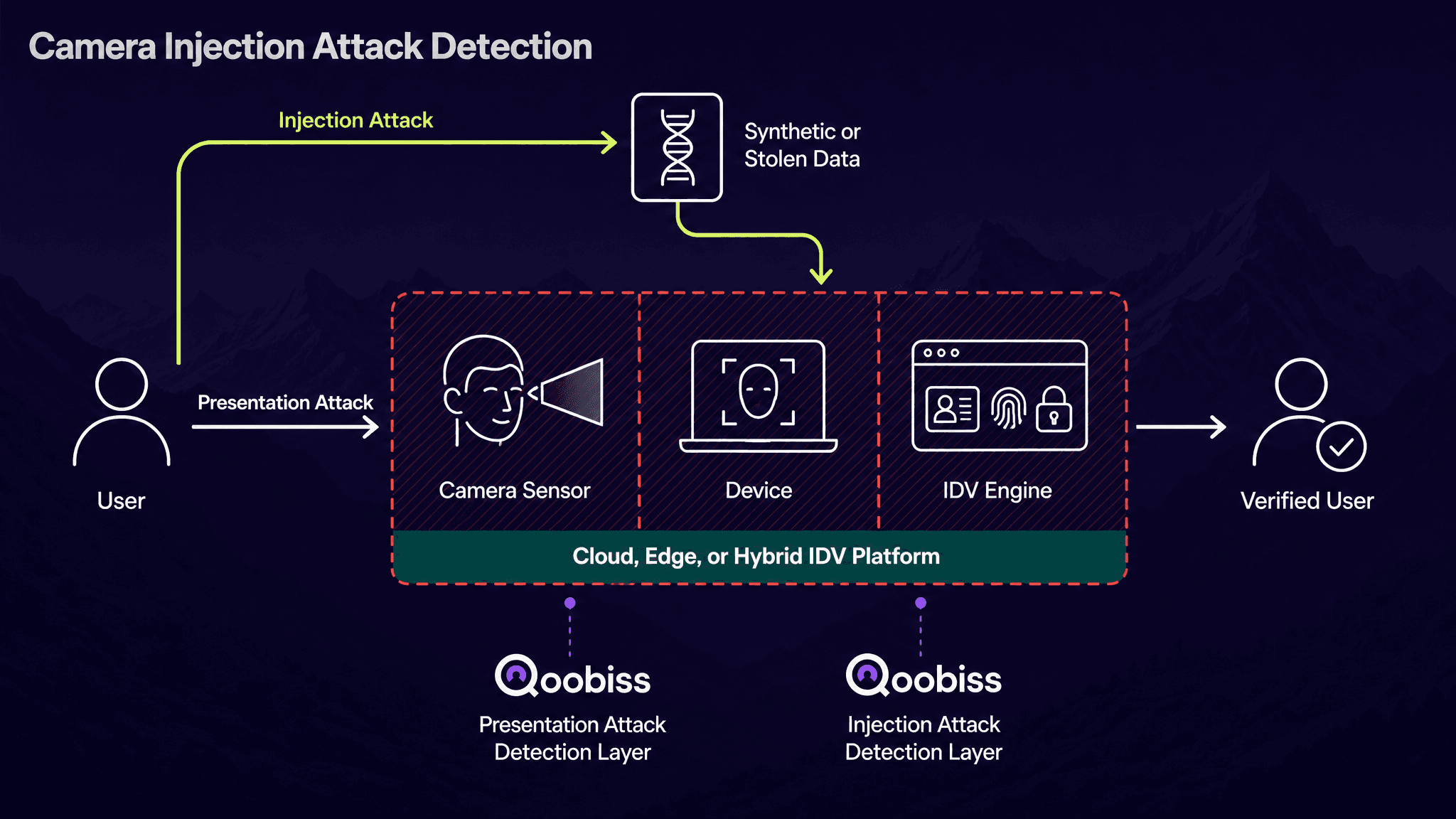
Most explainers treat all spoofing as the same problem. It is not. There are two fundamentally different attack surfaces, and a tool that defends one may be blind to the other.
Presentation attacks
A presentation attack happens in front of the camera: the attacker physically presents a fake artifact, a printed photo, a screen replaying a video, a paper or silicone mask, to a genuine sensor. This is the attack class covered by the ISO/IEC 30107-3 standard and by iBeta PAD testing.
Injection attacks
An injection attack bypasses the camera entirely. The attacker injects a manipulated video stream directly into the application: using a virtual camera, an emulator, a hooked mobile app, or a tampered API call, so the system never sees the real lens at all.
This is how many real-time deepfakes are delivered, and it is the fastest-growing vector. Crucially,ISO/IEC 30107-3 and standard iBeta PAD certifications do not cover injection attacks. Defending against them requires additional controls: device and environment integrity checks, virtual-camera and emulator detection, secure SDKs with tamper protection, and server-side validation of the capture session. When evaluating a vendor, ask specifically how they handle injection, a PAD certificate alone does not answer it.
Types of Spoofing and Presentation Attacks
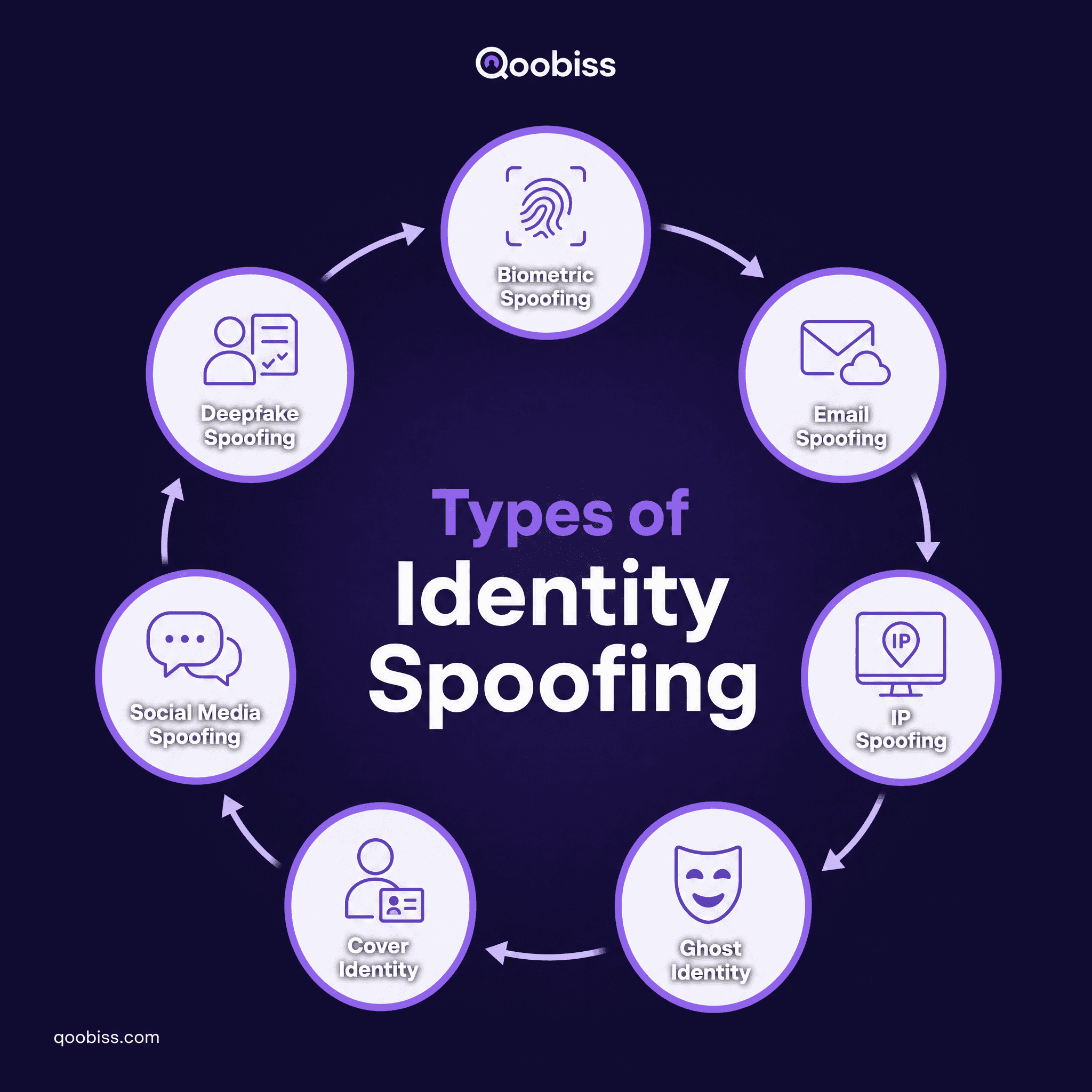
Liveness systems are benchmarked against a recognized hierarchy of spoofs, usually grouped by sophistication:
Print / photo attacks. High-resolution printed photos or paper masks, sometimes with eye-holes cut out so the attacker can blink through them.
Screen / replay attacks. A photo or pre-recorded video played on a phone, tablet or monitor. Tell-tale signs include screen glare, moiré patterns, pixel structure and reflections.
2D and 3D mask attacks. From flat cut-outs to latex, silicone and resin masks, wax heads, mannequins and even robotic heads built to defeat motion and depth checks.
Deepfakes and AI avatars. Generative models swap or synthesize a face in real time, including animated “puppets” driven by an attacker. Deepfakes can be presented to a camera or injected directly.
Synthetic identities. Composite identities, part real, part fabricated, increasingly sold pre-packaged. They pair a fabricated face with stolen or invented document data.
Injection / virtual-camera attacks. As above: manipulated streams fed straight into the app, bypassing the physical sensor.
Active vs. Passive Liveness Detection
There are two primary approaches, plus a hybrid middle ground. The right choice depends on your risk level and how much user friction you can tolerate during onboarding.
Active liveness detection
Active liveness, the first generation of the technology, uses challenge-response: the user is prompted to perform an action such as blinking, smiling, turning their head or following a moving dot. The action proves real-time presence and is particularly effective against pre-recorded replays. The trade-off is friction: it takes longer, demands user effort, and can frustrate older users or anyone in poor lighting.
Passive liveness detection
Passive liveness requires no extra action: the user simply takes a selfie, and AI analyzes texture, depth cues, reflections, lighting and micro-signals in the background. It is seamless and fast, which makes it ideal for scalable, mobile-first onboarding, but its accuracy depends heavily on capture quality and the strength of the underlying model.
Hybrid (semi-passive) liveness
Hybrid approaches run passive analysis by default and add one lightweight prompted action when risk signals warrant it, balancing assurance against user experience.
Comparison at a glance:
Factor | Active liveness | Passive liveness |
|---|---|---|
User interaction | Required (blink, smile, head turn) | None, a single selfie |
Experience | More friction, higher drop-off | Seamless and frictionless |
Speed | Slower (prompts add seconds) | Generally faster (1-2s typical) |
Replay resistance | Strong (challenge is unpredictable) | Strong, model-dependent |
Capture sensitivity | More tolerant of conditions | Sensitive to lighting and camera quality |
Best for | High-risk actions, step-up checks | High-volume onboarding, mobile UX |
Many providers now default to passive liveness for onboarding and reserve an active challenge as a step-up check for high-risk events such as large payments or account-recovery.
How Liveness Detection Works
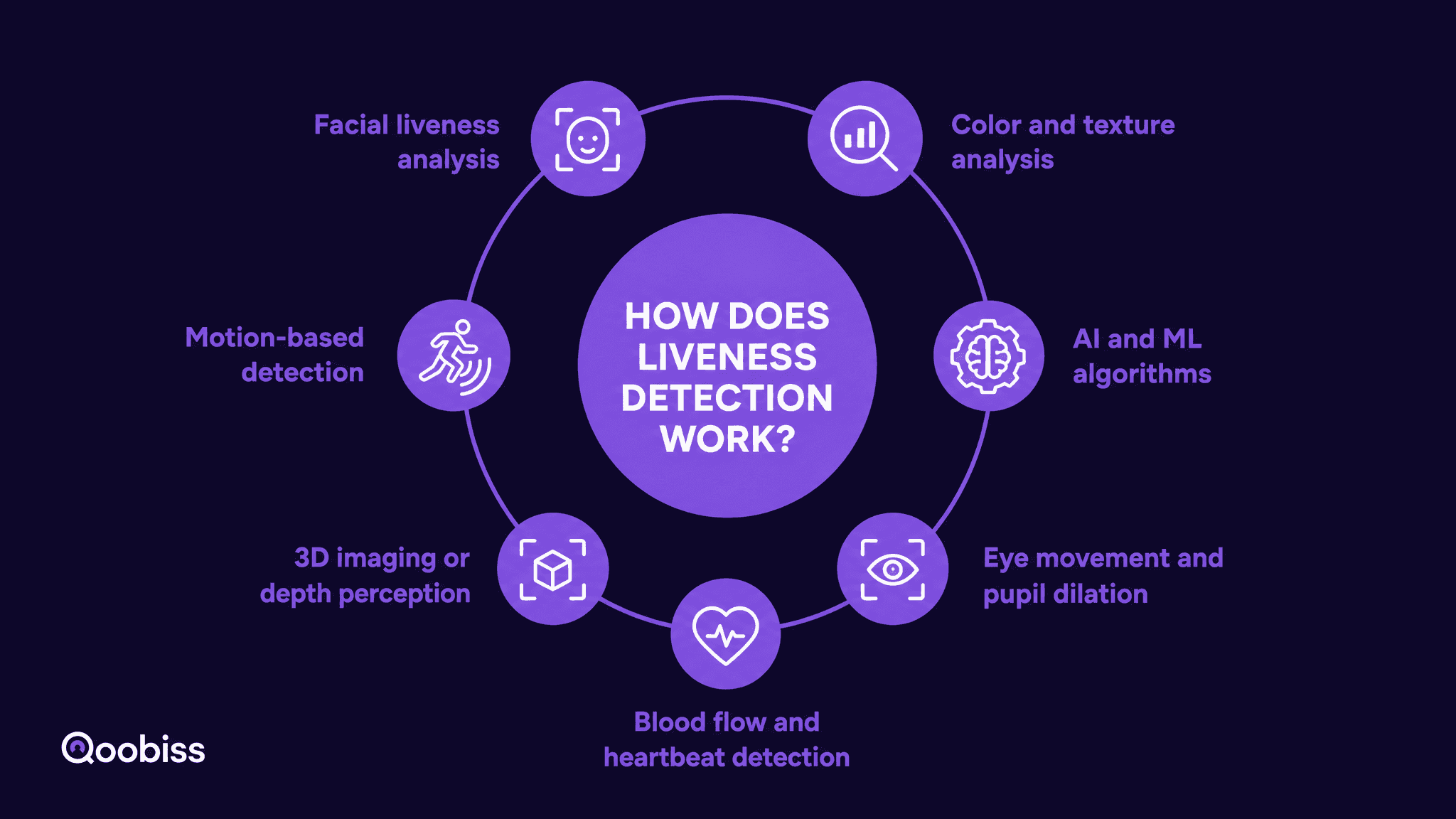
Modern liveness engines combine several signals, weighted by deep neural networks trained on large datasets of genuine and spoofed samples:
Texture and micro-detail analysis: real skin reflects light differently than paper, screens or silicone; recaptured images carry detectable artifacts.
Depth and 3D mapping: distinguishing a flat surface (X, Y) from a real, three-dimensional face (X, Y, Z). 2D analysis is faster and suits low-risk unlock; 3D is more secure and preferred for payments and onboarding.
Motion and micro-movements: optical-flow and motion analysis detect involuntary cues (blinking, subtle muscle movement, pupil behavior) that static or printed spoofs lack.
Reflection, light and context: screen glare, unnatural shadows and inconsistent lighting reveal replays and masks.
Challenge-response (active): randomized prompts the attacker cannot have pre-recorded.
Device and stream integrity (anti-injection): virtual-camera and emulator detection plus secure capture to ensure the feed actually came from the device’s real camera.
Some advanced systems also readbiological signals such as blood-flow-driven color changes in the skin (remote photoplethysmography, or rPPG), or use hardware sensors like infrared and 3D depth cameras.
Hardware-dependent methods are powerful but require special equipment; camera-independent software approaches trade a little assurance for far broader device coverage.
How Liveness Detection Accuracy Is Measured
Vendor claims of “99% accuracy” are meaningless without the underlying error metrics. The ISO/IEC 30107-3 standard defines the metrics that matter for PAD, and you should expect a serious vendor to publish them:
Metric | What it measures | Lower or higher is better |
|---|---|---|
APCER | Attack Presentation Classification Error Rate, share of spoof attacks wrongly accepted as genuine. | Lower is better (security) |
BPCER | Bona Fide Presentation Classification Error Rate, share of genuine users wrongly rejected as spoofs. | Lower is better (user experience) |
ACER | Average Classification Error Rate, the mean of APCER and BPCER; a single balance figure. | Lower is better |
FAR / FRR | False Acceptance / False Rejection Rate, broader biometric matching errors often reported alongside PAD. | Lower is better |
Penetration rate | Share of attacks that successfully “penetrate” during certification testing (e.g., iBeta). | Lower is better (0% is the goal) |
The key tension is between APCER (catching attacks) and BPCER (not blocking real customers). A system tuned to reject everything would have a perfect APCER and a terrible BPCER, and an empty signup funnel. Ask vendors for both numbers, at a stated operating point, from an accredited lab.
Standards and Certifications That Matter
Because anyone can claim strong liveness performance, independent testing is the only credible proof. The references to look for:
ISO/IEC 30107-3: the international standard for biometric presentation attack detection. It defines the test methodology and the APCER/BPCER metrics above.
iBeta PAD testing (Level 1 and Level 2): conformance tests conducted by a NIST/NVLAP-accredited laboratory against ISO/IEC 30107-3. Level 2 uses more sophisticated, higher-cost artifacts (e.g., custom 3D masks) than Level 1. A “0% penetration rate at Level 1 and Level 2” is the benchmark to look for.
NIST guidance (SP 800-63B): U.S. digital-identity guidance that expects credential service providers to confirm a captured facial image is live and not a spoof.
FIDO and ISO/IEC 19795: biometric performance and component certifications offered by some vendors as additional assurance.
Watch the gap:ISO/IEC 30107-3 and iBeta PAD testing certify defense against presentation attacks, physical spoofs shown to a camera. They do not certify defense against injection attacks. If real-time injected deepfakes are in your threat model (they should be), require separate evidence of injection-attack and virtual-camera defenses.
Liveness Detection and Regulatory Compliance
For regulated businesses, liveness is increasingly part of meeting KYC and AML obligations during remote onboarding, and it sits at the intersection of several frameworks:
AML / FATF: FATF guidance on digital identity expects remote verification to provide assurance the customer is genuine and present; liveness is how firms evidence that the selfie was not a spoof.
eIDAS 2.0 and the EU Digital Identity Wallet: Europe’s evolving identity framework raises the bar for remote identity proofing, where certified liveness becomes a practical requirement.
GDPR (Article 9): biometric data used to identify a person is a “special category” of personal data. Liveness providers must minimize and protect this data, with clear retention and consent practices.
U.S. biometric privacy laws (e.g., BIPA): state laws such as Illinois’ Biometric Information Privacy Act impose strict notice-and-consent rules on collecting biometric identifiers.
Practical takeaway: choose a liveness approach that is both certified (for security) and privacy-engineered (for compliance), ideally one that can run passive checks with minimal biometric data retention.
Face Liveness vs. Document Liveness
“Liveness” is most associated with faces, but the same principle applies to identity documents. Document liveness confirms that a presented ID is a genuine physical document held by the user in real time, not a printout, a photo of a screen, or a digitally edited image. Combining face liveness, document liveness and NFC chip reading produces a far stronger onboarding check than any single signal alone.
Use Cases by Industry
Industry | Where liveness is applied |
|---|---|
Remote account opening, payment approvals, step-up authentication, and account-recovery protection. | |
Exchange and wallet onboarding under KYC/AML and Travel Rule expectations. | |
Player KYC, age assurance and prevention of multi-accounting and bonus abuse. | |
Telehealth identity checks and prevention of insurance and prescription fraud. | |
Government & public services | Digital ID issuance, benefits access and tax-portal logins. |
Seller and worker verification to deter fake and duplicate accounts. |
How to Choose a Liveness Detection Vendor
Cut through the marketing with a structured evaluation. Strong candidates can answer all of the following:
Certification. Is it iBeta PAD Level 1 and Level 2 tested against ISO/IEC 30107-3, by a named accredited lab, with a stated penetration rate?
Injection defense. Beyond PAD, how does it detect virtual cameras, emulators and injected streams? Is capture validated server-side?
Published error rates. Will they share APCER and BPCER at a defined operating point, not just a single “accuracy” number?
Active, passive or hybrid. Can you choose per risk level, and step up to an active challenge on demand?
Deepfake resilience. What is tested specifically against generative-AI faces and real-time avatars, and how often are models retrained?
Fairness and accessibility. Is performance consistent across skin tones, ages, beards, makeup and assistive needs?
Privacy and data handling. GDPR/BIPA posture, data minimization, retention controls and where processing occurs.
Performance and UX. Latency, pass rates for genuine users, SDK size, and device/browser coverage.
Liveness Detection with Qoobiss
Qoobiss builds liveness and anti-spoofing directly into its identity-verification and fraud-prevention stack. Passive checks keep onboarding fast and frictionless, while challenge-response and injection defenses protect high-risk moments, combined with document verification and NFC reading for end-to-end assurance. The result is higher pass rates for genuine customers and far fewer spoofs, deepfakes and synthetic identities slipping through.
See it in action. Talk to our team about adding certified, deepfake-resilient liveness detection to your onboarding, book a Qoobiss demo
Frequently Asked Questions
What is liveness detection in simple terms?
What is the difference between liveness detection and face recognition?
Active vs. passive liveness, which is better?
Does liveness detection stop deepfakes?
What is a presentation attack?
What is the difference between a presentation attack and an injection attack?
What does iBeta Level 1 vs Level 2 mean?
Is liveness detection required for KYC and AML compliance?