NFC Tags Explained: How They Work, Types, and Uses in Identity Verification


Every time you tap your phone to pay for coffee, hold a transit card against a turnstile reader, or badge into a building, you are using NFC. Near-field communication has become so embedded in daily transactions that most people interact with the technology multiple times a day without thinking about what makes it work.
But NFC does more than enable payments and door access. The same technology that powers a contactless credit card also secures the identity documents that governments issue to their citizens. E-passports, national ID cards, and residence permits now carry embedded NFC chips that store cryptographically signed biometric data. For regulated businesses performing identity verification, the ability to read and validate that chip data represents the most reliable method available for confirming that an identity document is genuine.
This guide covers what NFC tags are, how the underlying technology works, the different tag types and their capabilities, common applications across industries, and the critical role NFC plays in identity document verification and fraud prevention.
What Is an NFC Tag?
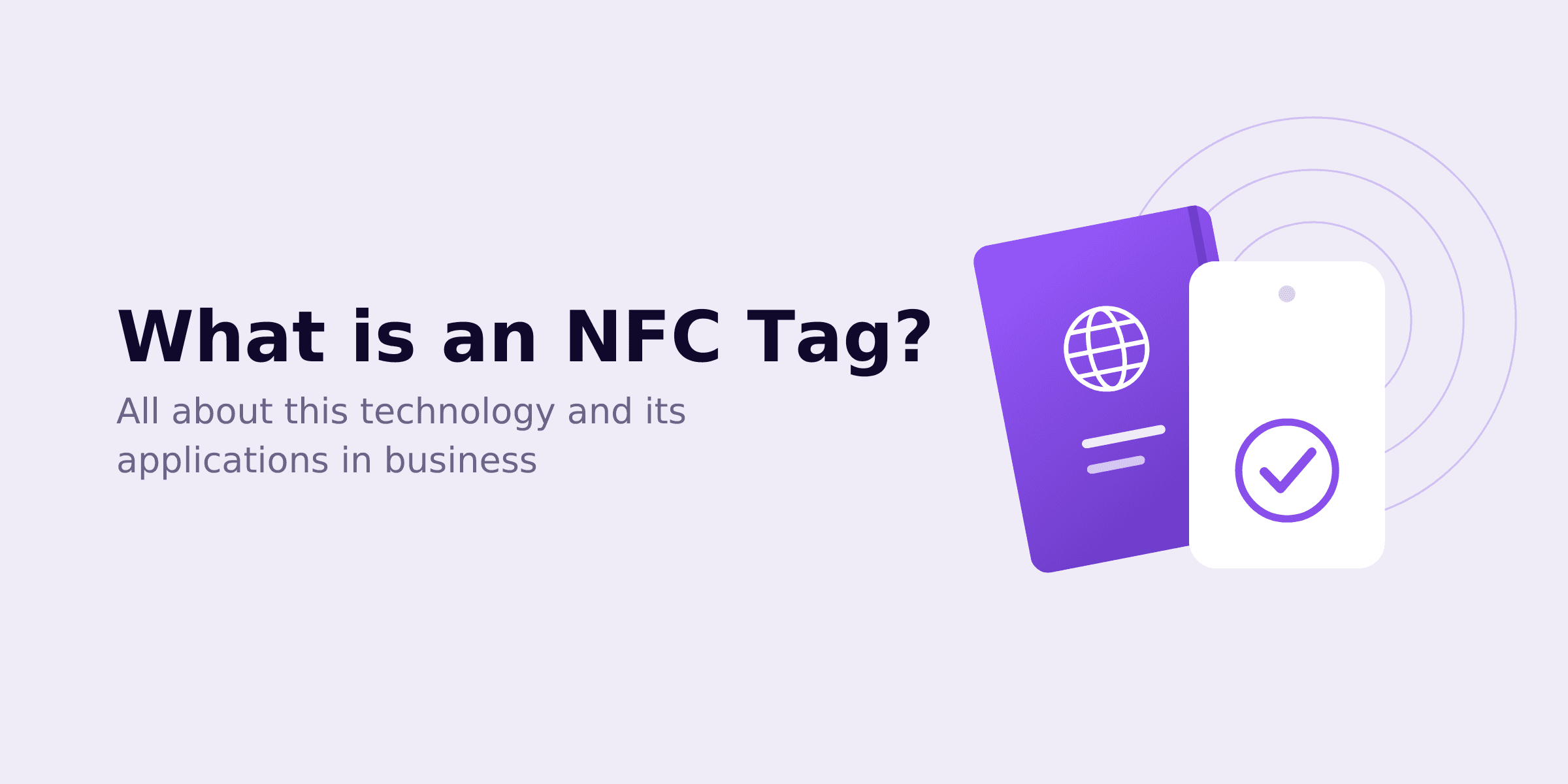
An NFC tag is a small electronic device that stores data and transmits it wirelessly to an NFC-enabled reader. In physical terms, a tag consists of two components: a microchip that holds the stored information and an antenna coil that enables wireless communication. These components are typically embedded in a thin substrate such as a sticker, card, wristband, or document.
The NFC tag meaning is straightforward: it is a passive data carrier that uses near-field communication to exchange information with a compatible device at close range. "Passive" is a key distinction. Unlike a smartphone or a Bluetooth beacon, an NFC tag has no battery and no independent power source. It draws the energy it needs from the electromagnetic field generated by the reading device. When an NFC-enabled phone or reader comes within range, the reader's field powers the tag's chip, which then transmits its stored data back to the reader.
This passive design makes NFC tags inexpensive to produce, virtually maintenance-free (no battery to replace), and durable enough to remain functional for years. Tags can be embedded in product packaging, printed on labels, laminated into cards, or integrated into the polycarbonate body of an identity document. The data stored on a tag can range from a simple URL or text string to encrypted biometric information and cryptographic certificates, depending on the tag type and its intended application.
How NFC Technology Works
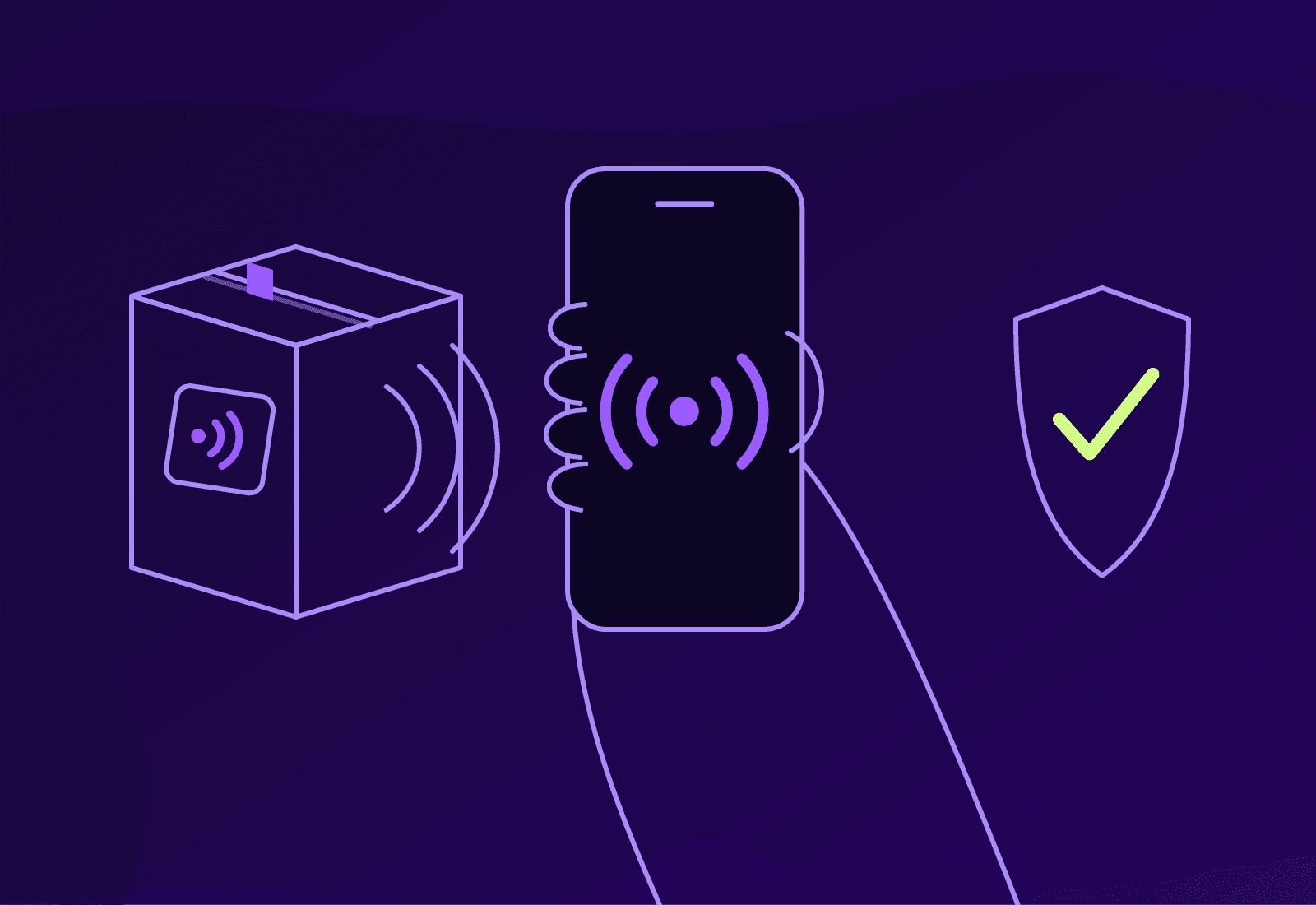
Near-field communication is a short-range wireless communication standard that operates at 13.56 MHz, the same high-frequency band used by contactless smart cards. NFC is technically a subset of the broader radio-frequency identification (RFID) family, but it is defined by specific characteristics that distinguish it from other RFID implementations.
The communication process relies on electromagnetic induction. When an NFC reader (such as a smartphone) is brought within range of an NFC tag, the reader generates an alternating electromagnetic field through its antenna. The tag's antenna coil enters this field, and the changing magnetic flux induces an electrical current in the tag's circuit. This induced current powers the tag's microchip, which then modulates the field to transmit its stored data back to the reader. The entire exchange happens in milliseconds.
The effective operating range for NFC is typically 4 to 10 centimeters. This short range is a deliberate design feature, not a limitation. For applications involving payment credentials, access control, or identity data, requiring physical proximity between the tag and reader significantly reduces the risk of unauthorized interception compared to longer-range wireless protocols.
NFC devices operate in three distinct modes. In reader/writer mode, an active device (typically a smartphone) reads data from or writes data to a passive tag. In peer-to-peer mode, two active NFC devices exchange data directly, as when two phones share a contact card. In card emulation mode, an NFC-enabled device mimics a contactless smart card, which is how mobile payment services such as Apple Pay and Google Pay function. The reader at the payment terminal treats the phone as if it were a physical contactless card.
Data exchanged between NFC devices follows the NFC Data Exchange Format (NDEF), a standardized message structure defined by the NFC Forum. NDEF messages can contain URIs, plain text, MIME-type data, or application-specific records, providing a common format that ensures interoperability across devices and tag types.
NFC vs. RFID: Key Differences
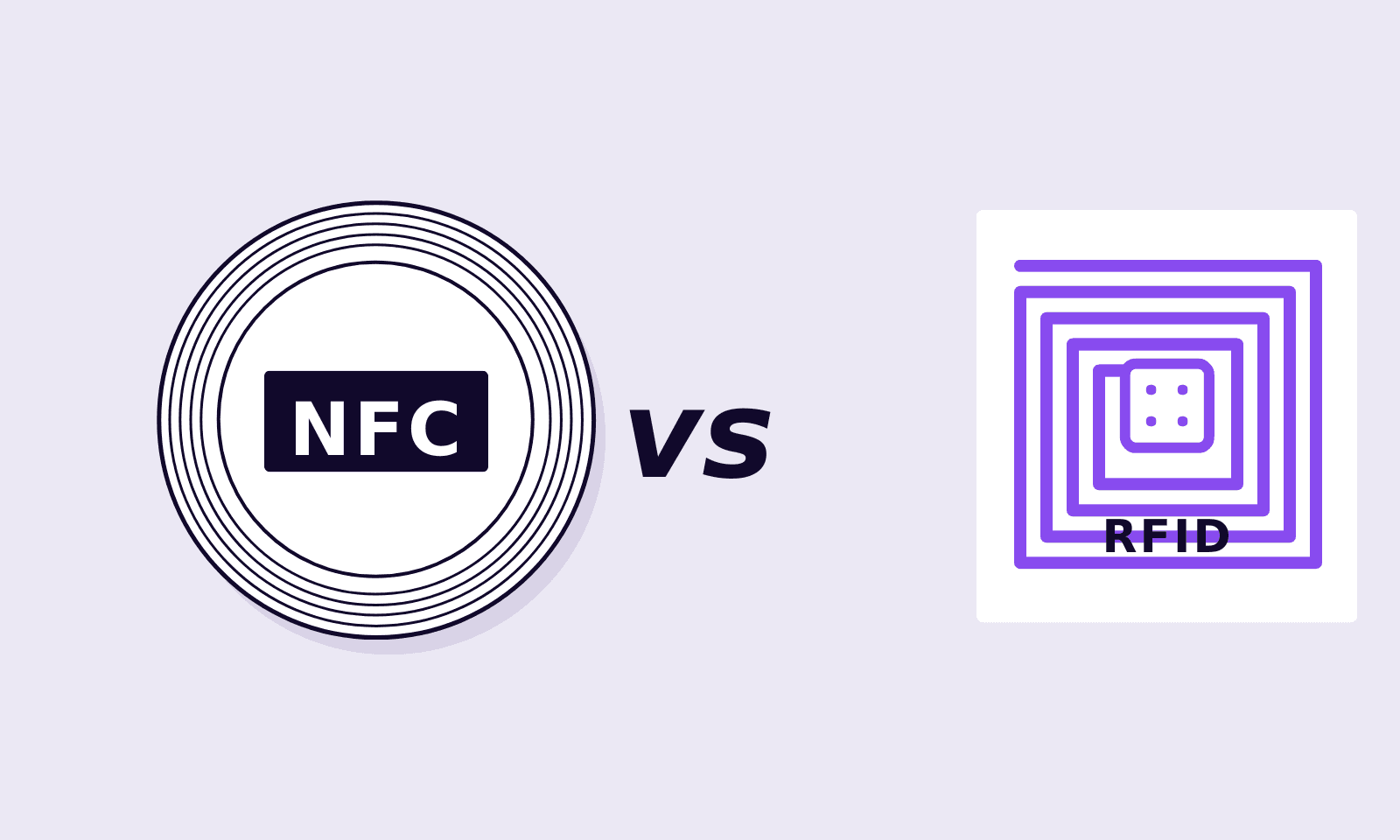
NFC and RFID are related but not interchangeable. RFID is the broader technology family that encompasses any system using radio waves to identify and track objects. NFC is a specific implementation within that family, optimized for close-range, interactive communication between devices.
The differences are significant in practice. RFID systems operate across multiple frequency bands: low frequency (125-134 kHz), high frequency (13.56 MHz), and ultra-high frequency (860-960 MHz). UHF RFID tags can be read at distances of several meters, which makes them suitable for warehouse inventory tracking, supply chain logistics, and asset management. NFC operates exclusively at 13.56 MHz and is limited to centimeter-range communication.
RFID communication is typically unidirectional. A reader interrogates a tag, and the tag responds. NFC supports bidirectional communication, enabling two active devices to exchange data in both directions. This two-way capability is what makes NFC suitable for interactive applications like payment authorization, where the terminal and the phone need to exchange cryptographic challenges and responses.
The security implications of these differences matter for identity applications. An RFID tag that can be read from several meters away is inherently more vulnerable to unauthorized scanning. NFC's centimeter-range requirement means that reading a tag requires deliberate physical proximity, providing a baseline level of access control before any software security measures are applied.
Types of NFC Tags
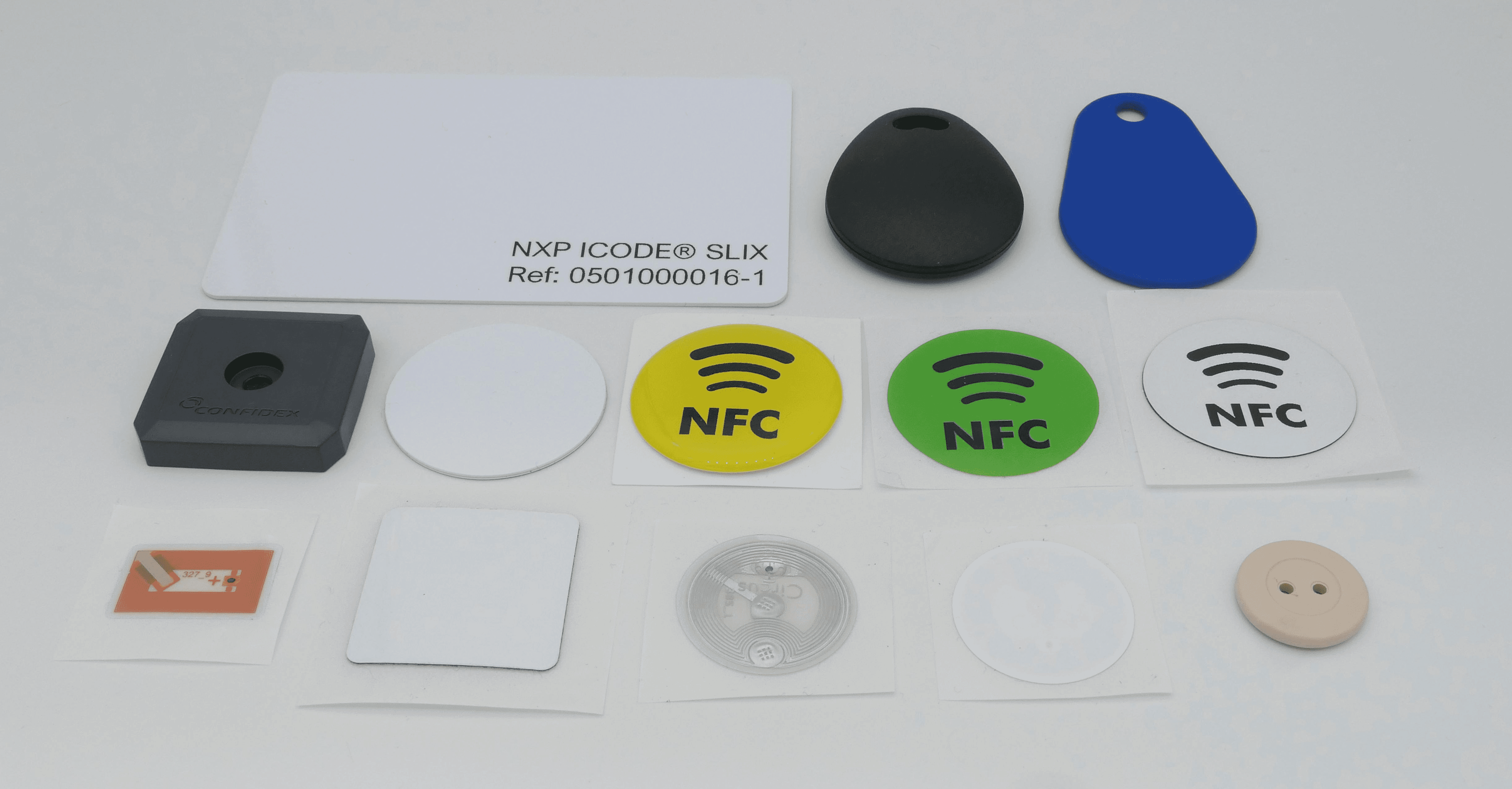
The NFC Forum defines five standardized tag types, each with different memory capacities, data transfer speeds, and security capabilities. The tag types are built on two underlying ISO standards: ISO 14443 (Types 1 through 4) and ISO 15693 (Type 5).
Type 1 and Type 2 Tags
Type 1 tags offer basic functionality with small memory capacities (typically 96 bytes to 2 KB) and modest data transfer speeds. They are rewritable and among the least expensive NFC tags to produce, making them suitable for simple applications like embedding a URL in a marketing poster or storing a Wi-Fi network credential.
Type 2 tags are the most widely deployed NFC tag type. Based on the NXP NTAG family, they offer memory capacities ranging from 48 bytes to approximately 888 bytes, with faster communication speeds than Type 1. Their low cost and reliability make them the standard choice for consumer applications: product packaging, smart labels, event wristbands, and home automation triggers.
Type 3 and Type 4 Tags
Type 3 tags are based on the Sony FeliCa standard and are widely used in Japan and other parts of Asia for transit cards and electronic payment systems. They offer higher data transfer rates and larger memory capacity than Types 1 and 2, but are more expensive to produce.
Type 4 tags represent the high end of NFC tag capability. Based on the ISO 14443A/B standard, they support memory sizes up to 32 KB, higher communication speeds, and advanced security features including cryptographic authentication and access control. Type 4 tags can be configured as read-only or read/write, and they support multiple applications on a single tag. This is the tag architecture used in contactless payment cards and, critically, in the NFC chips embedded in identity documents such as e-passports and national ID cards. The security capabilities of Type 4 tags enable the cryptographic signing and mutual authentication protocols that make NFC-based document verification possible.
Type 5 Tags
Type 5 tags operate under the ISO 15693 standard, which provides a slightly longer communication range than the ISO 14443-based types. They are used in industrial applications, pharmaceutical supply chain tracking, and specialized environments where the additional range (up to 1.5 meters with industrial readers) is beneficial. Their memory capacity can reach 64 KB, and they support both single-block and multi-block read/write operations.
Common Uses of NFC Tags
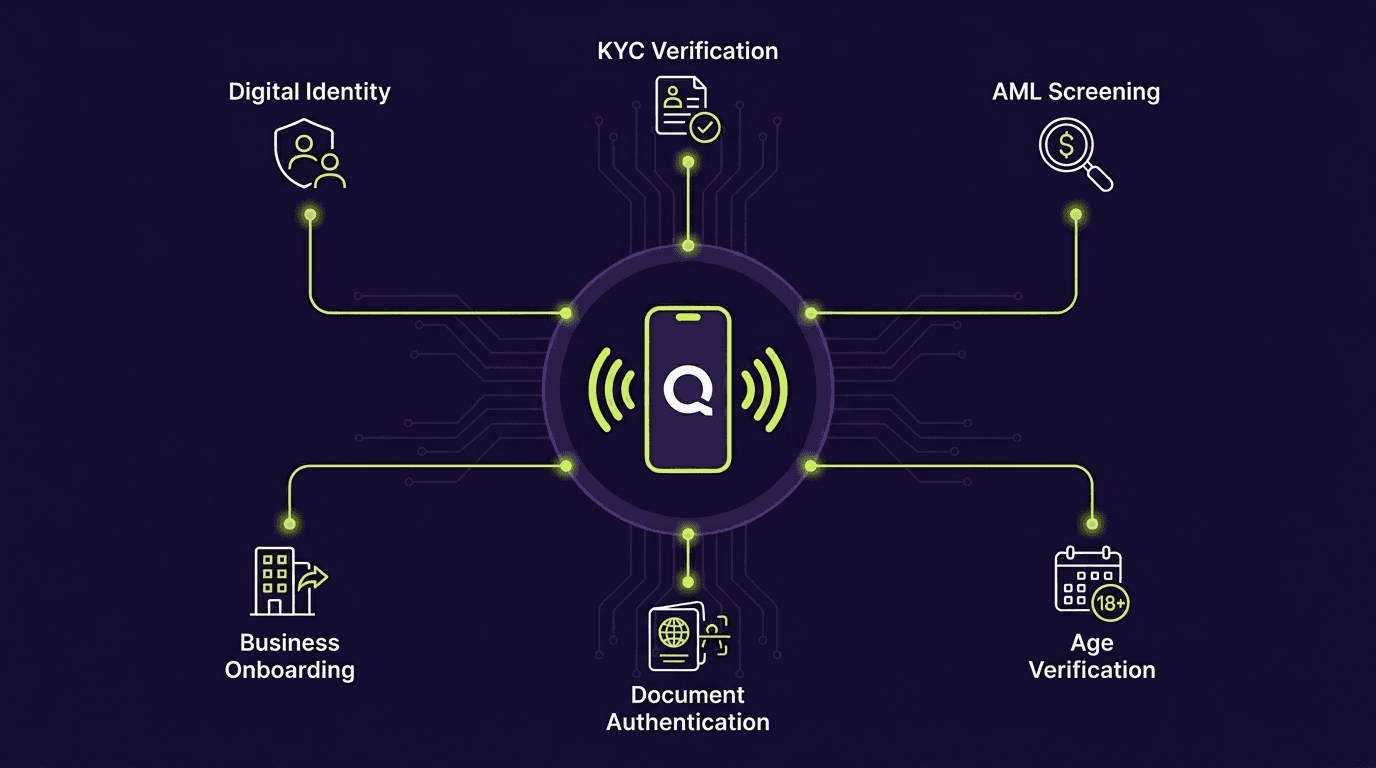
Contactless Payments
The most visible NFC application is contactless payment. When a customer holds a payment card or smartphone near a point-of-sale terminal, the NFC chip in the card (or the card emulation function in the phone) communicates with the terminal's reader to authorize the transaction. The exchange is encrypted and tokenized, meaning the actual card number is never transmitted. This payment infrastructure processes billions of transactions annually across Visa, Mastercard, and regional payment networks.
Access Control and Smart Home
NFC tags are used extensively in physical access control systems. Employee badges, hotel key cards, and building access tokens use NFC to authenticate the holder against a centralized access management system. In consumer settings, programmable NFC tags can trigger smartphone automations: tapping a tag on a nightstand can activate a "sleep mode" routine that dims lights, sets an alarm, and enables do-not-disturb settings.
Marketing and Product Authentication
Brands embed NFC tags in product packaging to provide customers with direct access to product information, warranty registration, or promotional content through a single tap. In luxury goods and pharmaceuticals, NFC tags serve an anti-counterfeiting function by linking each physical product to a unique digital identity that can be verified by the consumer or retailer.
Identity Documents and Travel
This is where NFC's security capabilities become most consequential. Over 150 countries now issue e-passports that contain an NFC chip storing the holder's biometric photograph, biographical data, and in many cases fingerprint templates. The data on the chip is digitally signed by the issuing country's document signer, and that signature can be validated against a public key infrastructure maintained by ICAO (the International Civil Aviation Organization).
National ID cards and residence permits in the European Union, the UAE, Singapore, and many other jurisdictions use the same chip architecture. For regulated businesses, this creates an opportunity to verify document authenticity with a level of certainty that no visual inspection or template-matching algorithm can match.
NFC in Identity Verification
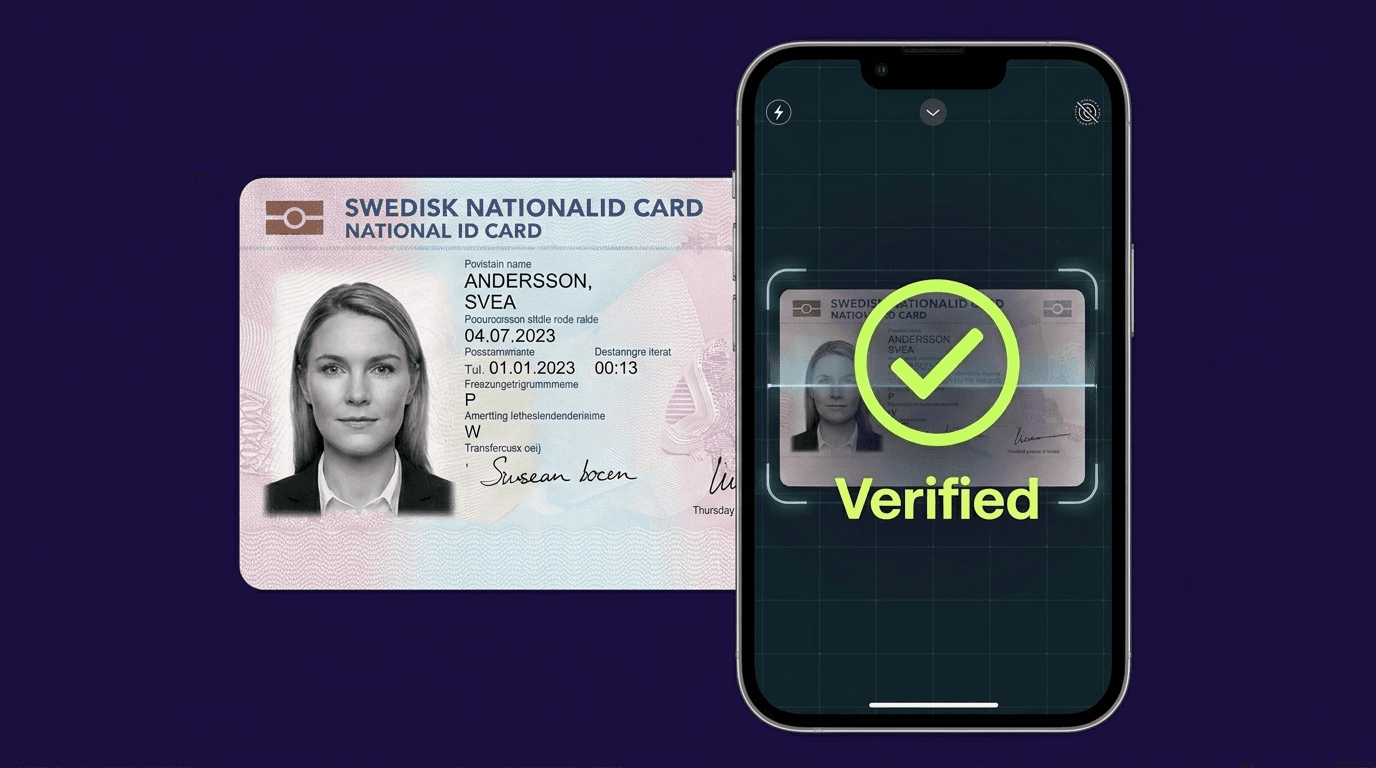
The NFC chip in an e-passport or national ID card is not simply a storage device. It is a secure element that implements multiple layers of cryptographic protection to ensure that the data it contains is authentic, unaltered, and readable only under controlled conditions.
The chip stores a defined set of data groups specified by the ICAO Document 9303 standard: the holder's facial image (Data Group 2), biographical data matching the machine-readable zone (Data Group 1), and optionally additional biometric data such as fingerprints (Data Group 3).
Each data group is individually hashed, and the collection of hashes is signed by the issuing country's Document Signer certificate. This signature chain links back to the country's Certificate Signing Authority, which is registered with ICAO's Public Key Directory.
When a verification system reads an NFC-enabled document, it performs several checks. Passive Authentication validates the digital signature on the chip data, confirming that the data was written by the legitimate issuing authority and has not been modified since issuance. Active Authentication (or its successor, Chip Authentication) confirms that the chip itself is genuine and not a clone.
Basic Access Control (BAC) or Password Authenticated Connection Establishment (PACE) ensures that the chip data cannot be read without first optically scanning the document's machine-readable zone, which provides the session key for encrypted communication.
The practical result is that NFC chip verification provides a definitive document authenticity check. A counterfeit passport can replicate the physical appearance of a genuine document, including holograms, UV features, and microprinting. It cannot reproduce a valid cryptographic signature issued by a national Certificate Signing Authority. This makes NFC verification the single most reliable method for distinguishing a genuine identity document from a forgery, whether that forgery is a physical counterfeit or an AI-generated document image.
For regulated businesses performing KYC onboarding, NFC verification addresses a specific compliance challenge: confirming document authenticity using an independent and reliable source. FATF Recommendations require exactly this, and NFC chip reading satisfies the requirement with a level of technical certainty that document image analysis alone cannot provide.
NFC Security: Strengths and Considerations
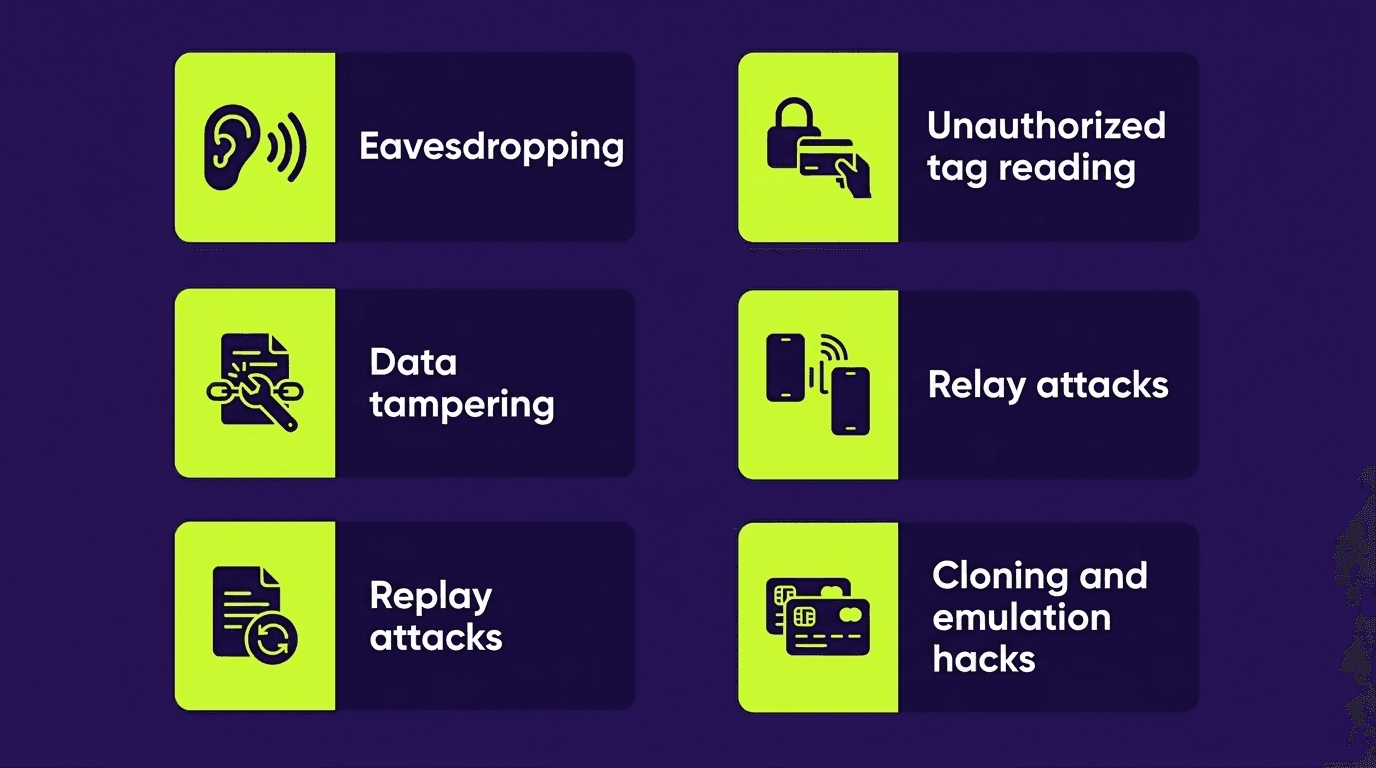
NFC's security profile begins with its physical characteristics. The centimeter-range communication requirement means that an attacker would need to position a reader within touching distance of the tag to intercept data. This makes passive eavesdropping significantly more difficult than with longer-range wireless protocols.
Beyond physical proximity, the NFC protocols used in identity documents implement layered cryptographic protections. BAC and PACE prevent unauthorized reading of the chip by requiring knowledge of data printed on the document (typically the document number, date of birth, and expiry date from the MRZ). Without this information, the chip will not establish a communication session. All data exchanged between the chip and reader during a session is encrypted using session-specific keys derived during the authentication handshake.
Common concerns about NFC security include eavesdropping (intercepting the communication between tag and reader), relay attacks (extending the communication range using intermediary devices), and data skimming (reading chip data without the holder's knowledge). In practice, these attack vectors are significantly constrained.
Eavesdropping requires proximity to an active communication session and the ability to decrypt session-encrypted data. Relay attacks require real-time coordination between two devices and are defeated by distance-bounding protocols. Data skimming of identity document chips is prevented by BAC/PACE, which requires optical access to the document's MRZ before any data can be read.
For identity verification applications specifically, the data on the chip is signed and can be verified but not modified. Even if an attacker could read the chip data (which BAC/PACE is designed to prevent), they could not alter it or create a chip with a valid signature from a different issuing authority. The security model is built on the assumption that the chip will be read, and ensures that the data's integrity and provenance can be cryptographically verified regardless.
FAQ
What is an NFC tag in simple terms?
What does "NFC tag detected" mean on my phone?
What is the difference between NFC and Bluetooth?
Can NFC tags be hacked?
How is NFC used in passports and ID cards?
Can NFC verification detect fake IDs?
Qoobiss ONTRACE integrates NFC chip reading into its identity verification workflow, extracting cryptographically signed data from e-passports and chip-enabled national ID cards during customer onboarding. The platform validates the chip's digital signature against the issuing country's certificate chain, cross-references chip data against the document's printed and machine-readable information, and combines NFC verification with biometric facial matching and liveness detection to deliver multi-layered document authentication. For regulated businesses, NFC chip reading through ONTRACE provides the highest available level of document authenticity assurance, satisfying KYC requirements with cryptographic certainty.
Request a demo at qoobiss.com to see how NFC verification fits into your onboarding workflow.