Biometric Passport: What It Is, How It Works, and Why It Matters

If you’ve renewed your passport in the last decade, there’s a strong chance you’re already carrying a biometric passport, whether you realize it or not. More than 150 countries now issue them, and border control systems worldwide increasingly depend on the embedded chip rather than a manual page-by-page inspection.
Yet most travelers have only a vague sense of what their passport’s chip actually stores, how it protects against fraud, or why certain countries now require one for entry. For businesses that verify identity documents as part of customer onboarding, the distinction between a biometric and a non-biometric passport has direct implications for how reliably they can authenticate a person.
This guide covers the biometric passport meaning in full, from the technology inside the chip to the practical question of whether your passport qualifies, and what these documents mean for both travelers and organizations handling identity verification.
What Is a Biometric Passport?
A biometric passport, also called an e-passport or electronic passport, is a travel document embedded with a small RFID (Radio-Frequency Identification) chip that stores the holder’s personal and biometric data digitally. The biometric passport meaning extends beyond a simple upgrade: it represents a fundamental shift in how governments authenticate travelers and how border agencies verify identity in real time.
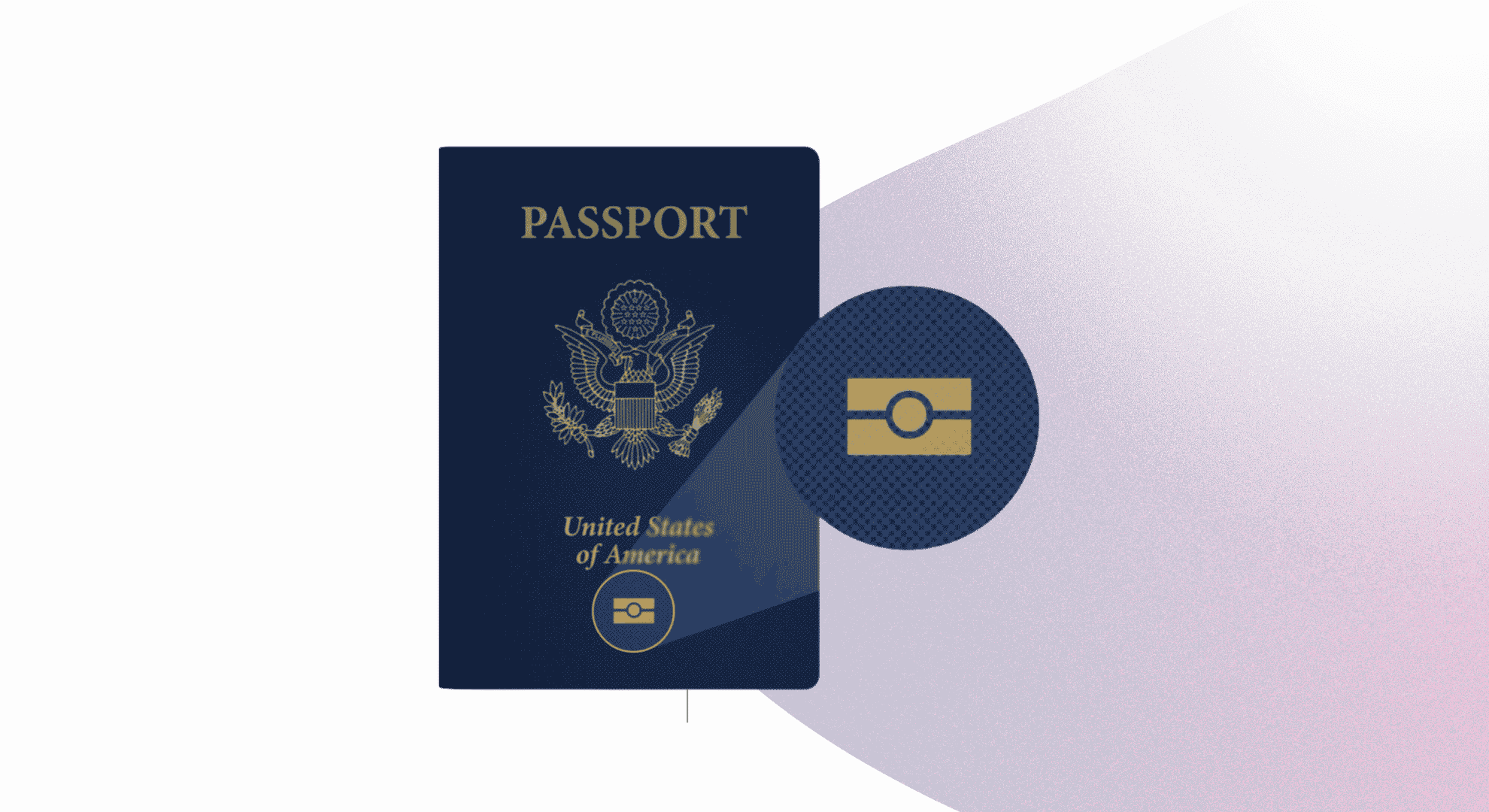
So what is a biometric passport in practical terms? It looks almost identical to a traditional passport. The key difference is invisible: a microchip, typically embedded in the front cover or data page, that holds a digital version of your photograph, your biographical details (name, date of birth, nationality, passport number), and in some countries, fingerprints or iris scan data.
This data is digitally signed by the issuing country’s authority, meaning any tampering with the chip’s contents can be detected at the point of inspection. Unlike a printed passport page, where a skilled forger can swap a photograph or alter text, the digital signature on a biometric chip creates a cryptographic seal that breaks if anything is modified.
So what's a biometric passport in the simplest terms? It’s a standard passport with a chip that makes forgery vastly more difficult. What does a biometric passport mean for everyday travelers? Faster processing at e-gates, stronger protection against identity theft, and an increasingly necessary credential for visa-free travel programs. Understanding biometric passport technology helps explain why governments have invested heavily in the transition.
How to Know If Your Passport Is Biometric
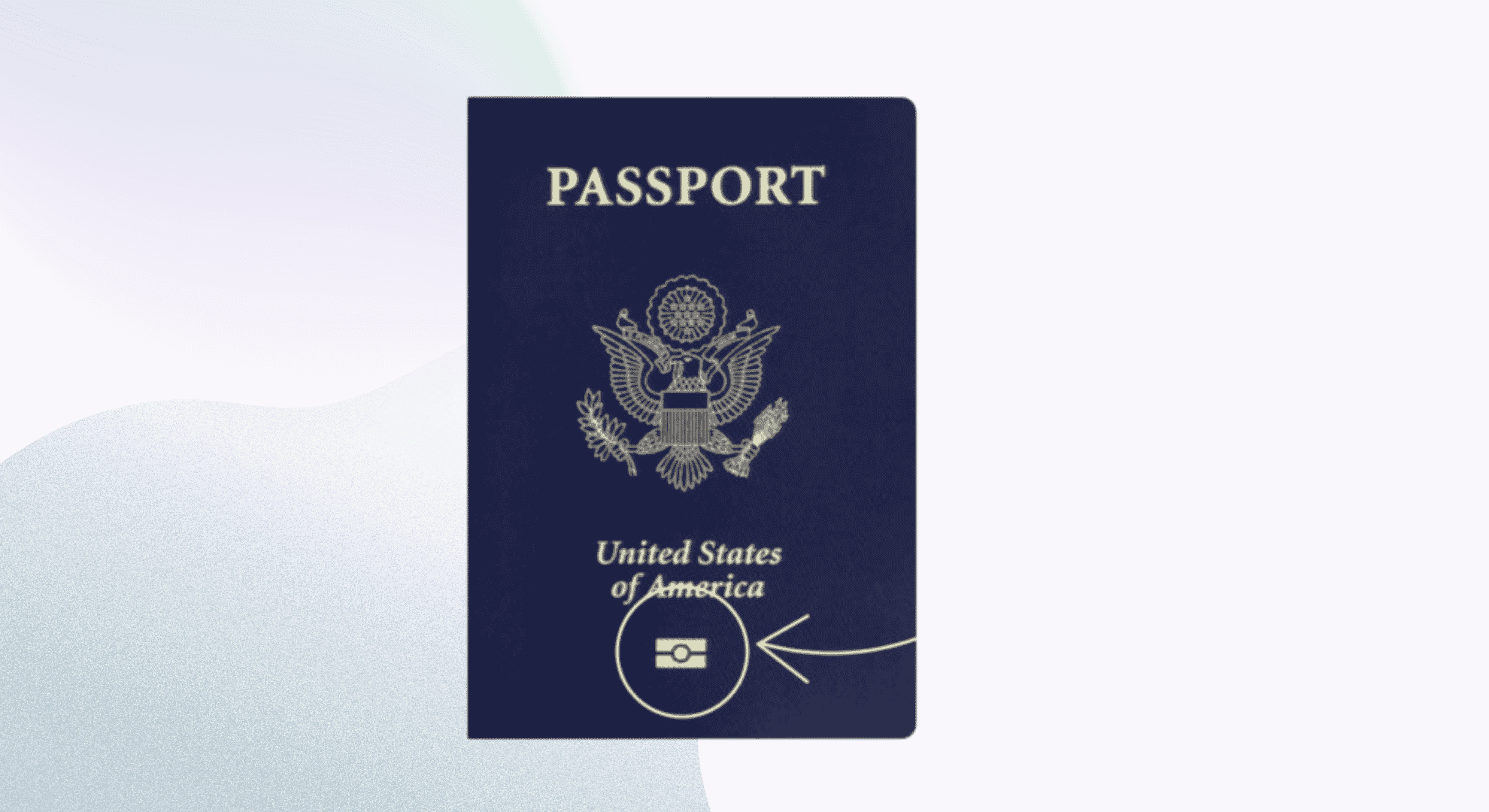
The easiest way to tell: look at the front cover. Every biometric passport carries a standardized symbol: a small gold rectangle with a circle inside, resembling a simplified camera or chip icon. If your passport displays this mark, it contains an electronic chip.
If you’re wondering “is my passport biometric?” and hold a US passport issued after August 2007, the answer is yes; every US passport produced since then includes a biometric chip. The same applies to UK passports issued since 2010, and the vast majority of EU, Canadian, Australian, and Japanese passports issued in the past 15 years.
For those asking “do I have a biometric passport?” without the cover handy, check the data page. Many biometric passports print the chip symbol there as well. Some passport reader mobile apps can also detect the chip by holding your phone’s NFC sensor against the passport cover; if it reads data, the chip is present.
How to know if a passport is biometric when you hold one from a less common issuing country? The ICAO (International Civil Aviation Organization) maintains a public directory of countries that have adopted e-passport standards. If your country appears on the list and your passport was issued within the relevant timeframe, it’s almost certainly biometric.
How the Biometric Chip Works
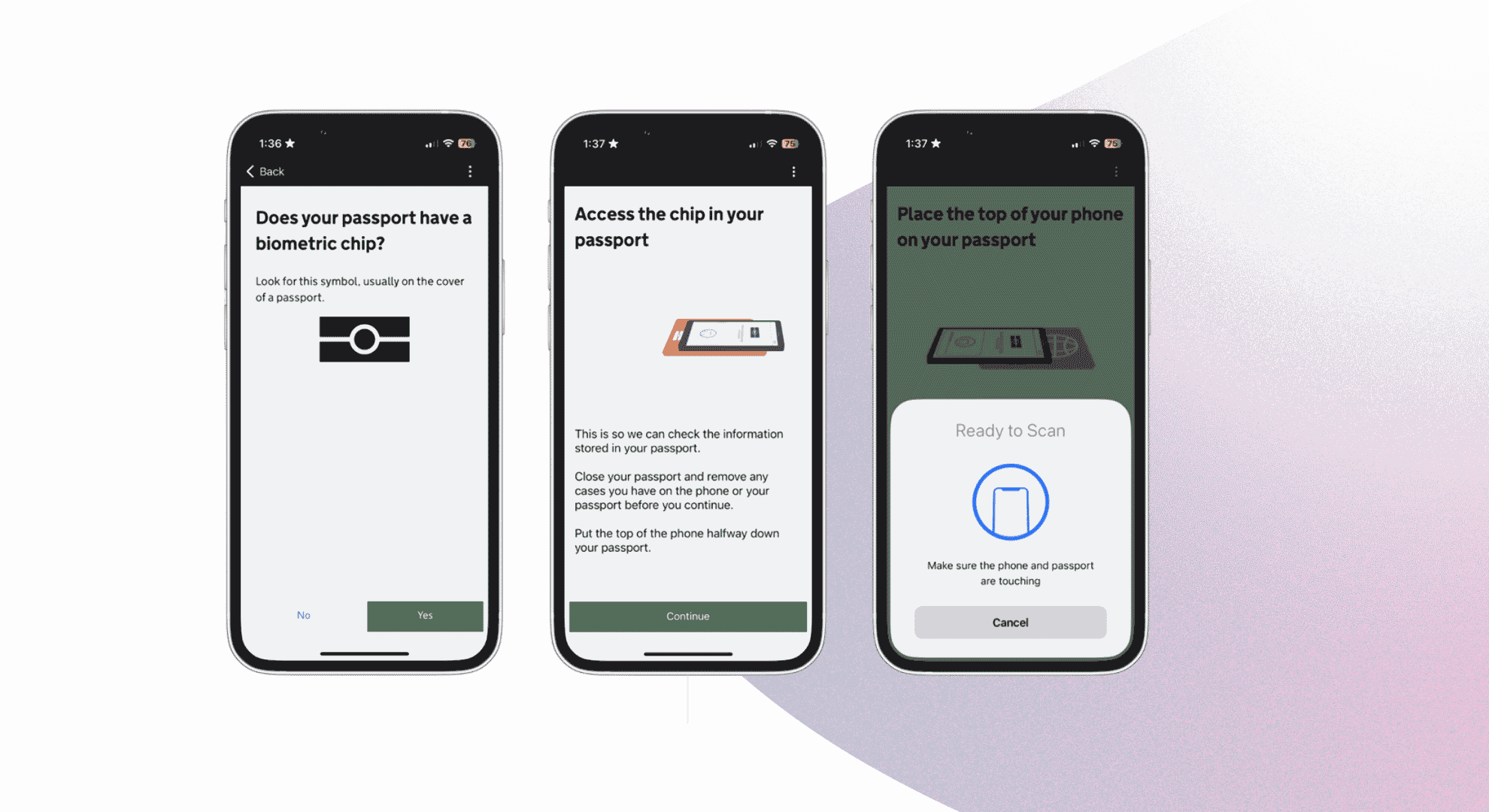
The passport biometric chip is a contactless integrated circuit that communicates via NFC (Near-Field Communication), the same technology behind tap-to-pay cards. When held against a compatible reader at a border checkpoint or e-gate, the chip transmits its stored data without any physical connection.
Here’s what happens during a scan. The reader powers the chip through electromagnetic induction; there’s no battery inside the passport. The chip then transmits its data payload, which conforms to ICAO Document 9303, the international standard governing machine-readable travel documents.
This payload typically includes the machine-readable zone (MRZ) data (the two lines of text at the bottom of your data page), a high-resolution digital photograph, and optionally, fingerprint templates or iris data depending on the issuing country.
To prevent unauthorized reading, biometric passports implement access control protocols. Basic Access Control (BAC) requires the reader to first optically scan the MRZ data before the chip will release its contents, meaning someone can’t simply scan your passport through a bag. The newer Password Authenticated Connection Establishment (PACE) protocol offers even stronger protection using encrypted communication.
The issuing authority’s digital signature is the final layer. Each chip carries a certificate chain that lets the reader cryptographically verify that the data was produced by a legitimate government and hasn't been altered since issuance. This is what makes the biometric chip passport fundamentally more secure than any printed document.
Biometric Passport vs. Machine-Readable Passport
Not all machine-readable passports are biometric, and the distinction matters, both for travelers and for organizations that verify identity documents. A biometric versus machine readable passport comparison clarifies what each offers:
Feature | Biometric Passport (e-Passport) | Machine-Readable Passport (MRP) |
Data storage | RFID/NFC chip + printed data page | Printed data page + MRZ only |
Biometric data | Digital photo, fingerprints, iris (varies by country) | None stored electronically |
Security level | High: digital signature, encrypted chip, clone detection | Moderate: relies on physical security features |
E-gate compatibility | Yes: automated border control | No: requires manual inspection |
Forgery resistance | Very high: chip tampering detectable via cryptography | Lower: printed pages can be altered |
ICAO compliance | Meets Doc 9303 electronic standards | Meets Doc 9303 MRZ standards only |
Global adoption | 150+ countries, required for many visa-free programs | Still valid but being phased out |
The practical difference for travelers: biometric passports unlock automated border crossings, meet Visa Waiver Program requirements (such as the US ESTA), and are increasingly required for programs like the EU’s ETIAS. A machine-readable passport still works for international travel in most cases, but it closes doors to expedited processing and certain visa-free entry schemes.
For businesses conducting identity verification, the distinction is more consequential. An e-passport chip can be read and cryptographically validated through NFC, providing a level of document authentication that no amount of visual inspection can match.
Security Features and Fraud Prevention
Biometric passports were designed explicitly to address the vulnerabilities of traditional travel documents. The security architecture operates across multiple layers.
At the physical level, the chip itself is tamper-evident; attempts to remove or replace it damage the passport irreversibly. The antenna connecting the chip to the NFC interface is woven into the passport’s structure, making extraction without destruction effectively impossible.
At the data level, digital signatures prevent any modification to the stored information. If a single byte of data is changed, a character in the name, or a pixel in the photograph, the signature validation fails, and the document is flagged as compromised. Active Authentication (AA) takes this further by having the chip prove it’s the original (not a clone) through a challenge-response protocol using an on-chip private key that cannot be extracted.
These protections matter because passport fraud remains a persistent threat. Stolen and altered travel documents are used in human trafficking, terrorism financing, and illegal immigration. Biometric passports significantly raise the bar; while a printed page can be altered by a skilled forger, duplicating or modifying a cryptographically signed chip requires capabilities that are orders of magnitude more difficult to obtain.
Biometric Passports in the United States
Is a US passport biometric? Yes, and has been for nearly two decades. The United States has issued biometric passports exclusively since August 2007, making it one of the earlier adopters. Every current US passport book contains an RFID chip embedded in the front cover. US passport cards, however, use a different RFID technology (vicinity-read) and do not contain biometric data in the same format; they are not considered e-passports under ICAO standards.
Does a US passport have biometric chip data beyond the photograph? Specifically, does the US biometric passport store fingerprints? No. Unlike some European and Asian countries, the US e-passport chip stores only the holder’s digital photograph, biographical data, and the MRZ information. No fingerprint or iris data is recorded on the chip. Fingerprints collected during the passport application process are used for background checks but are not embedded in the document itself.
For US travelers heading to Europe, biometric passports are becoming more than a convenience; they are approaching a requirement. The EU’s ETIAS (European Travel Information and Authorisation System), expected to become mandatory for visa-exempt travelers including Americans, will operate alongside the EES (Entry/Exit System) that uses biometric data captured at the border. A biometric passport USA travelers already carry will streamline this process significantly.
Which Countries Issue Biometric Passports?
As of 2026, more than 150 countries issue biometric passports conforming to ICAO Document 9303 standards. Adoption has accelerated sharply over the past decade, driven by international security agreements, visa-free travel requirements, and the operational efficiency of automated border control.
Key adoption milestones include Malaysia, which became the first country to issue biometric passports in 1998, followed by the United States in 2007, the United Kingdom in 2010, India beginning its phased rollout in 2021, and the European Union, where all member states now issue e-passports with mandatory fingerprint storage under EU Regulation 2019/1157.
Spain’s October 2025 implementation of the EU Entry/Exit System marked a significant milestone, requiring biometric verification at Schengen borders and effectively making non-biometric passports a friction point for entry. Similar systems are rolling out across all Schengen member states.
For travelers, the practical advice is simple: if your passport was issued in the last ten to fifteen years by any major country, it’s almost certainly biometric. If it isn’t, or if it’s approaching expiration, renewing now avoids potential complications as biometric requirements tighten globally.
How Biometric Passports Affect Identity Verification for Businesses
For organizations that verify identity as part of customer onboarding, banks, fintechs, crypto exchanges, insurance providers, biometric passports represent a step change in document authentication reliability.
Traditional document verification relies on visual inspection or optical character recognition (OCR) of the data page. This approach catches obvious forgeries but struggles with high-quality fakes where the printed information looks legitimate. NFC-based chip verification eliminates this weakness entirely. By reading the passport’s chip and validating its digital signature against the issuing country’s public key infrastructure, a verification platform can confirm with cryptographic certainty that the document is genuine and unaltered.
The benefits extend beyond fraud prevention. Chip-based verification extracts data directly from the source, eliminating OCR errors that plague scanned document workflows. The high-resolution digital photograph stored on the chip enables more accurate biometric facial matching during selfie-based verification steps. And because the chip data is structured and standardized, it integrates cleanly into automated KYC pipelines without the parsing ambiguities that arise from photographed or scanned data pages.
For regulated businesses operating under KYC and AML obligations, leveraging biometric passport chips isn’t just a technology upgrade; it’s a compliance advantage. It produces stronger audit trails, reduces false rejection rates, and accelerates onboarding without compromising verification integrity.
Biometric Passport - FAQ
Is my US passport biometric?
How do I know if my passport is biometric?
Enter Your Question
What’s the difference between a biometric and a machine-readable passport?
Can the biometric chip be hacked or skimmed?
Do I need a biometric passport to travel to Europe?
What biometric data does my passport store?