Deepfakes Explained: How They Threaten Identity Verification and How to Detect Them

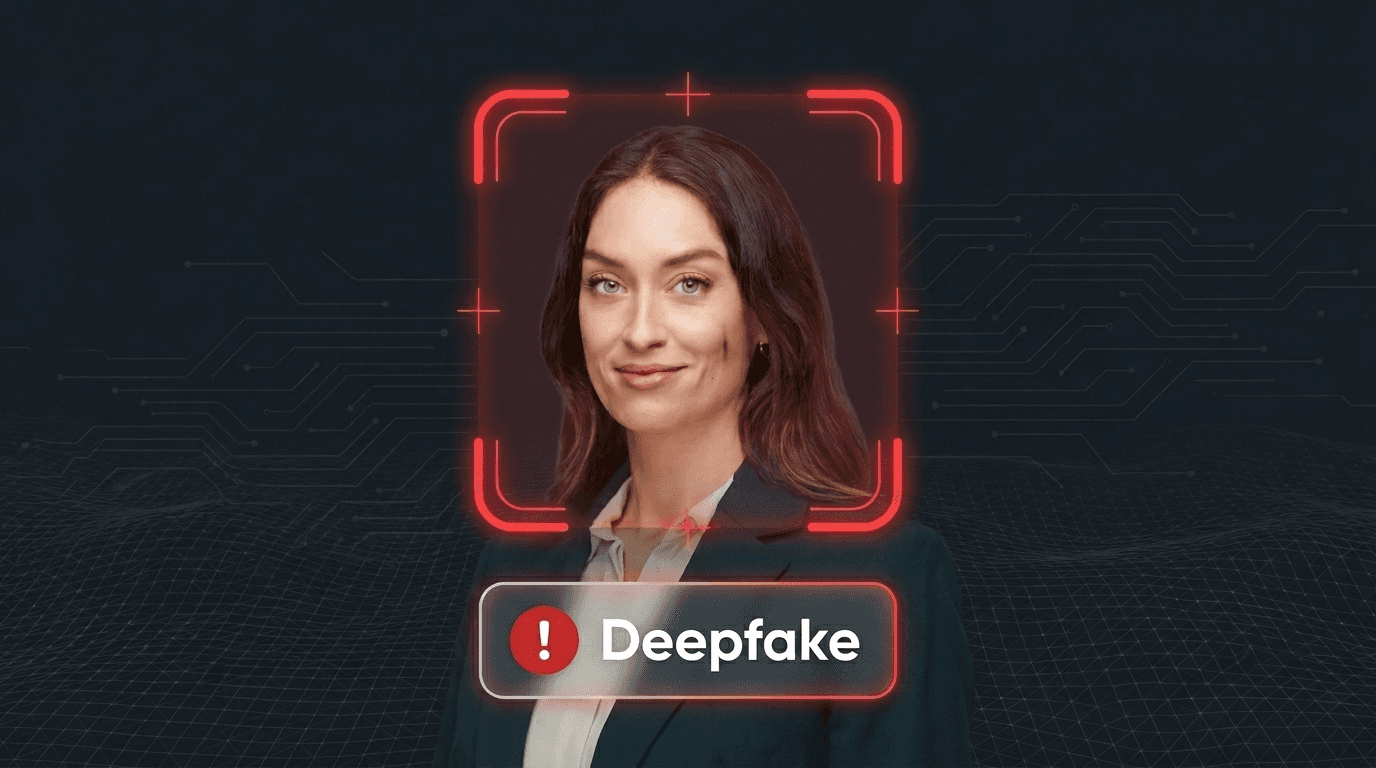
What required a research team, specialized hardware, and weeks of computation five years ago can now be produced in minutes with consumer-grade tools. Deepfakes have evolved from a niche technical curiosity into one of the most consequential threats facing businesses that rely on digital identity verification to onboard customers, authenticate transactions, and meet compliance obligations.
The numbers reflect the scale of the problem. Data from iProov's 2024 Threat Intelligence Report documented a 1,151 percent increase in injection attacks over a single year. The US Department of Homeland Security has published dedicated advisories on the increasing threat of deepfake identities. Europol has identified deepfakes as a growing challenge for law enforcement across the EU. For regulated businesses performing identity verification, deepfakes are not a hypothetical future risk. They are an operational reality that verification systems must be engineered to withstand.
This guide covers what deepfakes are, how the underlying technology works, the types of deepfakes that threaten identity verification, how deepfake attacks target each layer of the verification process, the methods used to detect them, and the evolving legal landscape around deepfake regulation.
What Are Deepfakes?
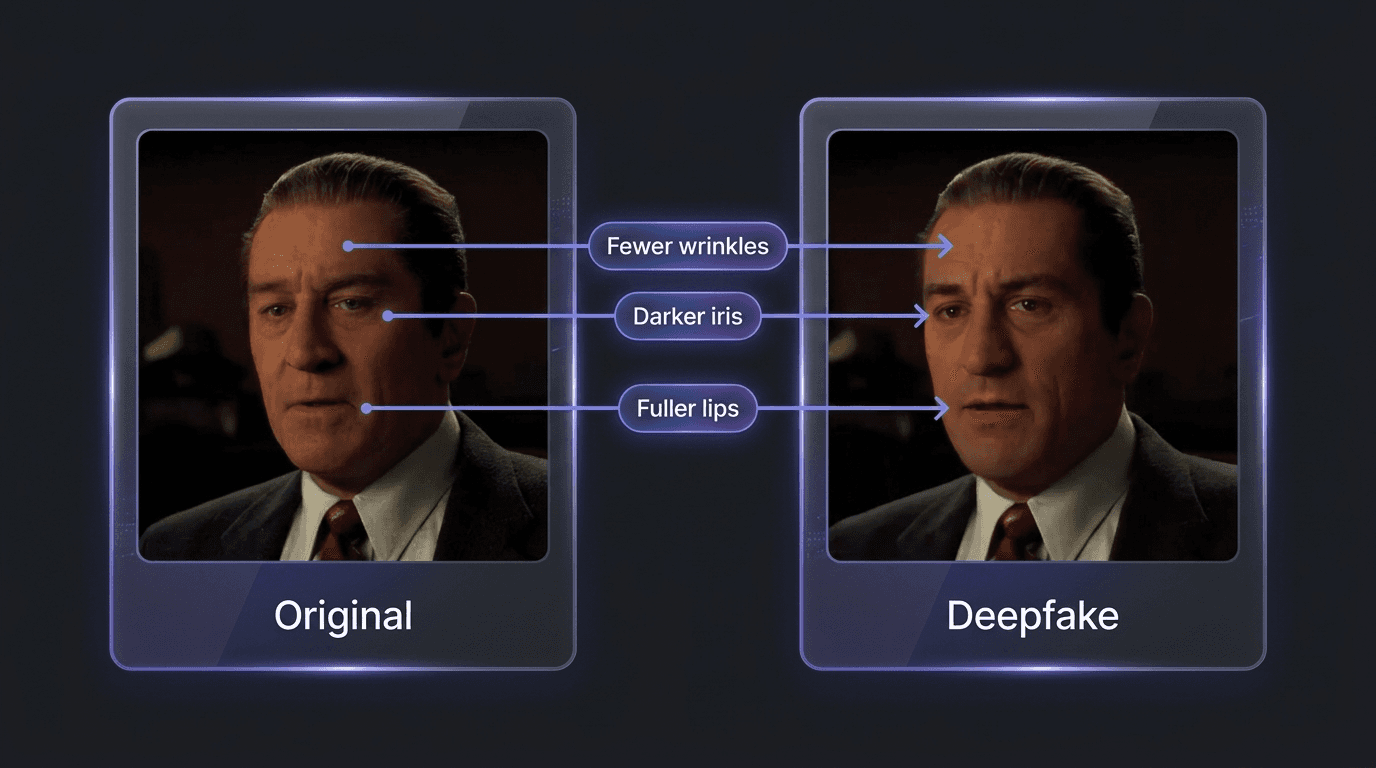
A deepfake is synthetic media, including video, audio, or images, generated or manipulated by artificial intelligence to depict something that did not actually occur. The deepfakes definition encompasses any AI-generated content that convincingly portrays a person saying or doing something they never said or did, or that creates entirely fictional identities that appear photorealistic.
The term was coined in 2017 on Reddit, combining "deep learning" (the class of AI algorithms that powers the technology) with "fake." Early deepfakes were primarily face-swap videos that superimposed one person's face onto another's body in existing footage. Since then, the technology has expanded to include voice cloning, full-body synthesis, AI-generated static images, and synthetic document generation.
What distinguishes deepfakes from traditional image or video manipulation is the role of machine learning. Conventional photo editing requires manual, pixel-level work by a skilled operator. Deepfake technology automates the process through neural networks that learn the visual and auditory characteristics of a target and generate synthetic output that is increasingly indistinguishable from authentic media at human-perception level. This automation is what makes deepfakes scalable: producing one convincing deepfake with a trained model takes minutes, not days.
The deepfakes meaning in a business context extends beyond misinformation and entertainment. For regulated businesses, deepfakes represent a direct attack vector against the identity verification systems that protect customer onboarding, biometric authentication, and compliance workflows.
How Deepfake Technology Works
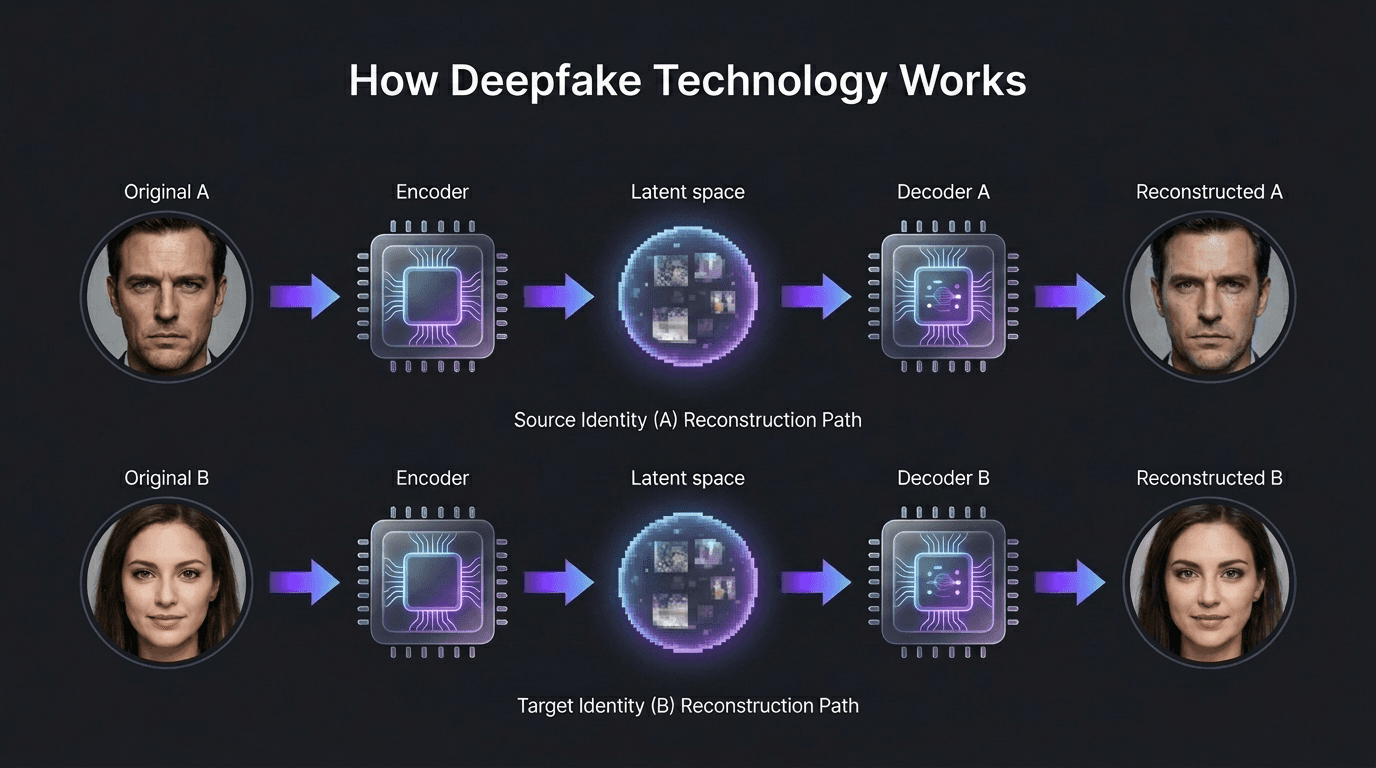
The technical foundation of deepfake generation has evolved through several generations of AI architecture, each producing more convincing results than the last.
Generative Adversarial Networks (GANs) were the first AI architecture widely used for deepfake creation. A GAN consists of two competing neural networks: a generator that creates synthetic content and a discriminator that evaluates whether the content is real or fake. The generator produces increasingly realistic output as it learns from the discriminator's feedback. Through thousands of training iterations, the generator improves until the discriminator can no longer reliably distinguish synthetic content from genuine samples. This adversarial training process is what gives deepfakes their name: the "deep" refers to deep learning, and the competitive dynamic between generator and discriminator drives the quality of the output.
Autoencoders and variational autoencoders are commonly used for face-swapping deepfakes. These models learn to compress a person's facial features into a compact mathematical representation (encoding) and then reconstruct the face from that representation (decoding). By training separate encoders on different faces but sharing a common decoder, the system can reconstruct one person's expressions and movements using another person's facial identity. This architecture is the basis of many face-swap tools that are now freely available online.
Diffusion models represent the newest generation of generative AI. Unlike GANs, diffusion models work by gradually adding noise to training data and then learning to reverse the process, generating new content by progressively denoising random input. Diffusion models have demonstrated superior image quality and training stability compared to GANs, and they are increasingly being applied to video generation as well.
The training process for all these architectures follows a common pattern: the model is fed sample images, video, or audio of a target person and learns the distinguishing characteristics of their face, expressions, voice, or mannerisms. With sufficient training data (which can be as little as a few minutes of video or a handful of photographs), the model can generate synthetic content that reproduces those characteristics in new contexts. The barrier to entry continues to fall as pre-trained models, open-source tools, and cloud-based compute make high-quality deepfake generation accessible to anyone with basic technical literacy.
Types of Deepfakes
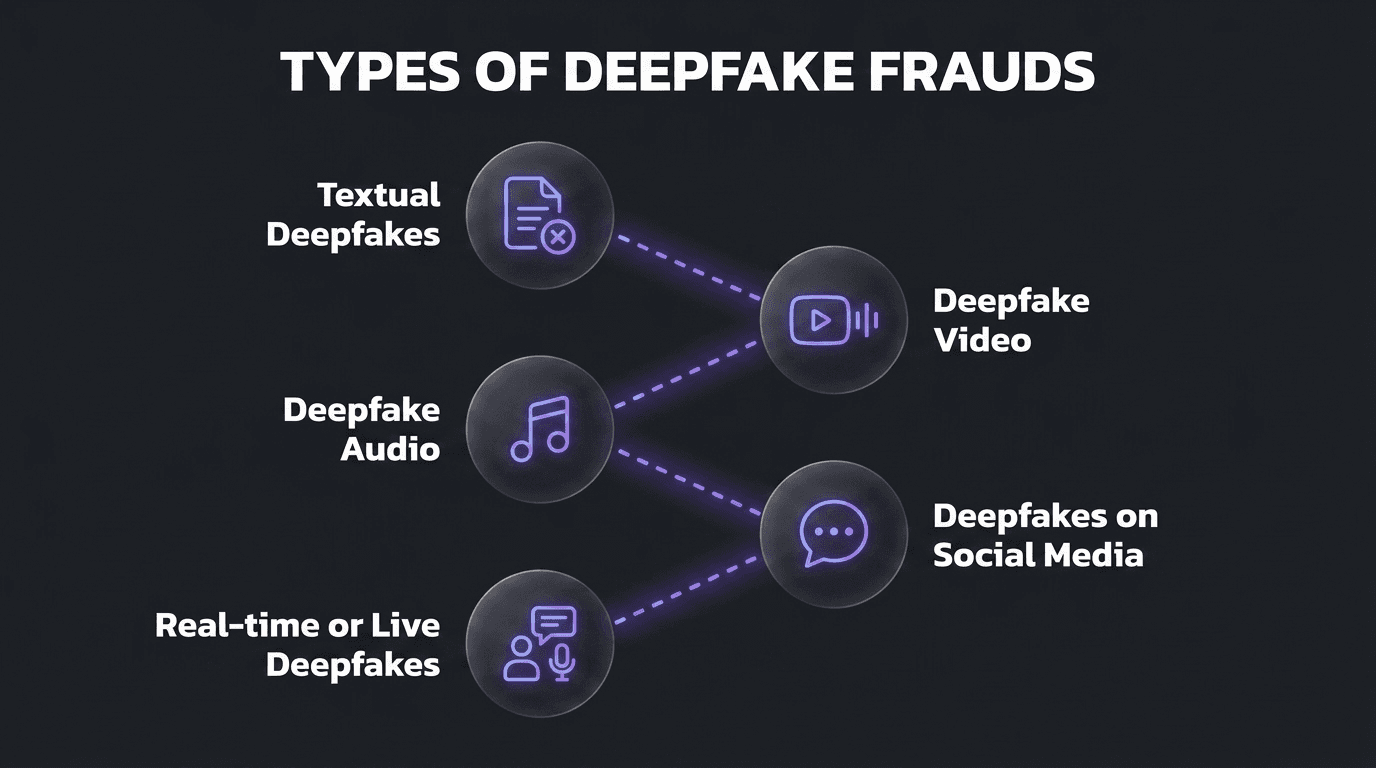
Face Swap
Face-swap deepfakes replace one person's face with another in video or photographic content. The target's facial identity (their appearance, skin texture, facial structure) is mapped onto the source person's head movements, expressions, and body. Modern face-swap deepfakes maintain consistent lighting, shadow, and perspective, making them difficult to detect through casual observation.
Face Reenactment
Face reenactment deepfakes manipulate the expressions, lip movements, and head orientation of a target person's face in existing footage. Unlike face swaps, which replace the entire face, reenactment deepfakes keep the target's identity but alter what they appear to be saying or expressing. This technique is particularly effective for creating videos of public figures appearing to make statements they never made.
Voice Cloning
Voice cloning deepfakes synthesize speech that mimics a target speaker's vocal characteristics, including pitch, cadence, accent, and speech patterns. Modern voice cloning systems can produce convincing reproductions from as little as a few seconds of sample audio. Voice deepfakes are used in social engineering attacks, where a cloned voice of a CEO or senior executive instructs an employee to authorize a payment or transfer funds.
Synthetic Document Generation
AI-generated identity documents represent a distinct and particularly dangerous category of deepfake for regulated businesses. Generative AI models can produce photorealistic images of passports, driver's licenses, and national ID cards without any physical document being created. These synthetic documents replicate the layout, typography, security feature patterns, and photographic characteristics of genuine documents. The OnlyFake case in early 2024 demonstrated this at scale, with an online service producing AI-generated identity document images that reportedly passed verification checks on major platforms.
Full Synthetic Identities
Generative AI can create entirely fictional faces that correspond to no real person. These synthetic face images can be paired with fabricated personal information and synthetic documents to construct complete fictitious identities. Unlike stolen or borrowed identities, synthetic identities have no real victim who might notice and report fraudulent activity, making them harder to detect through conventional fraud monitoring.
Deepfakes and Identity Verification: The Threat Landscape
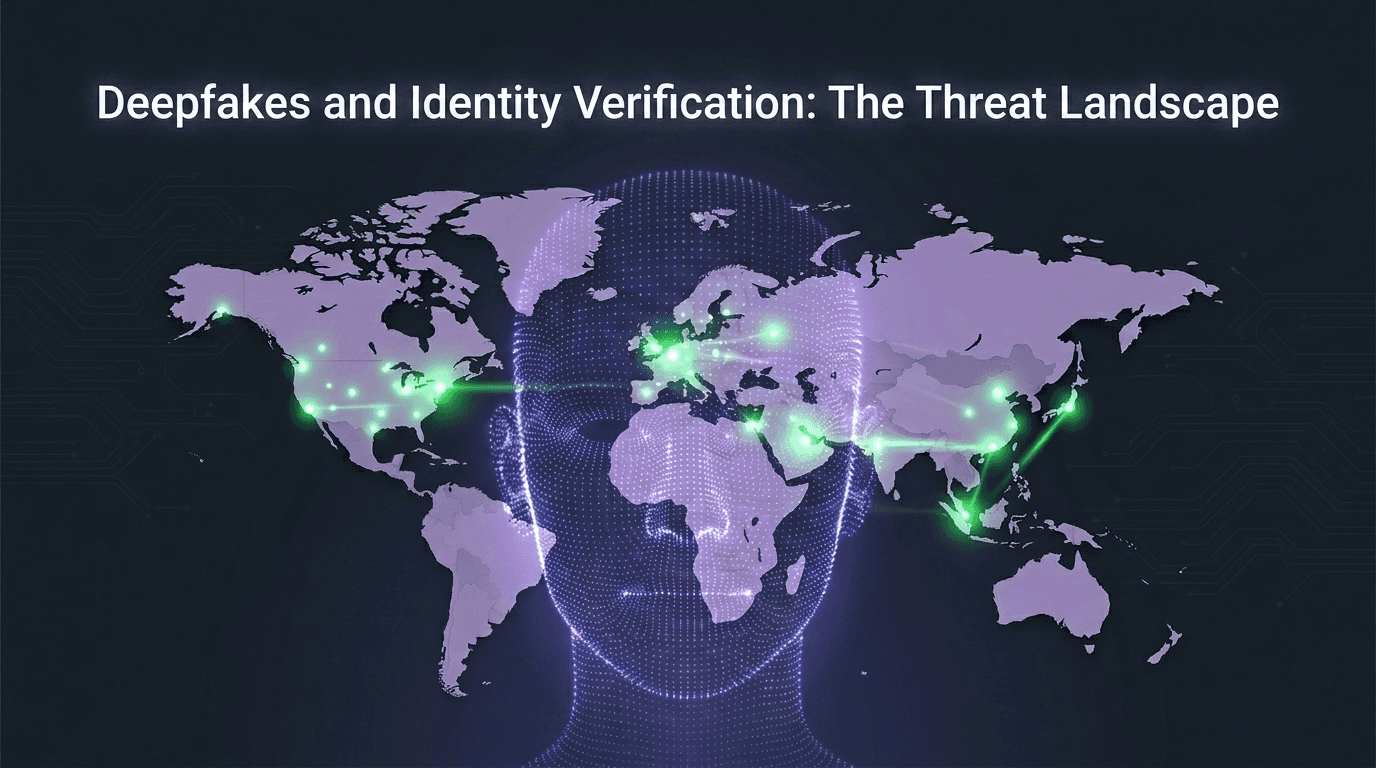
Deepfakes threaten identity verification systems at multiple points in the verification workflow, and the most sophisticated attacks target several layers simultaneously.
Document fraud through synthetic generation. AI-generated document images are submitted during remote onboarding in place of photographs of genuine documents. Because the verification system receives only a digital image (not a physical card), synthetic documents that replicate the expected visual characteristics of a genuine document can pass template-matching and OCR-based checks. This attack exploits the fundamental limitation of image-based document verification: the system sees what the attacker wants it to see.
Biometric spoofing during selfie capture. Face-swap deepfakes are used during the biometric matching step to make the attacker's face appear to match the photograph on a stolen or fabricated identity document. The attacker may use a deepfake overlay in real time during the selfie capture process, or submit a pre-generated deepfake video that matches the document photo.
Liveness detection bypass through injection attacks. This is the most technically sophisticated deepfake attack vector. Instead of presenting a deepfake to the device camera (a presentation attack), injection attacks feed synthetic video directly into the verification pipeline at the software level, bypassing the camera entirely. The verification system receives what appears to be a live camera feed but is actually a pre-rendered deepfake or a manipulated video stream injected through compromised drivers, virtual cameras, or modified application code. Injection attacks defeat presentation-level liveness detection because the synthetic content never passes through the physical capture environment that liveness algorithms are designed to analyze.
Voice deepfakes in call center authentication. For businesses that use voice biometrics to authenticate customers over the phone, voice cloning deepfakes can reproduce a customer's voiceprint with sufficient fidelity to pass automated voice verification systems. This allows attackers to gain access to accounts through telephone banking or customer service channels.
The DHS has explicitly identified deepfake identities as a national security concern, warning that the technology enables identity fraud at a scale and sophistication that existing verification methods were not designed to address. The threat is accelerating because the cost of producing high-quality deepfakes continues to decrease while the quality continues to improve.
How to Detect Deepfakes
Technical Detection Methods
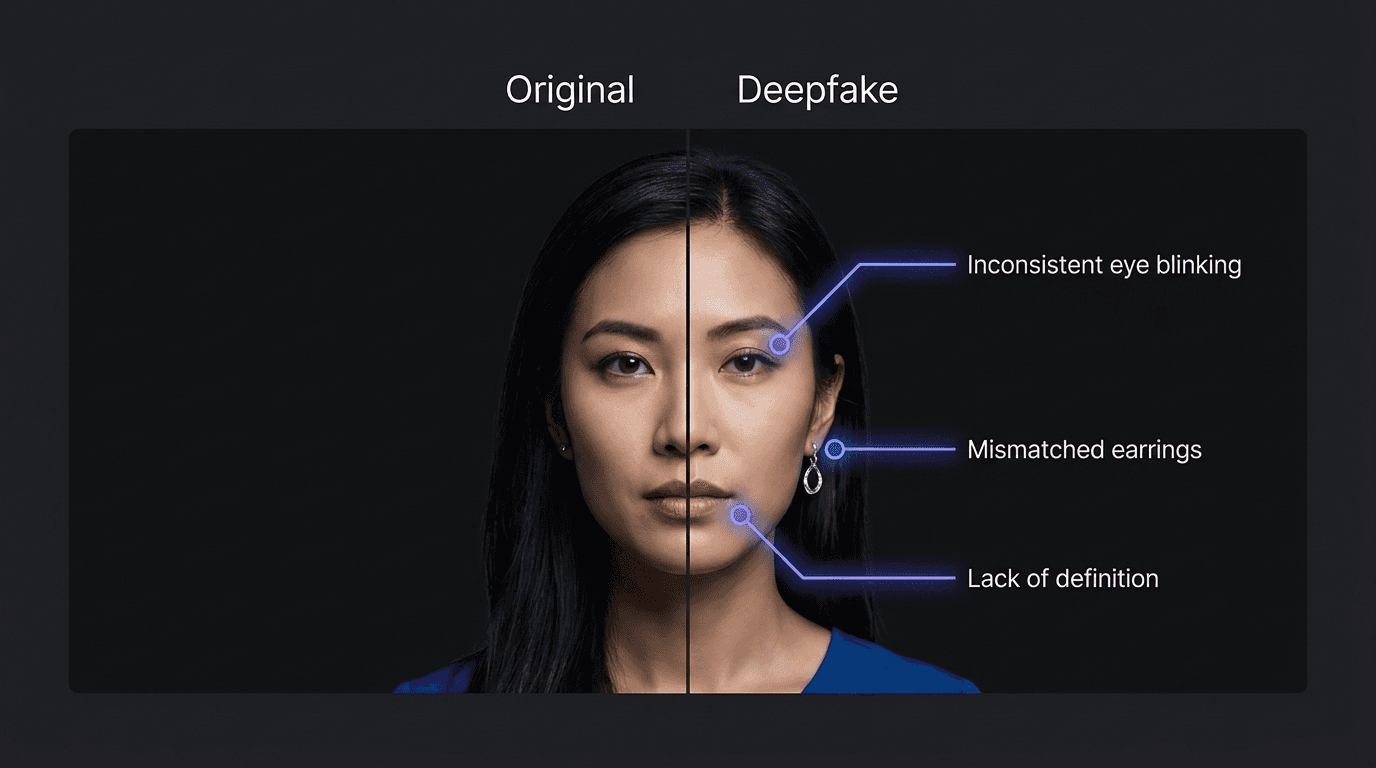
Deepfake detection algorithms analyze synthetic media for artifacts and inconsistencies that are invisible to human observers but detectable through computational analysis. These include temporal inconsistencies in video (unnatural blinking patterns, irregular micro-expressions), frequency-domain artifacts (patterns in the image's spectral decomposition that differ between real and generated content), GAN fingerprints (distinctive noise patterns left by the generator network), and compression artifacts that indicate digital manipulation. Detection models are trained on large datasets of genuine and deepfake samples, learning to identify the statistical signatures that distinguish synthetic content from authentic media.
Liveness Detection as Anti-Deepfake Defense
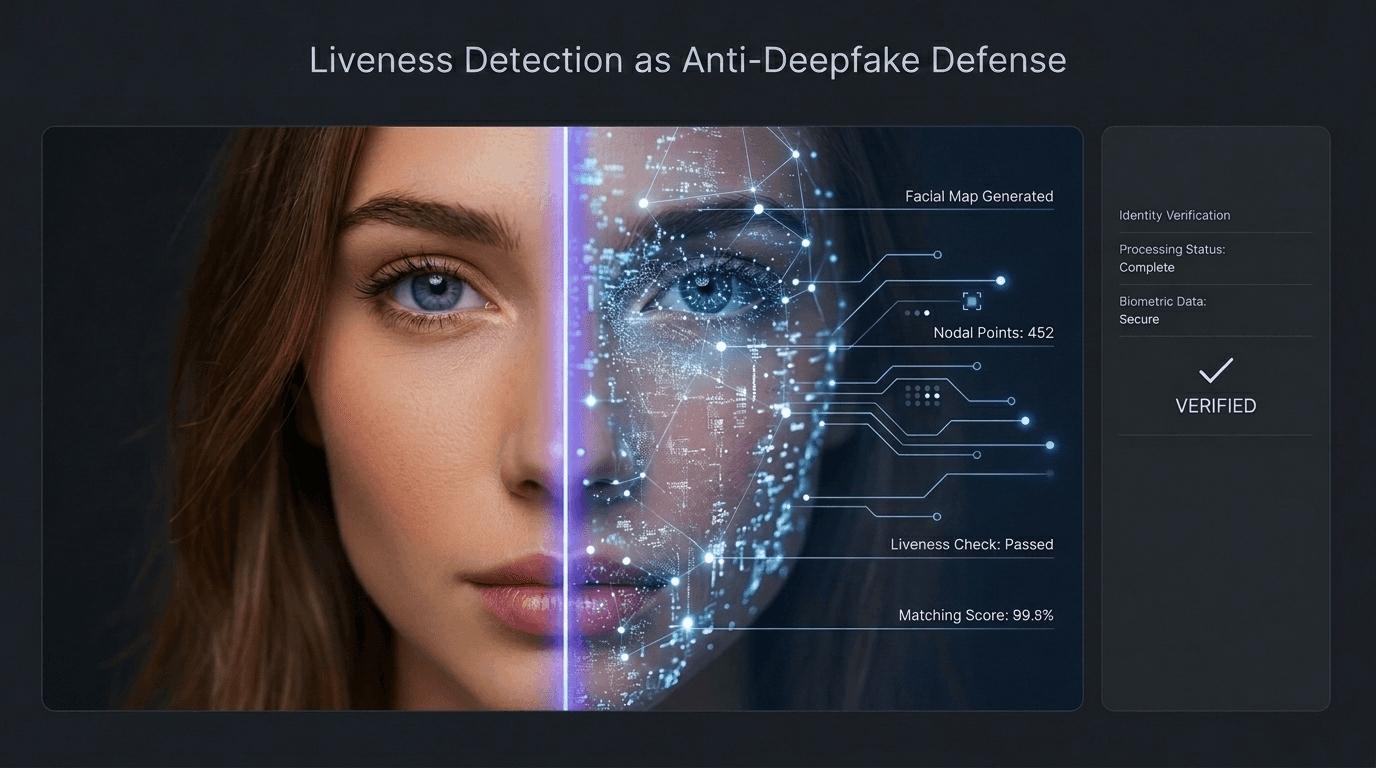
Liveness detection is the primary defense against deepfake presentation attacks in identity verification. Passive liveness analyzes the captured biometric sample for indicators of a live person: skin texture, depth information, micro-movements, light reflection patterns, and other physiological signals that a deepfake overlay or screen replay cannot reproduce. Active liveness prompts the user to perform randomized actions (head turns, blinks, specific expressions) that are difficult for pre-generated deepfakes to anticipate and reproduce in real time.
Advanced liveness detection systems combine both approaches and are specifically trained to identify deepfake artifacts in the captured sample, including the subtle rendering inconsistencies that distinguish AI-generated faces from live human subjects.
Injection Attack Detection
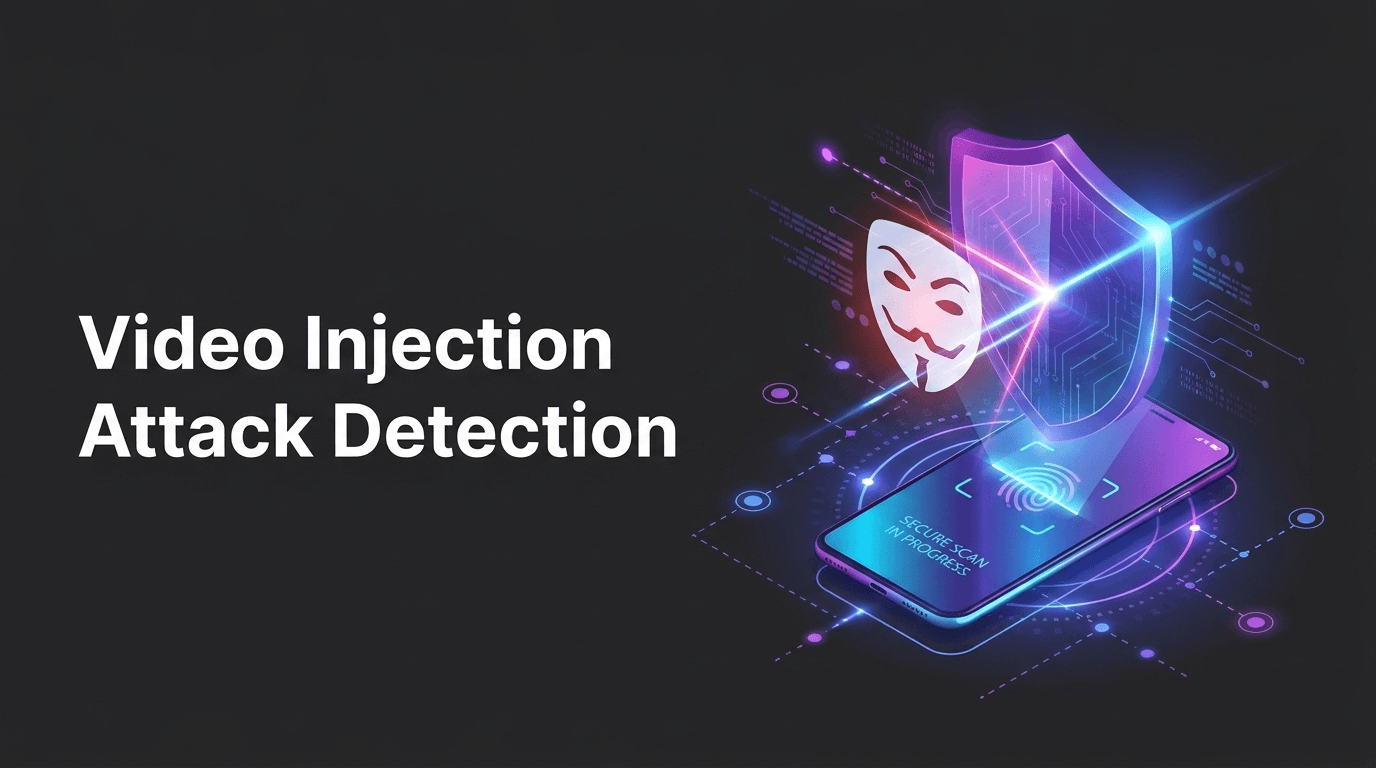
Because injection attacks bypass the device camera, they require detection at a different layer. Injection attack detection analyzes the integrity of the video capture pipeline itself: verifying that the video feed originates from a physical camera sensor rather than a virtual camera or software injection point, checking for signs of stream manipulation at the driver or application level, and validating the cryptographic integrity of the capture chain from sensor to processing.
This is the fastest-growing attack category and the one that requires the most specialized defense. Standard liveness detection, designed to analyze the content of the video feed, is insufficient when the entire feed is synthetic. Detection must confirm the authenticity of the capture source, not just the content.
Multi-Layered Verification
The most effective defense against deepfake attacks in identity verification is a multi-layered approach where defeating one layer is insufficient to compromise the verification. Document analysis detects synthetic document images. Biometric matching with liveness detection catches face-swap presentation attacks. Injection attack detection identifies synthetic video feeds injected into the pipeline. NFC chip reading provides a deepfake-proof verification layer: the cryptographic signature on an e-passport or national ID card cannot be synthesized, forged, or deepfaked regardless of how advanced the generative AI becomes.
Each layer addresses a different attack vector. An attacker who generates a synthetic document image still needs to pass biometric matching. An attacker who deploys a face-swap deepfake still needs to bypass liveness detection. An attacker who mounts an injection attack still cannot produce a valid NFC chip signature. The cumulative effect is a verification process where the cost and complexity of a successful attack increases with each layer, making comprehensive deepfake fraud economically and technically impractical.
Are Deepfakes Illegal? Laws and Regulations
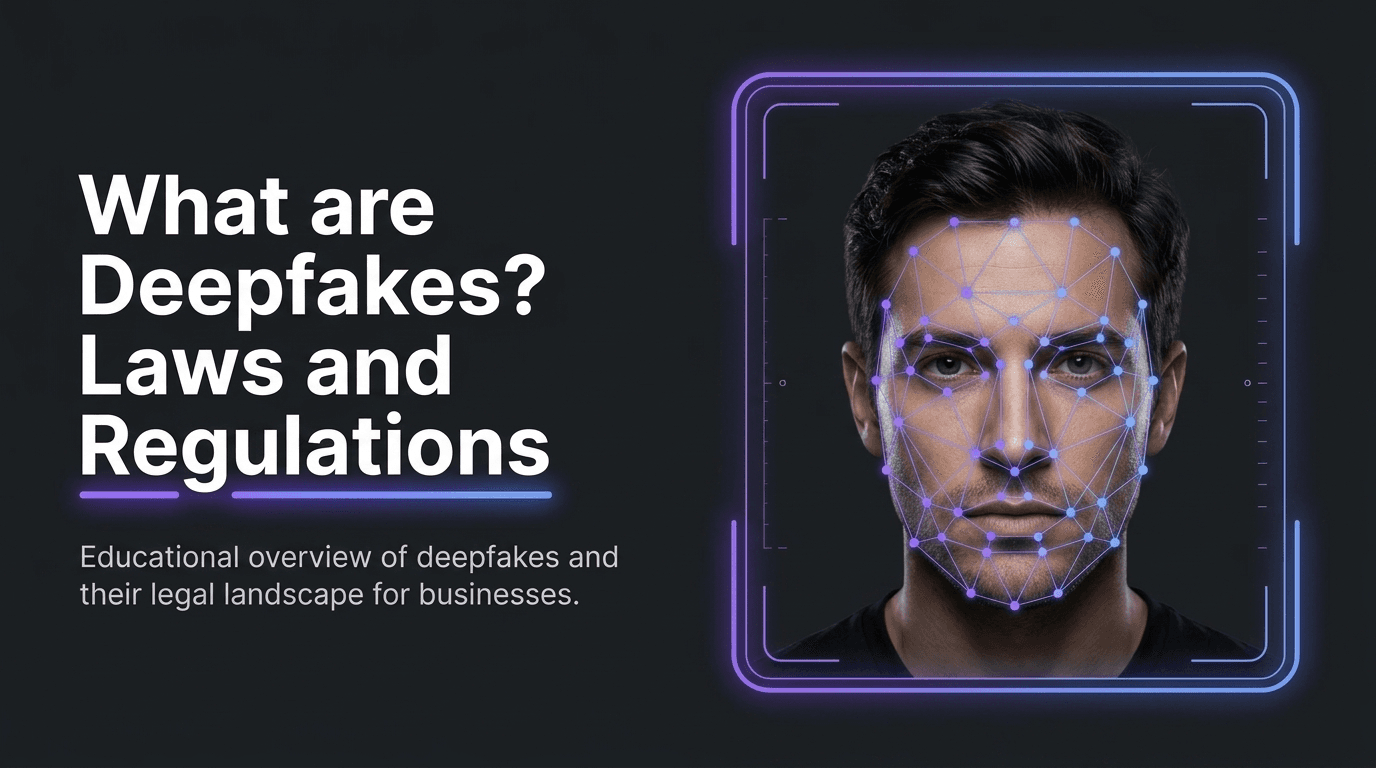
The legal landscape around deepfakes is evolving rapidly, with legislation emerging at both state and federal levels in the US and through regulatory frameworks in the EU and UK.
In the United States, several states have enacted laws targeting specific categories of deepfakes. Texas, California, Virginia, and others have passed legislation criminalizing non-consensual deepfake pornography. Some states have also addressed deepfakes in the context of election interference, making it illegal to distribute synthetic media intended to deceive voters within a specified period before an election. At the federal level, the proposed DEEPFAKES Accountability Act (H.R. 5586) would require that AI-generated content be clearly disclosed and labeled, though the bill has not yet been enacted as of 2026. The FTC has taken enforcement actions against deceptive uses of AI-generated content under existing consumer protection authority.
In the European Union, the AI Act classifies AI systems that generate deepfakes as requiring transparency obligations: users must be informed when they are interacting with AI-generated content. The Digital Services Act's provisions on illegal content and platform liability also apply to deepfake distribution. The EU is additionally developing specific frameworks for deepfake detection evaluation, establishing standards for assessing the effectiveness of detection tools.
In the United Kingdom, the Online Safety Act addresses deepfakes through its provisions on illegal content and content harmful to adults. The UK government has announced plans to develop and implement a deepfake detection evaluation framework, establishing consistent standards for assessing detection capabilities in identity verification systems.
The regulatory direction is clear: the focus is moving beyond content-level regulation (making certain deepfakes illegal) toward requiring that identity verification systems demonstrate measurable detection capability against deepfake attacks. For regulated businesses, this means that deepfake resilience is becoming a compliance requirement, not just a security best practice.
Deepfakes - FAQ
What is a deepfake in simple terms?
How can you tell if a video is a deepfake?
Are deepfakes illegal in the United States?
Can deepfakes bypass identity verification?
What is an injection attack in identity verification?
How do businesses protect against deepfake fraud?
Qoobiss ONTRACE is engineered to defend against deepfake attacks across every layer of the identity verification process. The platform combines document authenticity analysis with biometric facial matching, passive liveness detection trained to identify deepfake artifacts and presentation attacks, and NFC chip reading that validates cryptographically signed data from e-passports and chip-enabled national ID cards. Because NFC chip signatures are issued by government certificate authorities and cannot be synthesized or forged by generative AI, NFC verification provides a deepfake-proof anchor within the verification workflow. For regulated businesses facing the accelerating threat of deepfake-enabled identity fraud, ONTRACE delivers the multi-layered defense that current and emerging regulations increasingly require.
Request a demo at qoobiss.com to see how ONTRACE protects your verification process against deepfake attacks.