eKYC: What Is Electronic KYC & How Digital Verification Works


Opening a bank account once meant a trip to a branch, a folder of photocopied documents, and a wait of several days while someone checked them by hand. Today a customer can do the same thing from their sofa in under two minutes: scan an ID, take a selfie, and be verified. The technology that makes this possible is eKYC, or electronic Know Your Customer.
This guide explains what eKYC means, how the digital verification process actually works step by step, how it differs from traditional KYC and from related terms like Video KYC and cKYC, the regulations that govern it in different regions, and how to choose a provider. It is written for product, compliance, and operations teams evaluating digital onboarding.
What Is eKYC?
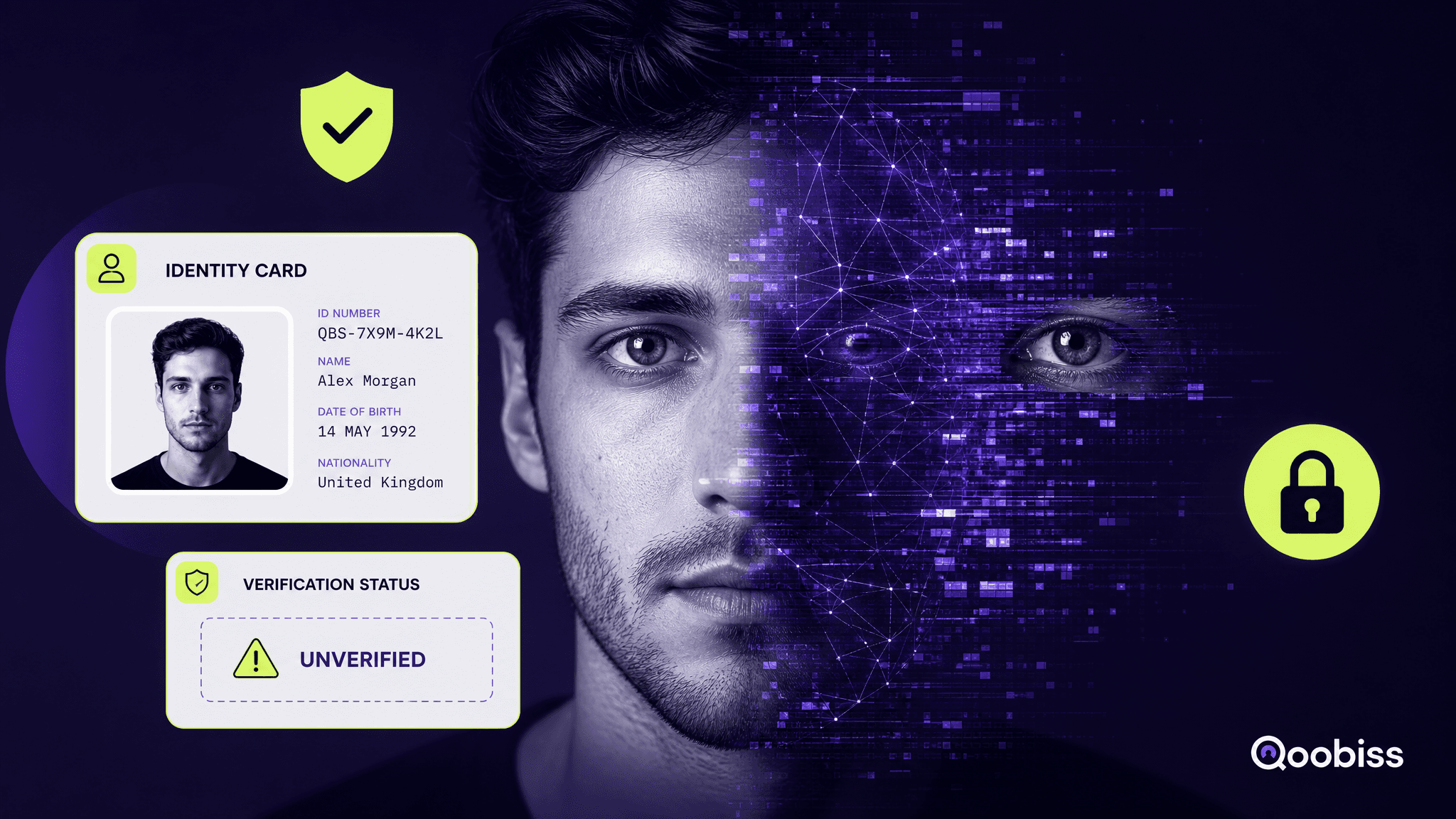
eKYC (electronic Know Your Customer) is the process of verifying a customer's identity entirely through digital channels, without paper documents or an in-person visit. The full form of eKYC is electronic Know Your Customer, and it is sometimes called digital KYC.
It combines digital document verification, biometric face matching, liveness detection, and database and watchlist screening to confirm that a customer is who they claim to be before they are granted access to a regulated service, such as a bank account, a loan, a crypto wallet, or a SIM card.
The goal is identical to traditional KYC: prevent identity theft, fraud, money laundering, and terrorist financing. What changes is the execution. eKYC moves the entire workflow online and automates it, so verification that once took days can finish in seconds.
eKYC vs KYC: What Is the Difference?
Traditional KYC and eKYC aim for the same outcome. The difference is how identity is collected, processed, and authenticated.
Factor | Traditional KYC | eKYC |
|---|---|---|
Process | Manual and paper-based | Digital and automated |
Presence | Often in person at a branch | Fully remote, from any device |
Documents | Physical copies handed over | Scanned or photographed, read by OCR and NFC |
Biometrics | Rare | Core (selfie face match plus liveness) |
Speed | Days or weeks | Seconds to minutes |
Cost | High, labor-intensive | Lower, automated at scale |
Human error | Higher | Reduced |
Availability | Business hours | 24/7 |
Scalability | Resource-heavy | Scales from 100 to 100,000 users |
Compliance record | Manual files | Time-stamped digital audit trail |
eKYC vs Video KYC vs cKYC

Several terms are used alongside eKYC and are easy to confuse:
eKYC: the broad category of digital identity verification, usually automated and asynchronous (scan, selfie, done).
Video KYC: a specific method where verification happens during a live or recorded video session, sometimes with an agent. In India it is a regulated process known as V-CIP. See our guide to digital onboarding for where it fits.
cKYC (Central KYC): India's centralized KYC record system, which stores standardized records under a unique identifier so regulated firms can reuse existing data instead of re-collecting documents.
How the eKYC Process Works
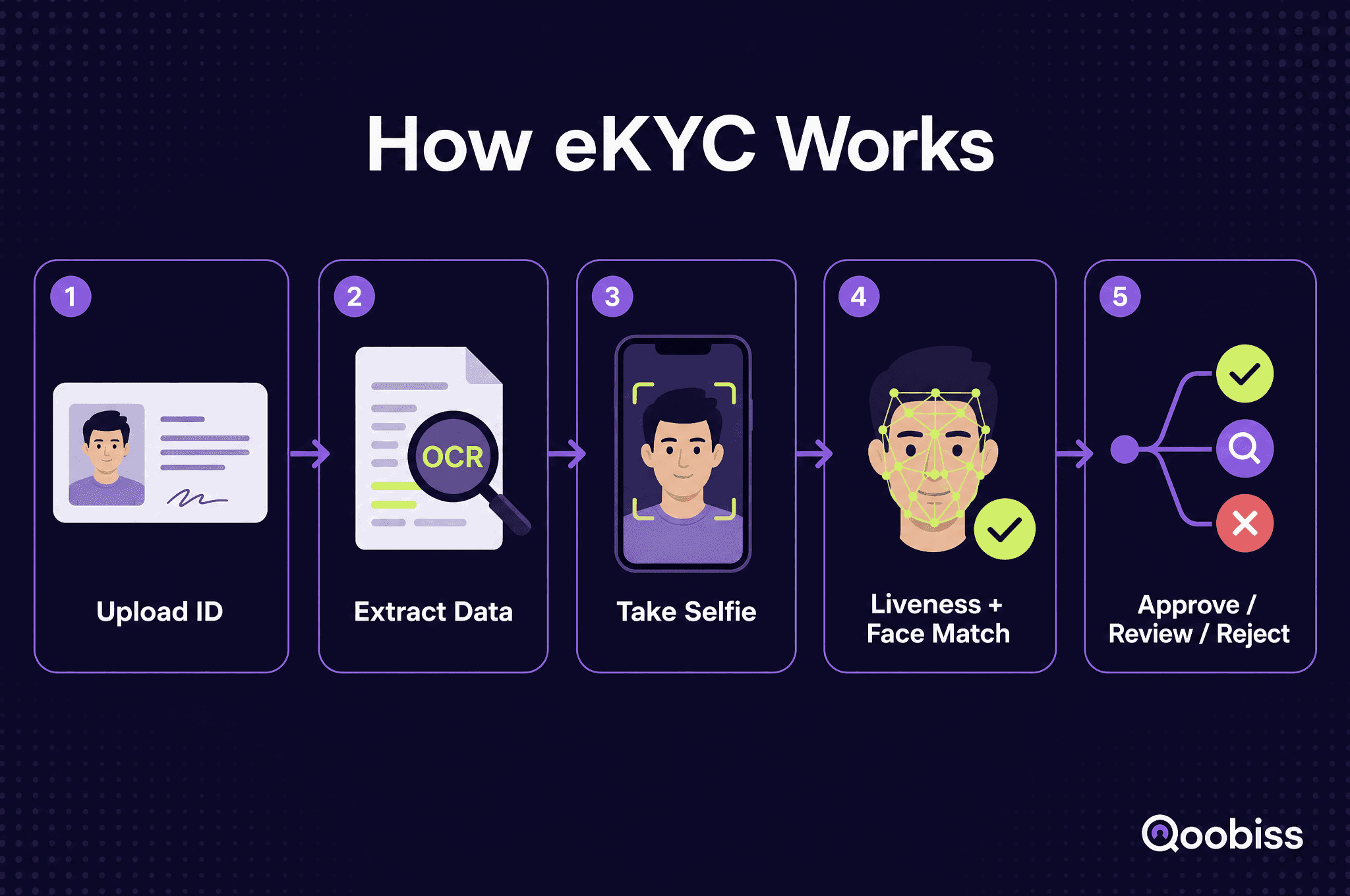
A typical eKYC flow runs the following checks. Although presented as steps, most run automatically and in parallel, which is why verification can complete in seconds:
Customer enrollment. The customer begins onboarding in an app or browser and enters basic details.
Document capture and verification. They photograph a government-issued ID. OCR extracts the data, while MRZ, barcode, and NFC chip checks confirm the document is authentic and unaltered. A strong solution runs dozens of forensic tests in real time.
Biometric face match. The customer takes a selfie, which is compared against the photo on the ID using facial recognition.
Liveness detection. A passive or active liveness check confirms a real, live person is present, not a photo, video, or deepfake.
Device and risk signals. Passive signals such as IP address, geolocation, and device fingerprint help flag stolen devices or suspicious sessions.
AML, sanctions, and PEP screening. The identity is checked against watchlists, sanctions lists, and politically exposed person databases.
Decision. If everything matches, onboarding completes automatically. Inconsistent or high-risk cases are routed to manual review.
Types of eKYC
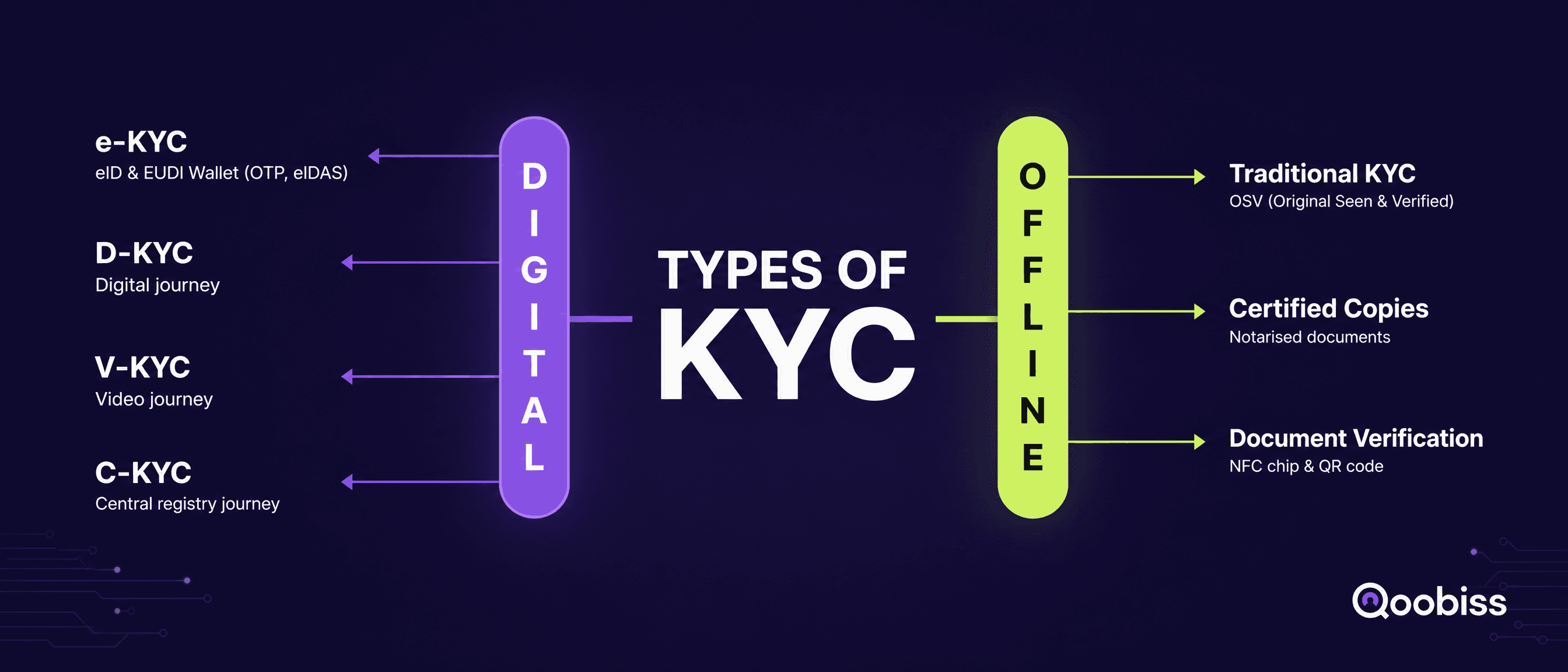
eKYC is not a single verification method. It combines different technologies depending on the customer, the level of risk, the available identity data, and local regulatory requirements. Most organisations use several methods together to create a faster and more reliable onboarding process.
Organizations often combine several of these methods:
Type | How it verifies identity |
|---|---|
Document-based eKYC | ID images read and authenticated via OCR, MRZ, and NFC |
Biometric eKYC | Face match, fingerprint, or iris, paired with liveness detection |
Video KYC | Live or recorded video session, sometimes with a human agent |
OTP-based eKYC | A one-time passcode to a registered mobile, common in Aadhaar eKYC |
Database / digital-ID eKYC | Verification against a government or trusted digital identity (e.g. Aadhaar) |
Digital-footprint eKYC | Risk signals from device, email, and online behavior, used as a supporting layer |
Benefits of eKYC
Faster onboarding: verification in seconds or minutes instead of days, which cuts drop-off and raises conversion.
Lower cost: automation removes most manual review and paperwork.
Stronger fraud prevention: biometrics, liveness, and document forensics catch spoofs that manual checks miss.
Better customer experience: remote, 24/7, and completable from any device.
Scalability: the same flow handles a hundred or a hundred thousand customers.
Cleaner compliance: consistent data and a time-stamped digital audit trail for regulators.
As one published case study reported, a bank that switched to digital onboarding saw its mobile account-opening conversion rate rise by 78% while customer acquisition cost fell by 65% (Regula, ABA Bank).
Who Uses eKYC?
Any organisation that needs to verify customers, users, or partners remotely can benefit from eKYC. It is especially important in regulated sectors, where businesses must balance fast digital onboarding with identity, fraud-prevention, and AML requirements.
Common use cases include:
Industry | Typical eKYC use |
|---|---|
Remote account opening, lending, and reverification | |
Exchange and wallet onboarding under AML rules | |
Telecom | SIM activation and subscriber registration |
Age assurance and player KYC | |
Policy issuance and claims verification | |
Telemedicine identity checks | |
Seller, driver, and worker verification |
eKYC Regulations by Region
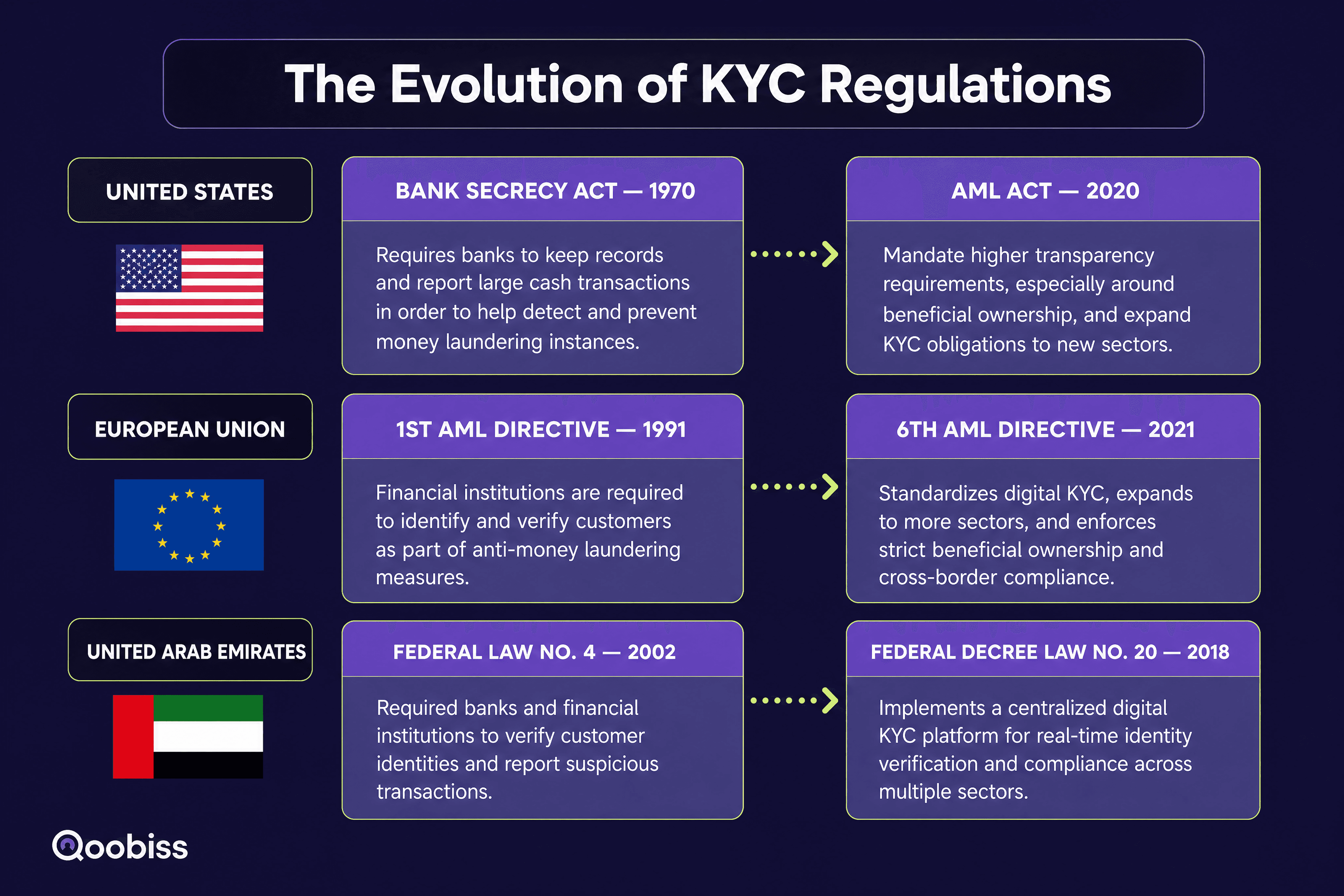
eKYC must satisfy the same AML and identity rules as in-person KYC, plus data-protection law. The Financial Action Task Force (FATF) sets the global baseline through its risk-based CDD recommendations, and regions implement it differently:
Region | Key frameworks | What they mean for eKYC |
|---|---|---|
United States | Bank Secrecy Act, USA PATRIOT Act (CIP), FinCEN | Customer Identification Program rules; remote verification permitted with documentary and non-documentary methods |
European Union | AML Directives, eIDAS 2.0 / EU Digital Identity Wallet, GDPR | Remote onboarding allowed; EBA guidelines expect liveness in unattended flows; biometric data protected as special category |
United Kingdom | Money Laundering Regulations 2017, JMLSG | Risk-based electronic verification accepted |
India | Aadhaar Act, UIDAI, RBI directions, DPDP Act | Aadhaar-based OTP and biometric eKYC; Video KYC (V-CIP); central cKYC registry |
Asia-Pacific & Middle East | MAS (Singapore), Qatar Central Bank | MAS allows non-face-to-face biometric verification; Qatar mandates active liveness for mobile onboarding |
Privacy law matters as much as AML law: biometric identifiers are tightly regulated under GDPR, India's DPDP Act, and US state laws such as Illinois' BIPA, so providers must minimize and protect the data they collect.
eKYC and India's Aadhaar System
Modern mass-market eKYC was effectively pioneered in India. The Unique Identification Authority of India (UIDAI) built Aadhaar, a national digital identity covering more than a billion people, and exposed it through an authentication ecosystem.
Regulated entities connect to UIDAI's Central Identities Data Repository through service agencies to verify customers in two ways: OTP-based eKYC, where a one-time code is sent to the registered mobile, and biometric eKYC, using fingerprint, iris, or face. India later added Video KYC (V-CIP) and offline options such as XML and QR-code Aadhaar and DigiLocker.
A 2018 Supreme Court ruling restricted mandatory private-sector use of Aadhaar eKYC, which reshaped how fintechs verify customers. This is why so much eKYC search demand and innovation originates in India.
eKYC Security Risks and the 2026 Threat Landscape
Moving verification online creates new attack surfaces. The most pressing risks today include:
Deepfakes and selfie spoofing: AI-generated faces and replayed videos attempt to defeat biometric checks. Strong liveness detection is the primary defense.
Injection attacks: fraudsters bypass the camera and inject a manipulated video stream using virtual cameras or emulators, an attack that standard presentation-attack testing does not cover.
AI-generated fake documents: synthetic IDs that pass a quick visual check but fail forensic and NFC validation.
Synthetic identities and mule accounts: fabricated or blended identities created to open accounts at scale.
Data and privacy risk: biometric and PII data must be encrypted, minimized, and governed, since a central store is a high-value target.
Algorithmic bias: biometric systems must perform consistently across ages, skin tones, and devices to avoid wrongful rejections.
How to Choose an eKYC Provider
A strong provider should be able to answer all of the following:
Document and country coverage: how many document types and countries are supported, with OCR, MRZ, and NFC reading?
Liveness and anti-spoofing: passive and active liveness, with certified presentation-attack detection and injection defenses?
Screening built in: are AML, sanctions, and PEP checks part of the same flow?
Pass rates and friction: what are genuine-user pass rates, and how is drop-off minimized?
Orchestration and review: can you configure risk rules and route exceptions to manual review?
Privacy and audit: data minimization, retention controls, and a complete audit trail for regulators?
Integration: clean APIs and SDKs for web and mobile?
eKYC with Qoobiss
Qoobiss delivers eKYC as a single, configurable flow: document verification with NFC reading, biometric face matching and liveness, device risk signals, and AML, sanctions, and PEP screening, with orchestration and audit trails built in. Genuine customers onboard in seconds, while spoofs, deepfakes, and synthetic identities are stopped at the door.
See it in action. Talk to our team about adding fast, compliant eKYC to your onboarding, book a Qoobiss demo.
Frequently Asked Questions
What does eKYC mean?
What is the difference between eKYC and KYC?
What documents are required for eKYC?
How long does eKYC take?
Is eKYC safe?
Is eKYC mandatory?