What Is a Transaction Dispute? Definition, Process, and How to Prevent Chargebacks


A transaction dispute is one of the most common friction points in modern payments, and one of the most misunderstood. When a cardholder challenges a charge with their bank, they set off a structured, rules based process that can end in a refund, a chargeback against the merchant, or a flat denial.
The scale is enormous: US consumers filed roughly 158 million transaction disputes in 2025, and analysts expect the value of global chargebacks to climb from about $33.8 billion in 2025 to $41.7 billion by 2028.
For banks, merchants, and payment platforms, understanding how disputes work is no longer optional. This guide explains what a transaction dispute is, how it differs from a chargeback and a refund, the full lifecycle from filing to arbitration, the US and EU rules that govern it, and how identity verification and transaction monitoring stop disputes before they start.
What Is a Transaction Dispute?
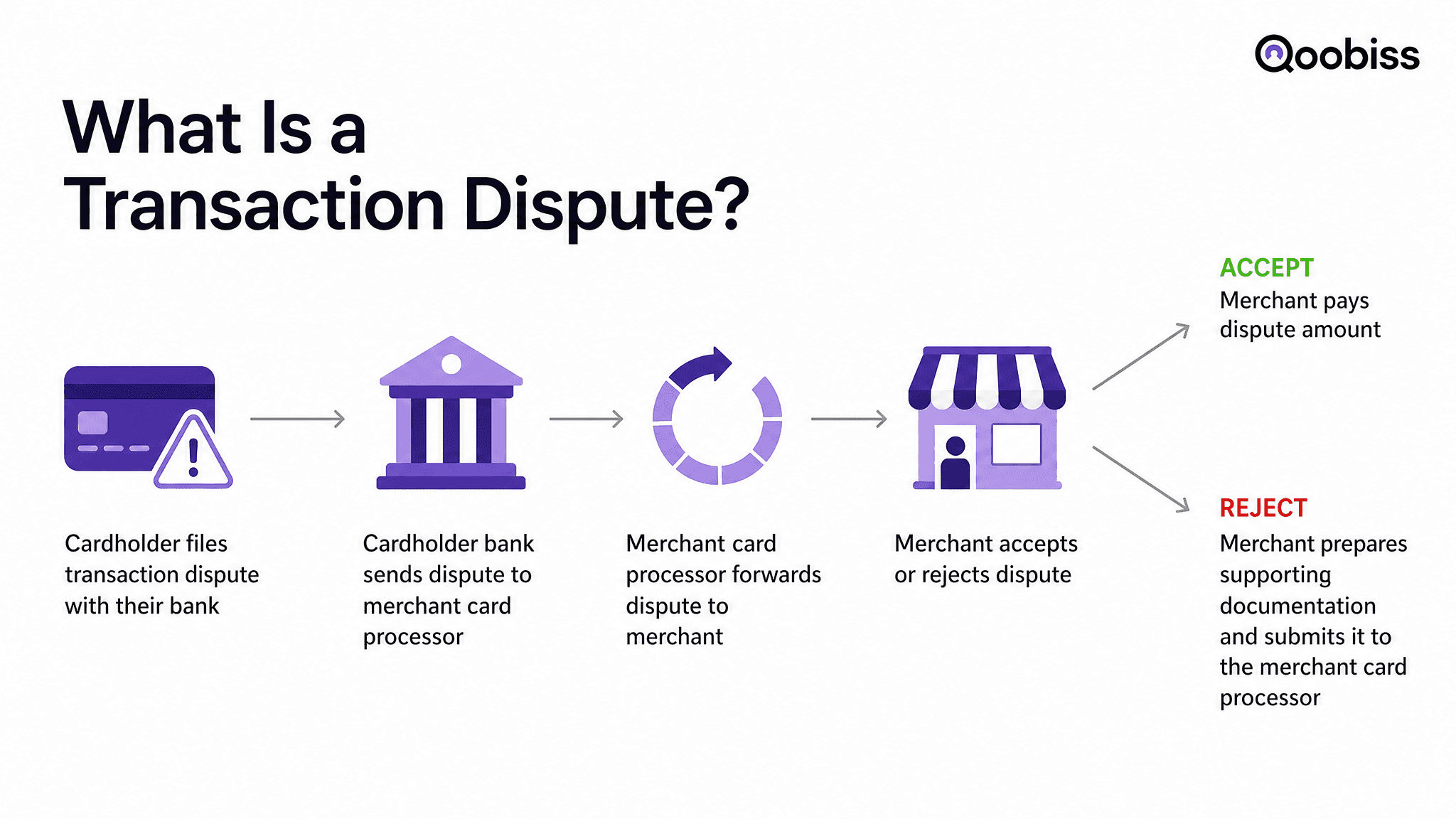
A transaction dispute is a formal challenge a cardholder raises with their card issuer, claiming that a charge on their account is wrong, unauthorized, or otherwise invalid. Instead of contacting the merchant for a simple refund, the customer asks their bank to step in and reverse the payment through the card network. Because the money has already moved, resolving the dispute means pulling those funds back through a chain of financial institutions.
Every card dispute involves four parties, and knowing who is who makes the rest of the process far easier to follow:
Cardholder: the customer who paid and is now challenging the charge.
Issuer (issuing bank): the bank that gave the cardholder their card and manages their account.
Acquirer (acquiring bank): the merchant's bank, which receives card payments on the merchant's behalf.
Merchant: the business that accepted the payment and must now defend it or accept the loss.
The card network (Visa, Mastercard, and the others) sits in the middle, setting the rules, deadlines, and reason codes that both sides must follow.
Dispute vs. Chargeback vs. Refund vs. Reversal
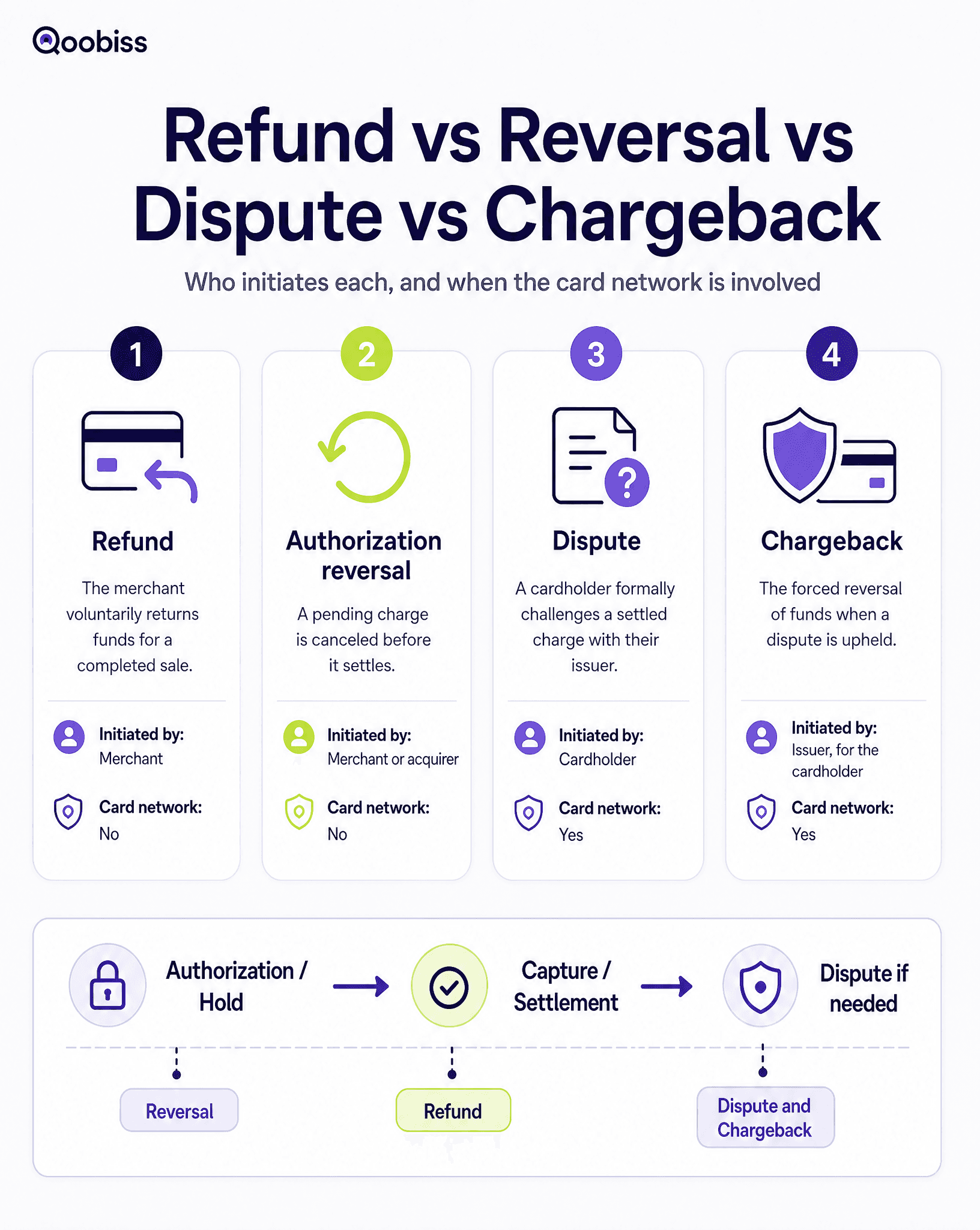
These four terms are used interchangeably in everyday conversation, but they mean very different things, and confusing them is the single most common mistake merchants and cardholders make. A dispute is the challenge itself. A chargeback is what happens if that dispute is upheld. A refund and an authorization reversal, by contrast, never involve the card network at all.
Term | What it is | Who initiates | Network involved? |
|---|---|---|---|
Refund | The merchant voluntarily returns funds for a completed sale. | Merchant | No |
Authorization reversal | A pending charge is canceled before it settles. | Merchant or acquirer | No |
Dispute | A cardholder formally challenges a settled charge with their issuer. | Cardholder | Yes |
Chargeback | The forced reversal of funds when a dispute is upheld. | Issuer, for the cardholder | Yes |
In short, every chargeback starts as a dispute, but not every dispute becomes a chargeback, and a refund is the friendly alternative that keeps both out of the network entirely.
Why Customers Dispute Transactions
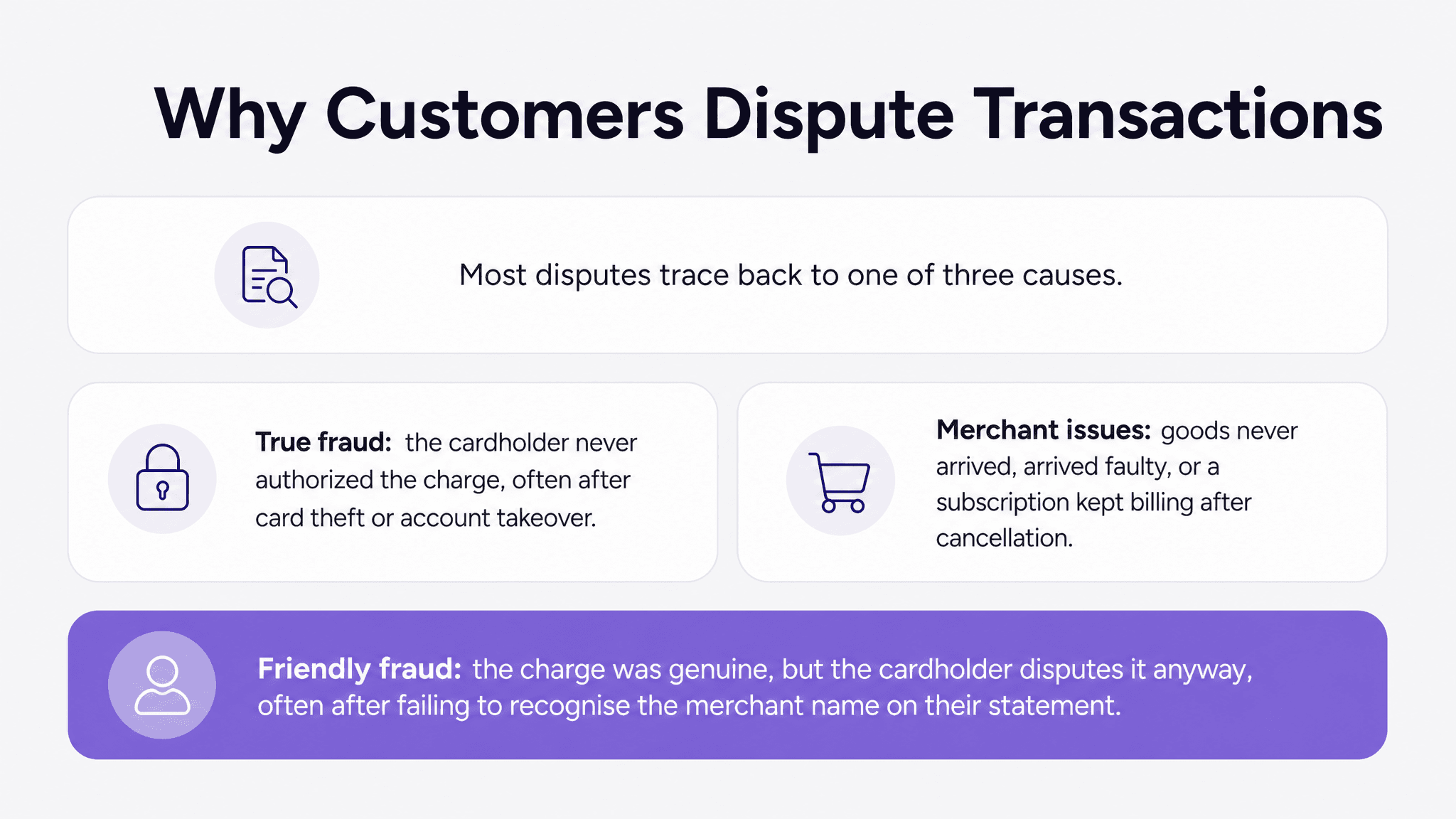
Customers dispute charges for many reasons, and not all of them are legitimate. Broadly, disputes fall into genuine fraud, honest errors, and a fast growing grey area known as first party or friendly fraud. The most common triggers include:
True fraud: the card or its details were stolen and used without the cardholder's knowledge.
Goods or services not received: the customer paid but nothing arrived.
Not as described: the item was materially different from what was advertised.
Duplicate or incorrect amount: the customer was billed twice or charged more than the agreed price.
Unwanted subscriptions: a free trial converted to a paid plan, or a canceled recurring charge kept billing.
Unrecognized descriptor: the customer did not recognize the merchant name shown on their statement.
Friendly fraud: the customer received exactly what they paid for, then disputed the charge anyway.
What Happens When You Dispute a Transaction
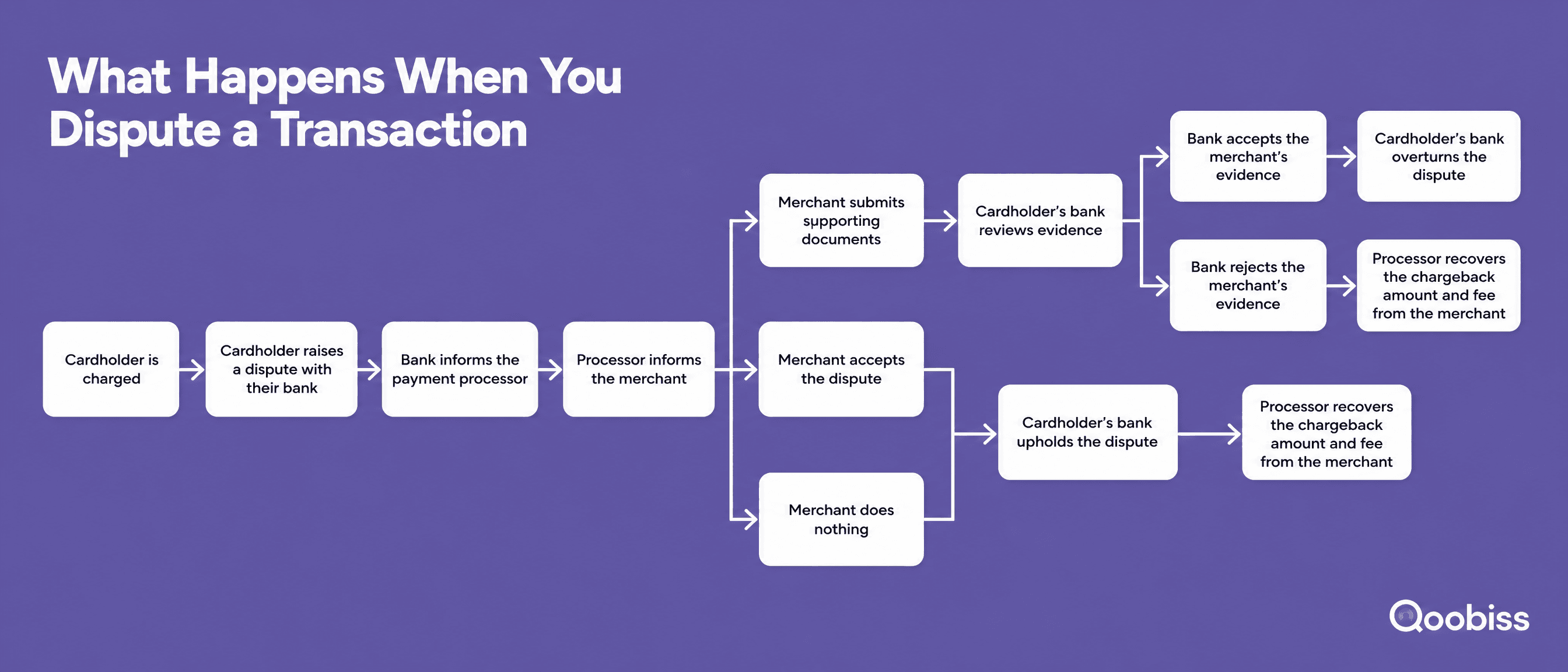
Filing a dispute is only the first step in a process that can run through several stages, each with its own deadline and its own answer to the question of who is currently holding the money. Understanding the full lifecycle matters because the outcome, and the cost, can change at every stage.
Stage | What happens | Who holds the loss | Typical window |
|---|---|---|---|
Authorization | The card is approved and funds are earmarked at checkout. | No one yet | Instant |
Dispute filed | The issuer often gives the cardholder a provisional credit and requests a chargeback via the network. | Merchant, provisionally | 60 to 120 days to file |
Representment | The merchant submits compelling evidence to prove the charge was valid. | Cardholder, if merchant wins | About 30 days to respond |
Pre-arbitration | The issuer pushes back on the evidence and reasserts the dispute. | Contested | Often 30 days |
Arbitration | The network reviews the case and rules for one side, with fees for the loser. | Loser of the ruling | Network's final call |
Many low value disputes never reach arbitration. Banks routinely write off small claims, often under $15 to $50, because investigating them costs more than simply refunding the customer. That economics is one reason friendly fraud is so hard to stamp out.
Dispute Reason Codes
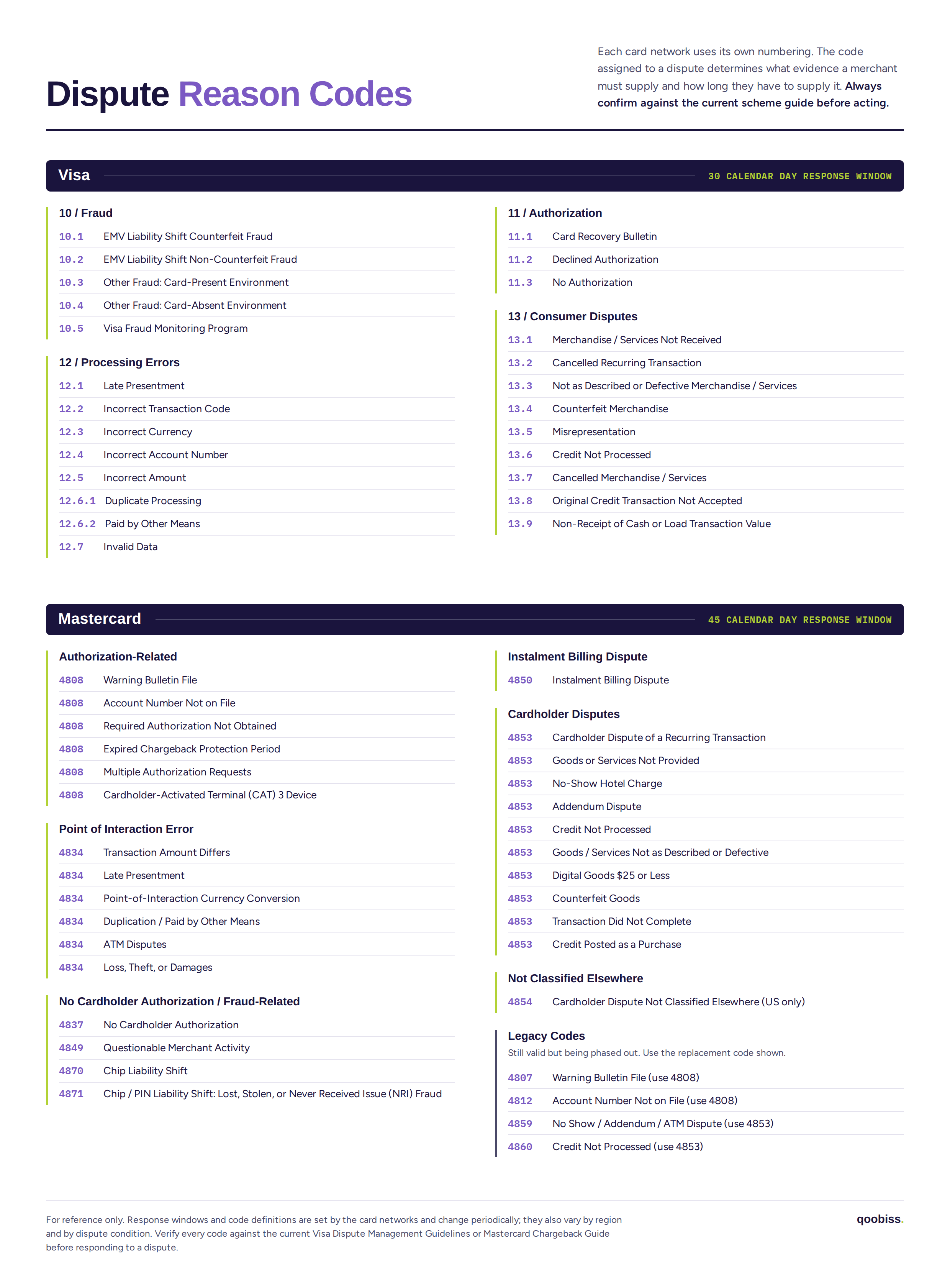
Behind every dispute is a reason code, a short identifier the issuer assigns to explain why the charge is being challenged. These codes determine what evidence a merchant needs and how much time they have to respond. Visa, which handles the largest share of disputes, sorts every case into four categories:
Category | Code range | Covers | Example |
|---|---|---|---|
Fraud | 10.x | Unauthorized or counterfeit card use | 10.4 Card absent fraud |
Authorization | 11.x | Charges approved despite a decline or expired authorization | 11.3 No authorization |
Processing errors | 12.x | Technical mistakes such as duplicate or incorrect amounts | 12.5 Incorrect amount |
Consumer disputes | 13.x | Quality, delivery, or cancellation complaints | 13.1 Merchandise not received |
Mastercard, American Express, and Discover use their own code sets, but the logic is the same. For card not present fraud, Visa's Compelling Evidence 3.0 framework lets merchants who supply strong identity and transaction data qualify for an automatic liability shift, turning good verification records into a decisive advantage.
How Long You Have, and How Long It Takes
One of the most confusing parts of disputes is that several clocks run at once. The window to file depends on the card and the reason, while the bank's deadline to resolve the case is set by regulation. The timeframes that matter most are:
Filing a billing error (US credit cards): within 60 days of the statement showing the charge.
Reporting fraud: often no strict deadline, though acting sooner is always safer.
Issuer acknowledgment: the bank must confirm a written dispute within 30 days.
Issuer resolution: the case must be resolved within two billing cycles, and no later than 90 days.
Provisional credit (US debit cards): typically issued within 10 business days while the bank investigates.
Your Rights: US and EU Rules
Disputes are not just a courtesy from your bank, they are backed by law, and the protections differ sharply between credit and debit cards, and between the US and the EU. Merchants and payment platforms operating across borders need to know all four frameworks:
Rule | Region | Applies to | Key protection |
|---|---|---|---|
FCBA / Reg Z | US | Credit cards | Liability for unauthorized use capped at $50; 60 day window to dispute billing errors. |
EFTA / Reg E | US | Debit cards, electronic transfers | Liability capped at $50 if reported within 2 days, up to $500 within 60 days. |
PSD2 | EU | All electronic payments | Strong Customer Authentication required; unauthorized payments refunded, usually by the next business day. |
PSD3 / PSR (incoming) | EU | All electronic payments | Expanded authentication and a stronger fraud liability shift onto PSPs; political agreement reached November 2025. |
The direction of travel in the EU is clear. Under the incoming PSD3 and Payment Services Regulation, a payment service provider that fails to apply Strong Customer Authentication when required can be made to bear the fraud loss itself. Authentication is becoming the dividing line between who pays and who does not.
The Merchant's Side: What a Dispute Really Costs
For merchants, a dispute is far more expensive than the transaction amount suggests. The headline figure is the disputed sale, but the true cost stacks up quickly, and card networks now penalize businesses whose dispute rates climb too high. A single chargeback can include:
The lost sale amount, refunded to the cardholder.
The lost merchandise and any shipping already paid.
A chargeback fee from the payment processor, commonly around $15 to $25 per case.
Staff time spent gathering evidence and fighting the dispute.
Network penalties once the dispute ratio crosses program thresholds.
Analysts estimate that every $1 lost to a chargeback ends up costing merchants between $3.75 and $4.61 once all of these are counted. Visa's Acquirer Monitoring Program (VAMP), which as of April 2025 replaced several earlier programs under a single combined metric, flags merchants and acquirers whose fraud and dispute ratio reaches an early warning band around 0.4 to 0.5 percent, with fees and remediation above that.
Friendly Fraud: The Fastest Growing Dispute
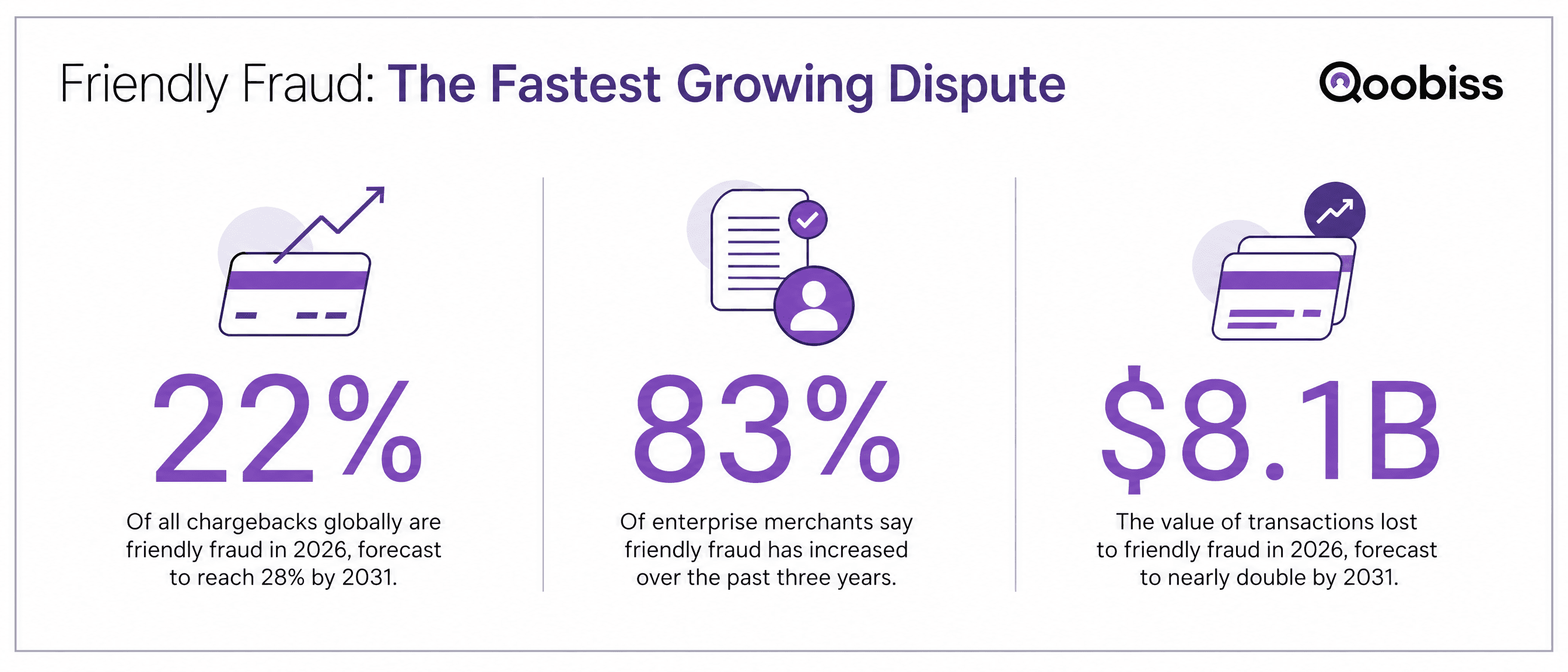
The hardest disputes to prevent are the ones filed by real customers. Friendly fraud, also called first party fraud, happens when a cardholder receives exactly what they ordered and then disputes the charge anyway, whether out of buyer's remorse, confusion, or deliberate abuse. It now accounts for an estimated 70 to 80 percent of all chargebacks, and first party fraud has become the leading fraud type globally, representing roughly 36 percent of reported fraud and a $132 billion risk to ecommerce. Surveys suggest 81 percent of customers have filed a chargeback simply because it felt easier than asking the merchant for a refund.
How to Prevent Disputes, and Win the Ones You Get

Because most disputes are avoidable, the smartest strategy is to stop them upstream rather than fight them after the fact. Every fraudulent dispute is, at its root, an identity problem: either someone is not who they claim to be, or a genuine customer is denying an action they actually took. Strong verification and monitoring close both gaps. The most effective controls include:
Verify identity at onboarding. Robust KYC verification and digital onboarding confirm a real, unique person is behind every account before the first payment.
Authenticate high risk payments. Strong Customer Authentication and 3-D Secure shift fraud liability away from the merchant and block unauthorized use, which is especially valuable under PSD2 and the incoming PSD3.
Detect fraud with biometrics and liveness. Biometric verification and liveness checks stop stolen credentials, fake IDs, and deepfakes from opening accounts in the first place.
Monitor transactions in real time. Continuous transaction monitoring flags anomalous behavior and suspicious patterns before a payment settles.
Keep clean, linked records. The same identity and authentication data that prevents fraud becomes the compelling evidence that wins representment when a dispute is filed.
For payment and fintech businesses, this is where prevention pays twice: fewer fraudulent disputes reach the network, and the disputes that do arrive are far easier to defend.
Cut Disputes at the Source with Qoobiss
Qoobiss helps banks, fintechs, and payment platforms reduce disputes before they happen. Omnicheck combines AML screening with transaction monitoring, while Qoobiss's fraud prevention and identity verification tools verify every customer and authenticate every high risk payment. See how Qoobiss supports fintech and payments teams, or get in touch to see it in action.
Frequently Asked Questions
What happens when you dispute a transaction?
Will I get a refund if I dispute a transaction?
Is a dispute the same as a refund?
How long does it take for a bank to refund a disputed transaction?
Can you dispute an Apple Pay, Cash App, or Zelle transaction?
What is friendly fraud?