Identity Theft: How to Tell If Someone Is Using Your Identity

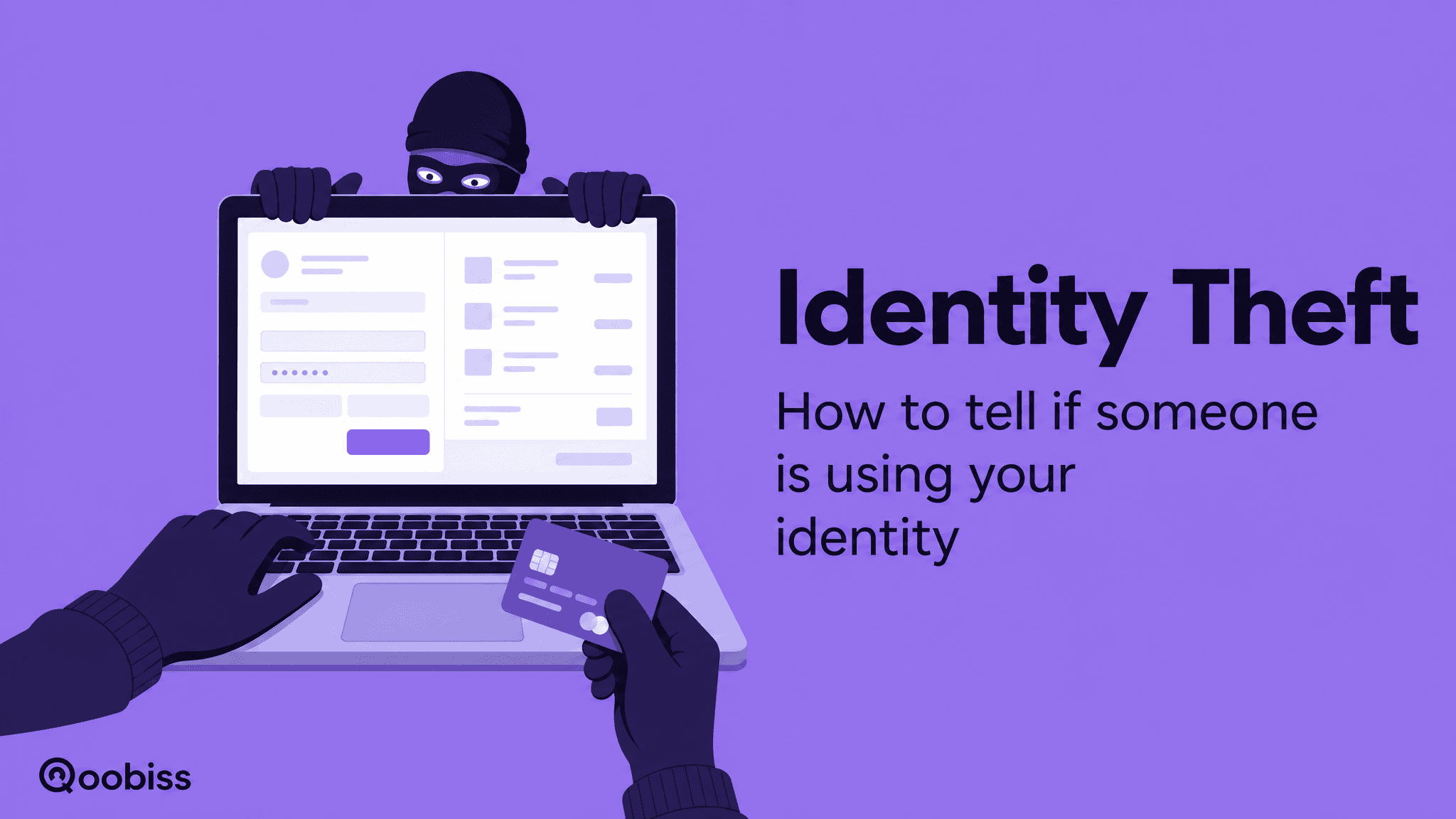
Most people find out their identity has been stolen the hard way: a bill for something they never bought, a loan application denied for no reason, or a letter from the tax authority about a return they did not file.
By then, the damage is already underway. The scale of this problem is immense; the US Federal Trade Commission alone logged more than 1.3 million identity theft reports in 2025, highlighting the staggering prevalence of the issue in the modern digital landscape. The good news is that identity theft leaves a trail, and knowing the warning signs, and where to look, lets you catch it early.
This guide explains how to tell if someone is using your identity, how to check, the main types of identity theft, what to do if it happens, and how to protect yourself. It also covers the part most guides leave out: how a stolen identity actually gets used to open accounts, and how the businesses on the other end are supposed to stop it.
What Is Identity Theft?
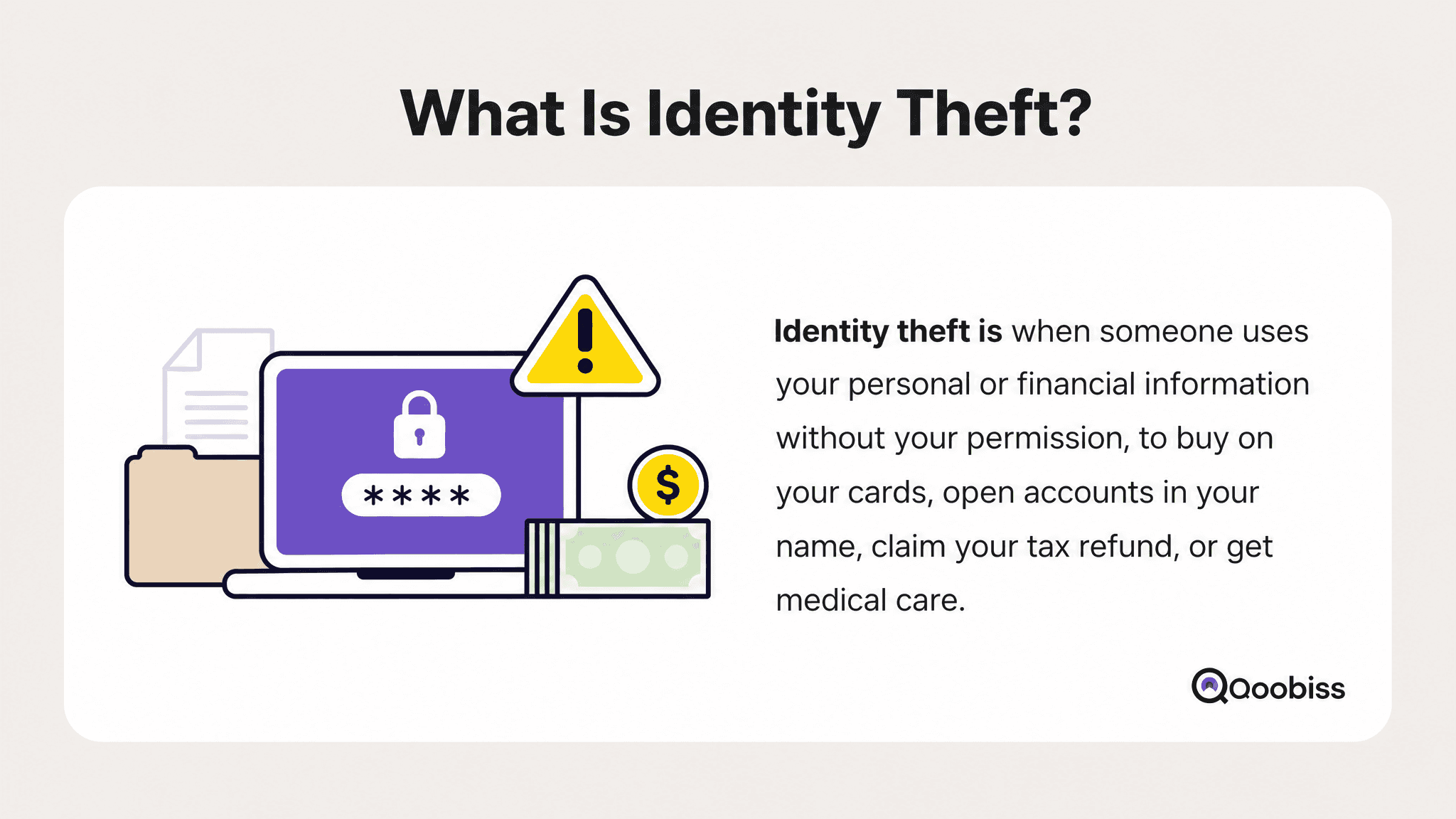
Identity theft is when someone uses your personal or financial information without your permission. That information might be your name and address, your Social Security or national ID number, your card or bank account numbers, or your medical insurance details.
With it, a thief can buy things on your cards, open new accounts in your name, file a tax return to steal your refund, get medical care, or even give your name to police. The US Federal Trade Commission alone logged more than 1.3 million identity theft reports in 2025.
Warning Signs: How to Tell If Someone Is Using Your Identity
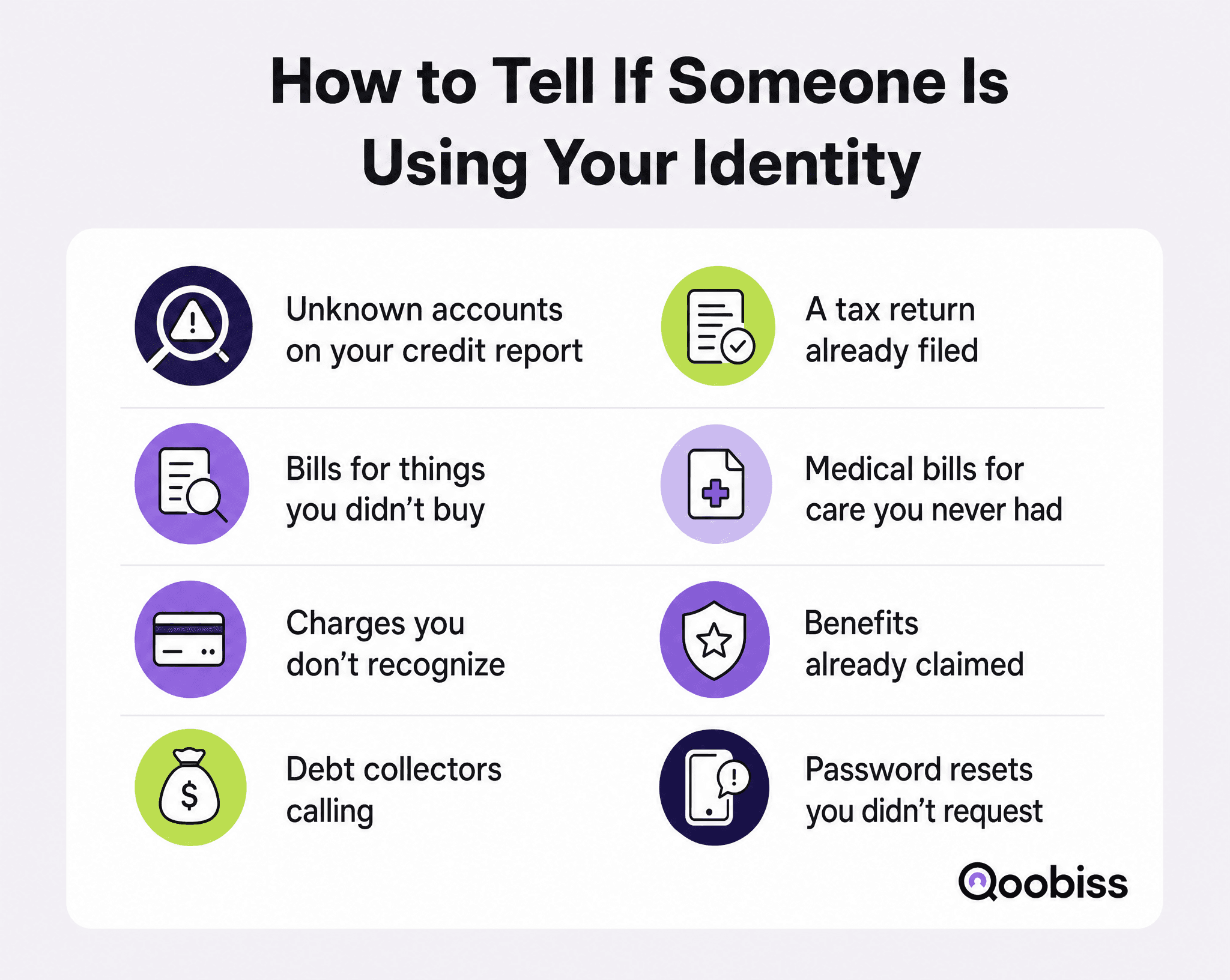
Identity theft rarely announces itself, but it produces telltale signals. Watch for these across the different parts of your financial life:
Where | Warning signs |
|---|---|
Credit report | Accounts or debts you don't recognize, a drop in your credit score, or hard inquiries when you haven't applied for credit |
Bills and mail | Bills for things you didn't buy, or bills and statements that suddenly stop arriving (a sign someone changed your address) |
Bank and cards | Charges, withdrawals, or transfers you don't recognize |
Debt collectors | Calls or letters about accounts you never opened |
Taxes | A return rejected because one was already filed, or a tax notice about income or an employer you don't recognize |
Medical | Bills or insurance statements for care you never received |
Benefits / SSN | Being denied benefits because they're already claimed, or an earnings record showing wages you didn't earn |
Accounts / logins | Password-reset alerts or login notifications you didn't request |
Any one of these can have an innocent explanation, but two or more together is a strong reason to check further.
There is also one signal that comes before any of these: a data breach notice. If a company tells you your information was exposed, treat it as an early warning even if nothing has gone wrong yet. Stolen data is often bought, sold, and used months or years later, so the gap between a breach and the first fraudulent charge can be long. Checking early, and freezing your credit, closes that window.
How to Check for Identity Theft
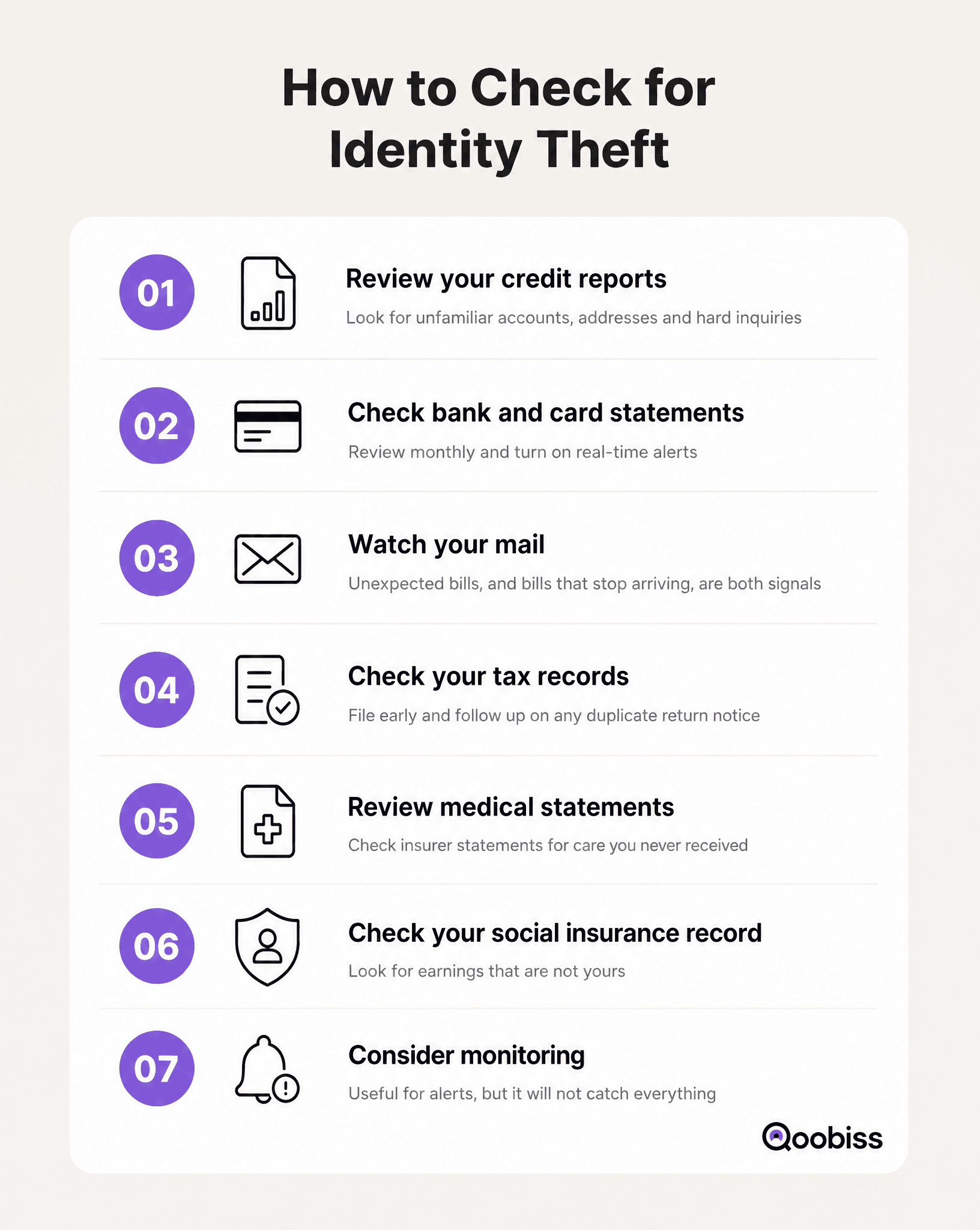
If you suspect something, or just want to check routinely, here is where to look:
Review your credit reports. This is the single most useful check. In the US you can get free reports from all three bureaus (Equifax, Experian, and TransUnion) at AnnualCreditReport.com, and view them weekly. Look for unfamiliar accounts, addresses, employers, and hard inquiries. Most countries have equivalent credit reference agencies.
Check bank and card statements. Review your transactions at least monthly, and enable real-time alerts, so unfamiliar charges surface fast.
Watch your mail. Both unexpected bills and bills that stop arriving are red flags.
Check your tax records. File early, and follow up on any notice about a duplicate return or unrecognized income.
Review medical statements. Read the explanations of benefits from your insurer for services you don't recognize.
Check your Social Security or national insurance record. Review your earnings history for wages you didn't earn.
Consider monitoring. Credit and identity monitoring services alert you to changes, though as we explain below, they do not catch everything.
Identity theft can happen to anyone, and the key to reducing damage is early detection. Beyond these routine checks, it is vital to understand that a stolen identity is often leveraged across multiple platforms simultaneously, leading to severe financial and legal repercussions if left unaddressed.
Types of Identity Theft
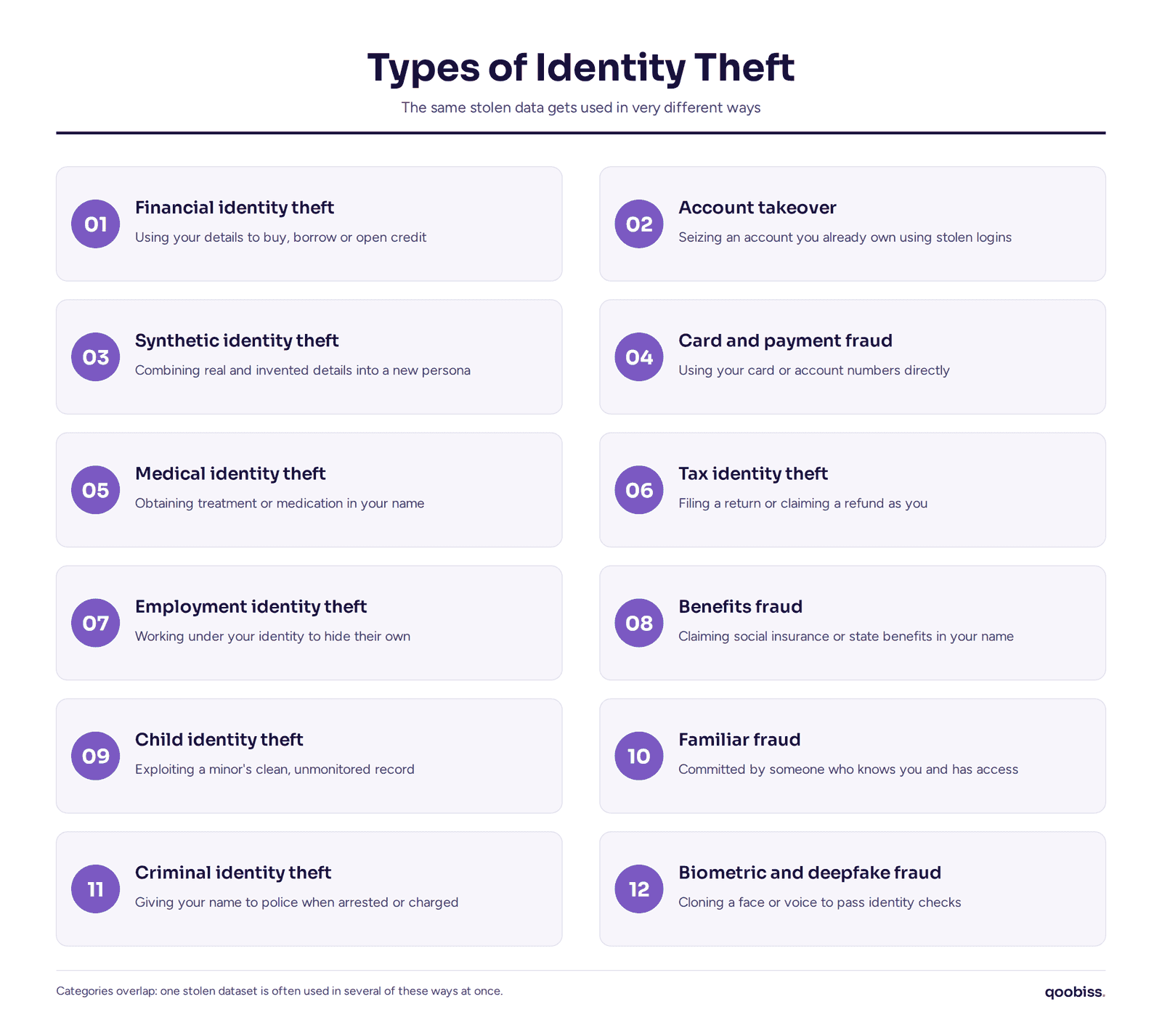
Identity theft is an umbrella term. The FTC notes there are more than 30 variations, but most fall into these categories. Knowing which type you are dealing with matters, because each one shows up in a different place: tax identity theft appears in a rejected return, medical identity theft in an insurance statement, and new-account fraud on your credit report.
Type | What the thief does |
|---|---|
Financial / new-account | Opens new credit cards, loans, or utility accounts in your name |
Account takeover | Takes over an existing account of yours by stealing the login |
Tax identity theft | Files a tax return in your name to steal your refund |
Medical identity theft | Gets treatment, prescriptions, or tests billed to you |
Employment identity theft | Uses your ID to get a job, affecting your tax and benefits records |
Criminal identity theft | Gives your name to police when arrested or cited |
Child identity theft | Uses a child's clean SSN, often undetected for years |
Synthetic identity theft | Combines a real ID number with fake details to create a new, fictitious person |
What to Do If Your Identity Is Stolen
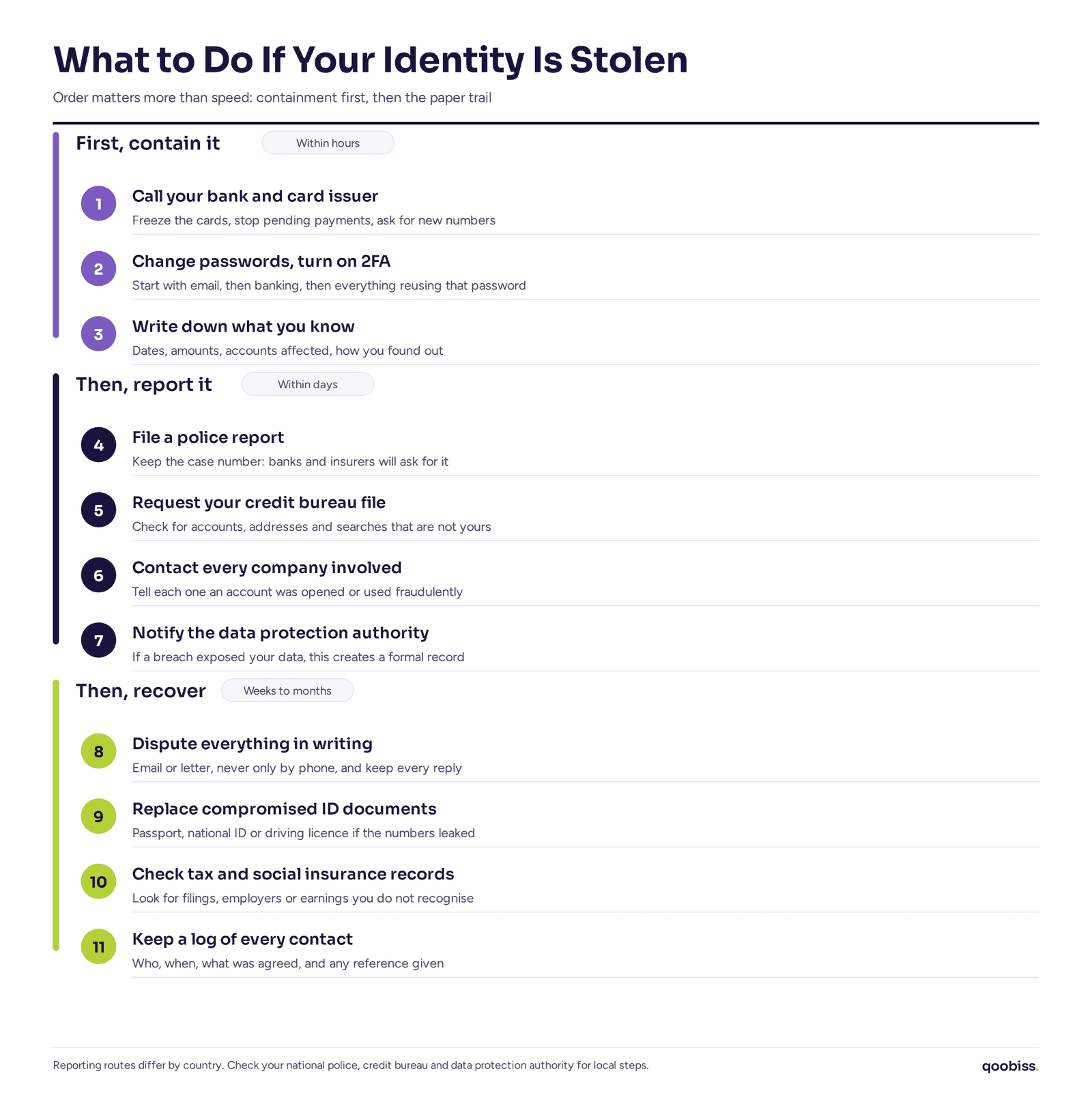
Act quickly, and keep a written record of every call, letter, and action. The core steps:
Contact the affected companies. Report the fraud to any bank or business where it occurred, and close or freeze the compromised accounts. Card liability is often capped by law (in the US, $50 for credit cards), and reporting faster limits it further.
Change passwords and PINs. Start with the affected accounts, then anywhere you reused the same credentials.
Place a fraud alert or freeze your credit. A fraud alert (free, one year) tells lenders to verify your identity before granting credit; a credit freeze blocks new accounts entirely. Both are free.
Report it to the authorities. In the US, report at IdentityTheft.gov to get a recovery plan and an official identity theft report; a police report may also help. Many countries have an equivalent reporting body.
Dispute the fraudulent activity. Challenge fraudulent accounts and charges with the credit bureaus and companies involved.
Handle tax fraud separately. If it is tax-related, follow the tax authority's process (in the US, that can include Form 14039 and an Identity Protection PIN).
How to Protect Yourself From Identity Theft
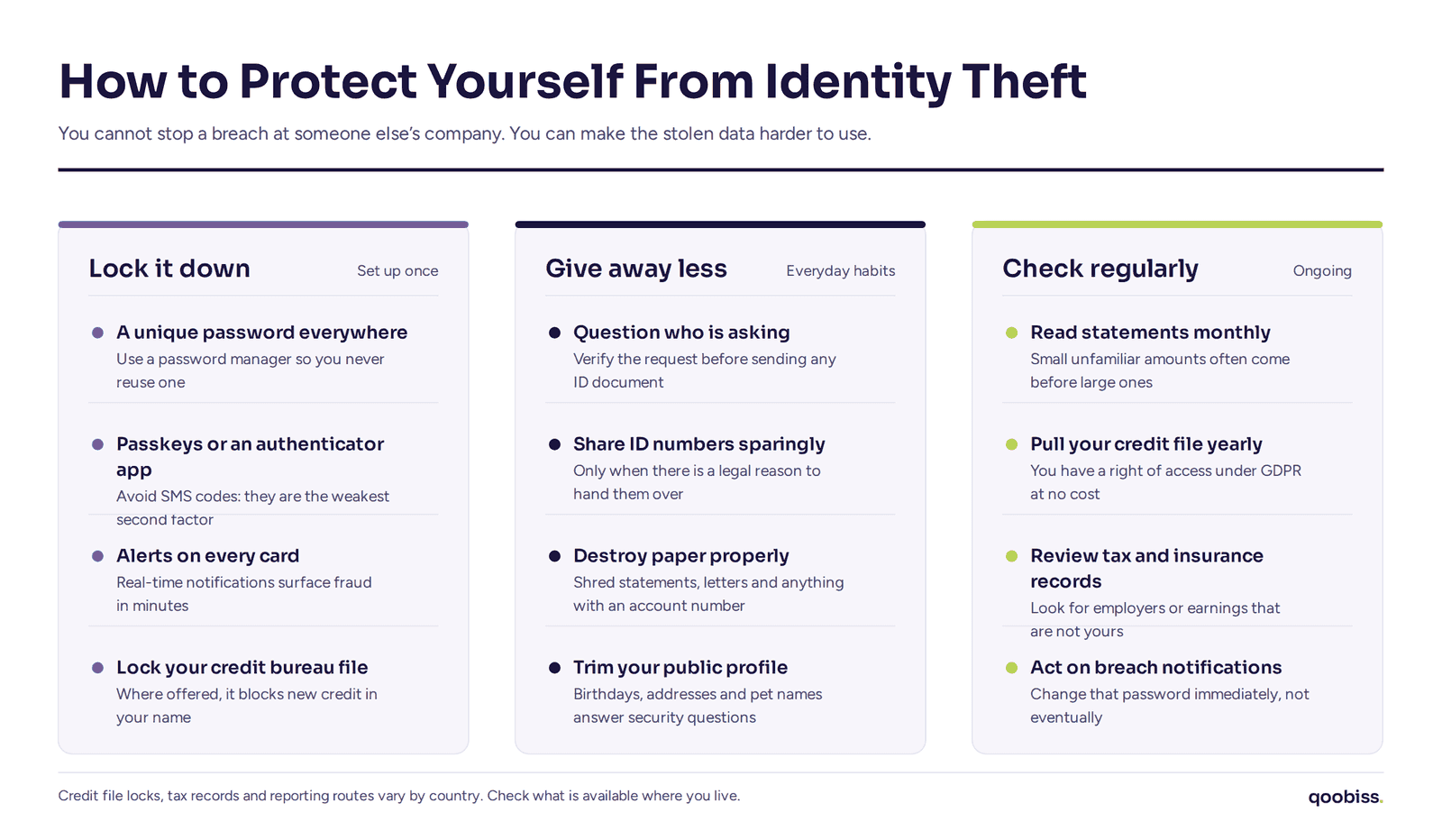
Freeze your credit when you are not actively applying for it; it is the strongest free protection against new-account fraud.
Use strong, unique passwords and multi-factor authentication on every important account.
Guard your documents and SSN: shred paperwork, keep your SSN card at home, and ask why anyone needs your number before giving it out.
Be skeptical of unsolicited contact: tax and government agencies do not call, text, or email demanding your personal data. Do not click links in unexpected messages.
Collect your mail promptly and place a hold when you travel.
Limit what you share on social media and public Wi-Fi.
Why Monitoring Isn't Enough
Here is the uncomfortable truth: most of the advice above is reactive. It helps you notice and clean up identity theft after it has started, not prevent it.
Monitoring services make this clear in their own fine print: credit monitoring will not tell you when someone drains your bank account or files a tax return in your name, and identity monitoring will not flag many benefits or government-fraud uses of your data.
Freezing your own credit is powerful, but it cannot stop a fraudster from opening an account at a business that does not verify identity properly. And no amount of personal caution protects you from a data breach at a company you have never even heard of.
Identity Theft vs Identity Fraud: The Other Half of the Story
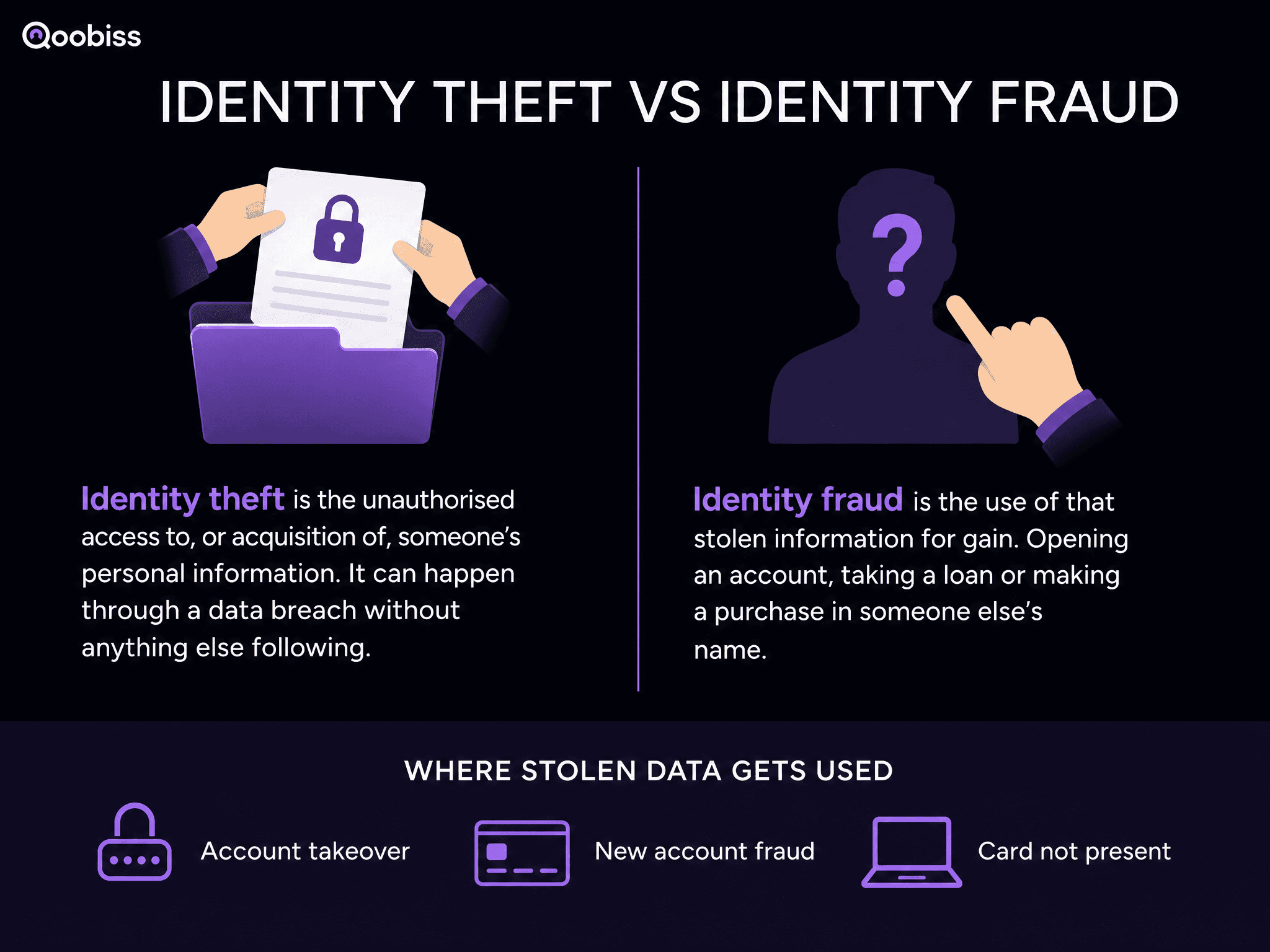
It helps to separate two things that are often blurred. Identity theft is the moment your information is stolen. Identity fraud is what happens next: someone using that stolen information to open accounts, take out loans, or move money. The theft harms you; the fraud is committed against a business that is tricked into believing the criminal is you.
That downstream fraud usually takes one of three forms:
New-account fraud: opening a brand-new account with your stolen details.
Account takeover: hijacking an account you already hold. See our guide to account takeover fraud.
Synthetic identity fraud: blending a real ID number (often a child's) with invented details to build a fake person who passes as real. See synthetic identity fraud.
How Businesses Stop Stolen Identities at the Door
The most effective place to stop identity theft is not on the victim's side at all; it is at the business, at the moment an account is opened. This is what KYC and modern identity verification are for. When a fraudster tries to use a stolen identity, strong verification puts up barriers a stolen name and number cannot pass:
Document verification: checking that a submitted ID is genuine and unaltered, not a stolen number typed into a form. See how document verification works.
Biometric face match and liveness: confirming the person opening the account is the real owner of the ID and physically present, not a photo or deepfake. See liveness detection.
Data and device signals: cross-checking the identity against trusted data and analyzing device, location, and behavior to spot fraud patterns, including synthetic identities.
Device and behavioral signals deserve a closer look, because they catch what documents alone cannot. A single stolen identity used to open dozens of accounts leaves a pattern: the same device or network appearing across many applications, an implausible typing or navigation speed, or a location that does not match the claimed address.
Synthetic identities, which have no real person behind them, often have a thin or contradictory data footprint that trusted databases expose. Together, these signals let a business decline a fraudulent application even when the name and number on it are technically valid.
A careful consumer and a diligent business are the two halves of the same defense. You reduce the chance your data is stolen; verification reduces the chance it can be used. Neither side is enough alone, which is why the strongest protection against identity theft is not something any individual can buy, but a system where the businesses handling your identity actually check it.
Stopping Identity Fraud with Qoobiss
Qoobiss helps businesses verify that customers are who they claim to be, combining document verification, NFC reading, biometric face matching, and liveness with fraud prevention and AML screening. The result is that stolen and synthetic identities are caught at onboarding, before they can become someone else's problem.
Stop identity fraud at onboarding. Talk to our team about verifying customers and blocking stolen identities, book a Qoobiss demo.
Frequently Asked Questions
Can I check to see if my identity has been stolen?
How do I check if my ID is being used?
How can I tell if someone is using my Social Security number?
Can someone steal your identity without your Social Security number?
What is the difference between identity theft and identity fraud?
Is credit monitoring enough to protect me?